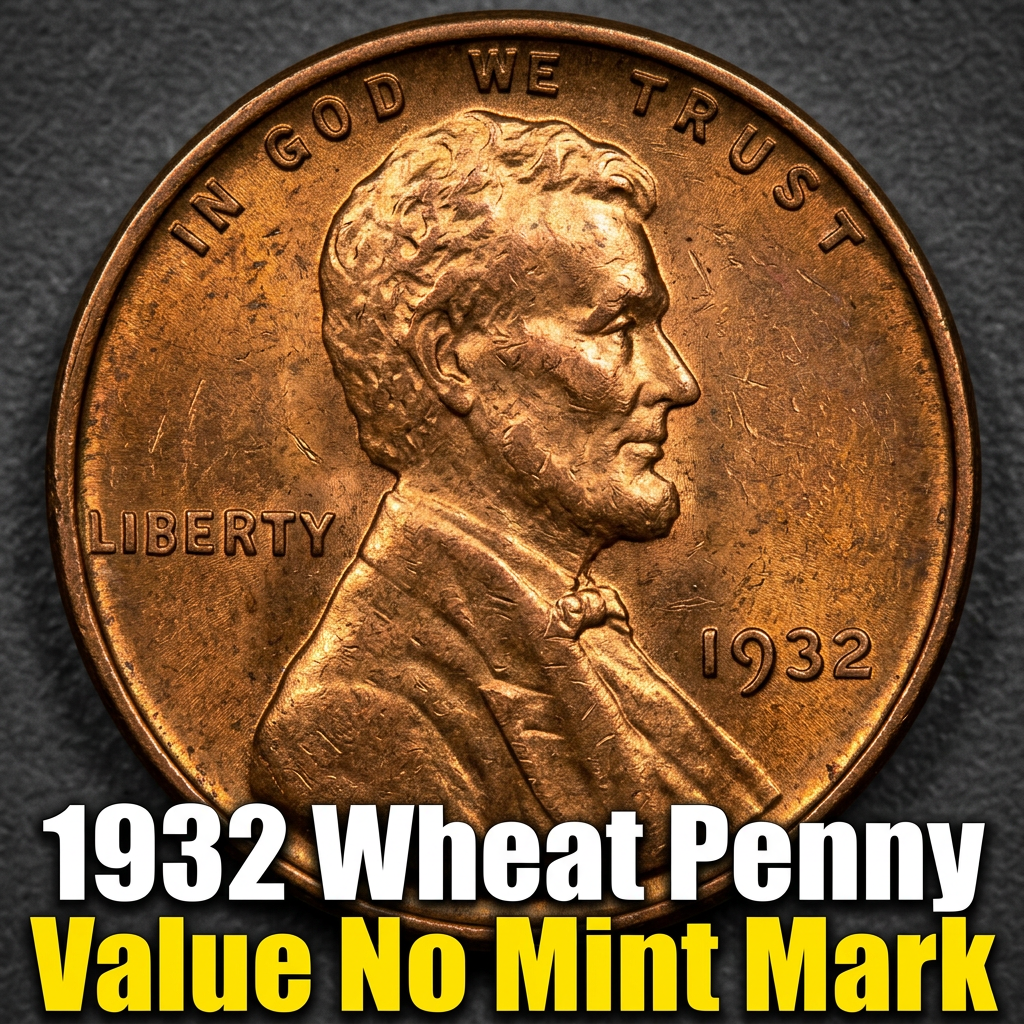
The 1932 Philadelphia Wheat Penny (no mint mark) is worth anywhere from $0.15 in heavily worn condition to over $50 or more in pristine mint state grades — and certain high-grade examples have fetched even more at auction. If you just found one of these old Lincoln cents tucked away in a drawer or an old coin collection, you’re in the right place to find out exactly what you’re sitting on.
What Makes the 1932 No Mint Mark Wheat Penny Special
The 1932 Lincoln Wheat Penny with no mint mark was struck at the Philadelphia Mint, which was the standard practice at the time — Philadelphia coins did not carry a mint mark. That year, the U.S. Mint produced just 9,062,000 of these cents, making it one of the lower-mintage Philadelphia Wheat Pennies of the entire series.
Low mintage matters to collectors. When fewer coins are made, fewer survive in good condition decades later. The 1932 Philadelphia cent isn’t the rarest Wheat Penny out there, but it’s far from common, especially in any grade above Fine.
If you want a quick and easy way to identify what you’ve got, try using a free coin identifier app — it can help you match your coin’s details in seconds before you dig deeper into its value.
1932 Wheat Penny Value by Grade
Condition is everything when it comes to old coins. A 1932 no mint mark penny that looks like it spent decades bouncing around in someone’s pocket is worth only a few cents to maybe a quarter. But one that has been well-preserved with sharp details and original luster can be worth significantly more.
Here’s a general breakdown of what the 1932 Philadelphia Wheat Penny is worth across different grades:
| Grade | Description | Estimated Value |
|---|---|---|
| Good (G-4) | Heavy wear, outline visible | $0.15 – $0.35 |
| Very Good (VG-8) | Major details clear | $0.50 – $1.00 |
| Fine (F-12) | Moderate wear, legends sharp | $1.00 – $2.50 |
| Very Fine (VF-20) | Light wear on high points | $3.00 – $6.00 |
| Extremely Fine (EF-40) | Slight wear, sharp overall | $8.00 – $15.00 |
| Mint State (MS-63) | No wear, some marks | $25.00 – $50.00 |
| Gem Mint State (MS-65+) | Outstanding, original luster | $75.00 – $200.00+ |
For the most up-to-date auction results and certified 1932 Wheat Penny price data in MS Red grades, it’s worth checking a dedicated price database that tracks live market sales.
How to Grade Your 1932 Wheat Penny at Home
You don’t need to be a professional numismatist to get a rough idea of your coin’s grade. Start by looking at Lincoln’s cheekbone, the wheat stalks on the reverse, and the lettering around the rim. These are the areas that wear down first.
If those details are sharp and complete, your coin is likely in Fine or better condition. If everything looks flat and blurry, you’re probably looking at a Good or Very Good coin — still collectible, but not a high-dollar piece.
Using CoinHix makes this process much easier. The app lets you enter your coin’s details and quickly see how condition translates to real market value, so you’re not left guessing.
Red, Brown, and Red-Brown — Why Color Matters for Mint State Coins
For Wheat Pennies that have never been circulated, color plays a major role in value. Copper coins naturally tone over time, and grading services classify mint state cents as Red (RD), Red-Brown (RB), or Brown (BN).
A 1932 no mint mark Wheat Penny graded MS-65 Red can be worth two to three times more than the same grade in Brown. Original red luster is rare and prized among Lincoln cent collectors.
This is one detail that surprises a lot of people who are new to coin collecting. You might think a coin is just a coin — but that subtle color difference can mean the difference between a $30 coin and a $150 coin. For a full picture of what a 1932 penny is worth based on color designation and grade, a detailed value breakdown can save you from selling too low.
Should You Get Your 1932 Wheat Penny Graded
If your coin looks like it might be in Extremely Fine or Mint State condition, professional grading through PCGS or NGC could be worth the investment. A certified coin sells for more and is easier to sell to serious collectors.
However, if your coin is clearly circulated and worn, the grading fee would likely cost more than the coin itself. In that case, it’s better to sell it raw or keep it as-is.
CoinHix can help you figure out whether your coin is a candidate for certification by giving you a realistic value estimate before you spend money on grading fees. It’s a smart first step for anyone who thinks they might have something valuable on their hands.
FAQ
Q: How do I know if my 1932 penny has a mint mark?
A: Look on the obverse (front) side of the coin, just below the date on the right. If there’s no letter there, it was made in Philadelphia and has no mint mark — which is normal for this year. A “D” means Denver and an “S” means San Francisco.
Q: Is a 1932 Wheat Penny worth cleaning?
A: Never clean your old coins. Cleaning removes the original surface and patina, which destroys collector value. A cleaned coin will grade lower and sell for significantly less than an original, uncleaned example — even if it looks shinier to you.
Q: Where is the best place to sell a 1932 no mint mark Wheat Penny?
A: eBay is a popular option for circulated examples. For higher-grade coins, consider a reputable coin dealer, a local coin show, or a major auction house. Always research recent sold prices before listing so you know what fair market value looks like.