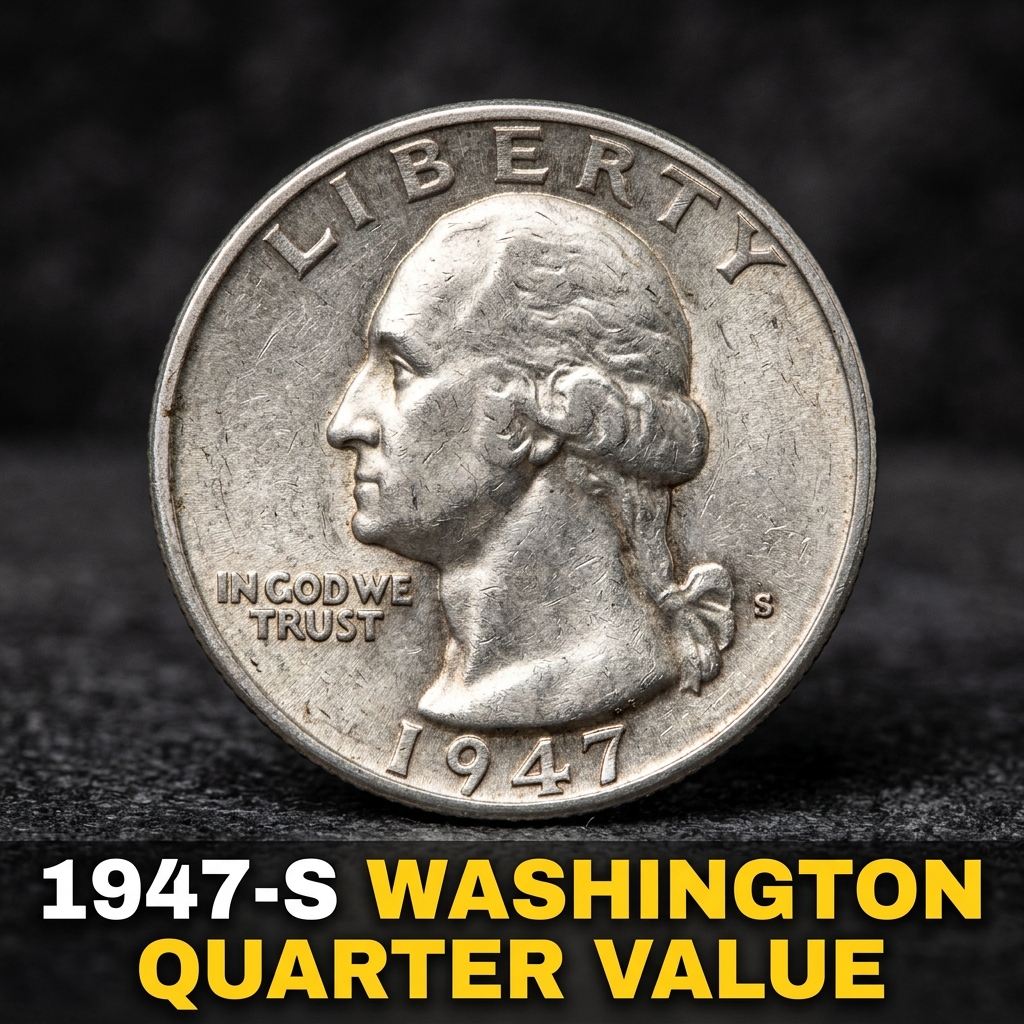

The 1963 Washington Quarter with no mint mark is worth anywhere from $6 in circulated condition to $25 or more in uncirculated grades — and if you’re lucky enough to have a high-grade example, it could be worth significantly more than face value.
If you found one of these coins in an old jar, a drawer, or inherited collection, you’re in the right place. Let’s break down exactly what you have, what it’s worth, and what to look for.
What Does “No Mint Mark” Mean on a 1963 Quarter?
The mint mark on a Washington Quarter tells you where the coin was made. A coin with no mint mark was struck at the Philadelphia Mint, which traditionally did not use a mint mark during this era.
In 1963, Philadelphia produced over 77 million quarters — making them common in everyday circulation. But “common” doesn’t mean worthless. These coins are made of 90% silver, which alone gives them real metal value regardless of condition.
If you’re not sure what mint mark your coin has (or doesn’t have), try using a free coin identifier app to quickly scan and identify the details. It’s one of the easiest ways to get started without any coin expertise.
How Much Is the 1963 Washington Quarter Worth Today?
The value of a 1963 no mint mark quarter depends on two main factors: its condition (also called “grade”) and the current price of silver.
Since these quarters contain 0.1808 troy ounces of silver, they always carry at least their melt value. With silver trading around $26–$28 per ounce, even a well-worn 1963 quarter is worth roughly $5–$6 just for the silver content alone.
Here’s a general breakdown of 1963 Philadelphia Quarter values by grade:
| Grade / Condition | Estimated Value |
|---|---|
| Good (G-4) | $5 – $6 (silver melt) |
| Fine (F-12) | $6 – $7 |
| Extremely Fine (EF-40) | $7 – $10 |
| About Uncirculated (AU-55) | $10 – $15 |
| Mint State (MS-63) | $20 – $30 |
| Mint State (MS-65) | $40 – $60+ |
For up-to-date market data, you can check the latest 1963 Washington Quarter prices in mint state grades to see recent auction results and trends.
How to Tell If Your 1963 Quarter Is Worth More
Most 1963 quarters you find in circulation will be well-worn — the fine details on Washington’s hair and the eagle’s feathers are often flat or faded. These are worth their silver melt value, which is still solid.
But if your coin looks sharp, shows original luster, and hasn’t been cleaned, you might have an uncirculated example. Look for:
– Crisp, sharp lettering with no fading
– Original mint luster — a slight cartwheel shine when you tilt the coin
– No scratches, spots, or cleaning marks
Coins in MS-65 or higher can fetch $50 to over $100 at auction. To get an accurate read on your specific coin’s value, the CoinHix app makes it easy to look up real sale prices and compare your coin’s condition to certified examples.
1963 Quarter No Mint Mark — Proof Versions Are Different
Here’s something many people don’t realize: in 1963, the Philadelphia Mint also produced Proof quarters for collectors. These were struck with specially polished dies and have a mirror-like finish.
Proof 1963 quarters are visually stunning and typically grade PR-65 or higher. They were sold in collector sets, not circulated. A 1963 Proof quarter in PR-65 can sell for $15–$25, while deep cameo proof examples (PR-67 DCAM) have sold for well over $100.
Check the full 1963 quarter value guide including proof and circulation strike data to see where your coin fits in.
If you’re unsure whether your coin is a business strike or proof, CoinHix has a clean database of both types with photos to compare against — it’s one of the most useful tools for new collectors trying to identify what they have.
Should You Clean or Sell Your 1963 Quarter?
Whatever you do — do not clean your coin. Even gentle cleaning removes microscopic surface metal and destroys collector value instantly. A cleaned coin can lose 50–80% of its numismatic premium.
If you believe your coin is in exceptional condition, consider having it graded by PCGS or NGC, the two most respected third-party grading services. A certified MS-65 or higher coin will sell for significantly more than a raw (uncertified) coin.
For most people though, a 1963 no mint mark quarter is a nice silver coin worth $6–$15 depending on wear. It’s not life-changing money, but it’s definitely worth more than 25 cents — and that’s a win.
—
FAQ
Q: Is a 1963 quarter with no mint mark made of silver?
A: Yes. All 1963 Washington Quarters — including those from Philadelphia with no mint mark — are composed of 90% silver and 10% copper. Each coin contains approximately 0.1808 troy ounces of pure silver, giving it real metal value regardless of collector grade.
Q: How do I know if my 1963 quarter is uncirculated?
A: An uncirculated coin shows no signs of wear on the high points — Washington’s cheekbone, hair above the ear, and the eagle’s breast feathers on the reverse. It should also have a natural luster with no dull or rubbed appearance. You can compare your coin using CoinHix, which shows graded photo examples side by side.
Q: Where is the mint mark on a 1963 Washington Quarter?
A: On 1963 quarters, the mint mark (if present) appears on the reverse side, just to the right of the ribbon tied around the eagle’s arrows, near the bottom of the coin. Philadelphia-minted coins have no mint mark in this location. The Denver Mint used a “D” mark, and those are equally common from this year.