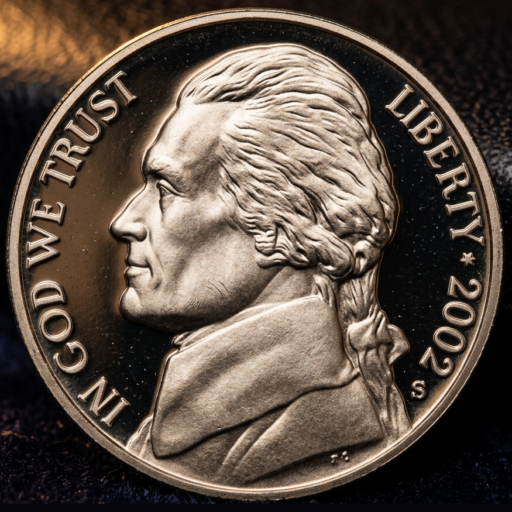
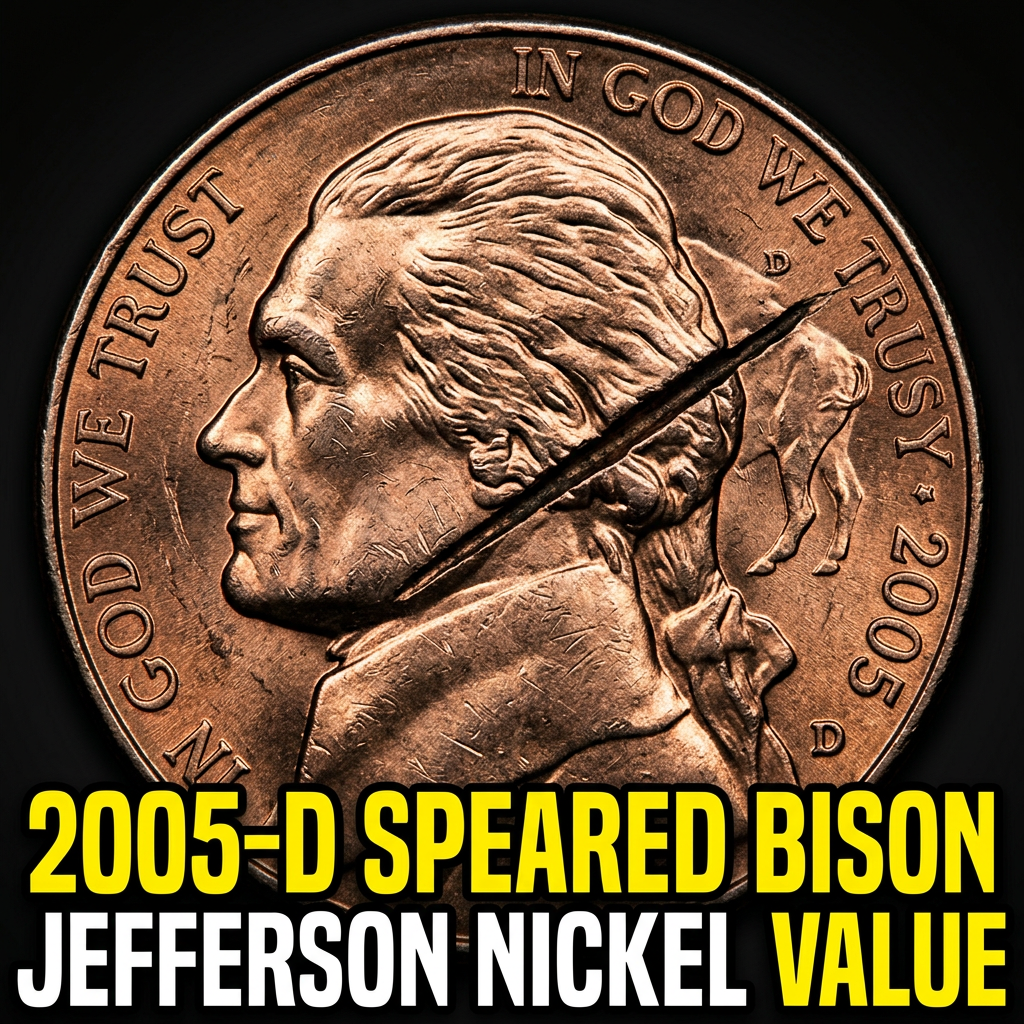
The 2005-D Speared Bison Jefferson Nickel is worth anywhere from $10 in circulated condition to over $500 or more for high-grade examples — and certain top-tier certified specimens have sold for well into the thousands. If you found one of these in your change jar or inherited it from a relative, you might be sitting on something genuinely exciting.
What Makes the Speared Bison So Special?
Most Jefferson Nickels are worth face value — five cents and nothing more. But the 2005-D Speared Bison is a completely different story. This coin came from the Denver Mint as part of the Westward Journey Nickel Series, which celebrated the Lewis and Clark expedition. The reverse design featured a bold American Bison, but a small number of coins were struck with a dramatic die gouge — a long, raised line running through the Bison’s body, making it look like the animal has been “speared.”
That die gouge wasn’t intentional. It happened because of a damaged or flawed die at the Denver Mint, and it slipped through quality control. Once collectors noticed it, demand exploded almost overnight.
The error is visible to the naked eye on most examples, which makes it one of the most accessible and exciting mint errors for everyday people to find. You don’t need a microscope — if you see a sharp diagonal line cutting across the Bison on the reverse, you’ve got one.
How Much Is the 2005-D Speared Bison Nickel Worth Today?
The value of this coin depends heavily on its condition. A well-worn example pulled from circulation might fetch $10 to $30, while a lightly circulated piece can land between $30 and $75. Uncirculated examples — coins that were never spent — jump significantly in value.
For certified mint-state coins graded by PCGS or NGC, values climb fast. You can check recent 2005 Speared Bison Jefferson Nickel price data and auction records to see exactly where the market stands right now. Prices shift depending on market demand and recent auction activity, so staying current is important.
Here’s a general value breakdown based on condition:
| Condition | Grade | Estimated Value |
|---|---|---|
| Heavy Wear | G–VG | $10 – $25 |
| Light Wear | EF–AU | $30 – $75 |
| Uncirculated | MS-60 to MS-63 | $75 – $200 |
| Gem Uncirculated | MS-65+ | $200 – $500+ |
| Top Pop Certified | MS-67+ | $1,000+ |
How to Identify the Error on Your Coin
The key feature to look for is a bold, raised diagonal line that cuts across the Bison’s back or mid-section on the reverse of the coin. This line is raised — not scratched or recessed — because it was caused by a gouge in the die itself. A scratch on a coin would be sunken into the surface, but a die gouge creates a raised mark on every coin struck from that die.
Hold your coin at an angle under a direct light source. If you see a sharp, raised ridge running across the animal like a spear, that’s your error. The line typically runs from the lower left to the upper right of the Bison’s body, and it’s quite prominent compared to typical coin flaws.
Don’t confuse this with post-mint damage, which is common on nickels. A genuine Speared Bison error will look clean and consistent — not random or scratched-looking.
If you want a faster answer, you can use a free coin identifier app to scan your coin and get a preliminary identification before sending it off to a grading service. Apps like CoinHix make it easy to snap a photo and get instant information about what you’re holding.
Should You Get It Graded?
If your coin looks uncirculated or near-uncirculated, professional grading is absolutely worth considering. PCGS and NGC are the two most trusted grading services, and a certified grade can significantly increase what a buyer is willing to pay. A raw (ungraded) MS-65 coin might sell for $150, but the same coin in a certified PCGS holder could bring $300 or more.
For coins in circulated condition, grading costs might eat into your profit, so it’s worth doing the math first. Use CoinHix to research recent sales and figure out whether the grading fee makes sense for your specific example.
You can also explore detailed 2005 Jefferson Nickel values by grade and mint mark to understand exactly where your coin fits in the current market.
Where to Sell the 2005-D Speared Bison Nickel
eBay is one of the most active marketplaces for this coin. Search “2005-D Speared Bison” and filter by “Sold” listings to see real transaction prices — not just asking prices. Heritage Auctions and Great Collections are also excellent platforms, especially for high-grade certified examples.
Local coin dealers can offer quick cash, but they typically pay below market value since they need room for profit. If you’re in no rush, online marketplaces generally yield better results.
CoinHix can help you track market trends over time so you know exactly when to sell and what a fair price looks like.
FAQ
Q: How do I know if my 2005-D Nickel has the Speared Bison error?
A: Look for a raised diagonal line running through the Bison’s body on the reverse side. It should look like a ridge or line cutting across the animal. A scratch would look sunken in; a die gouge error appears raised above the coin’s surface.
Q: Is the 2005-D Speared Bison rare?
A: It’s considered scarce but not extremely rare. It’s much harder to find than a normal 2005-D Nickel, but enough examples exist that collectors can still acquire them — which keeps the market active and prices strong.
Q: Can I find this coin in everyday pocket change?
A: It’s unlikely but not impossible. Most examples have already been pulled from circulation by sharp-eyed collectors. Your best bet is checking coin rolls from the bank, going through old coin collections, or buying from a reputable dealer or auction site.