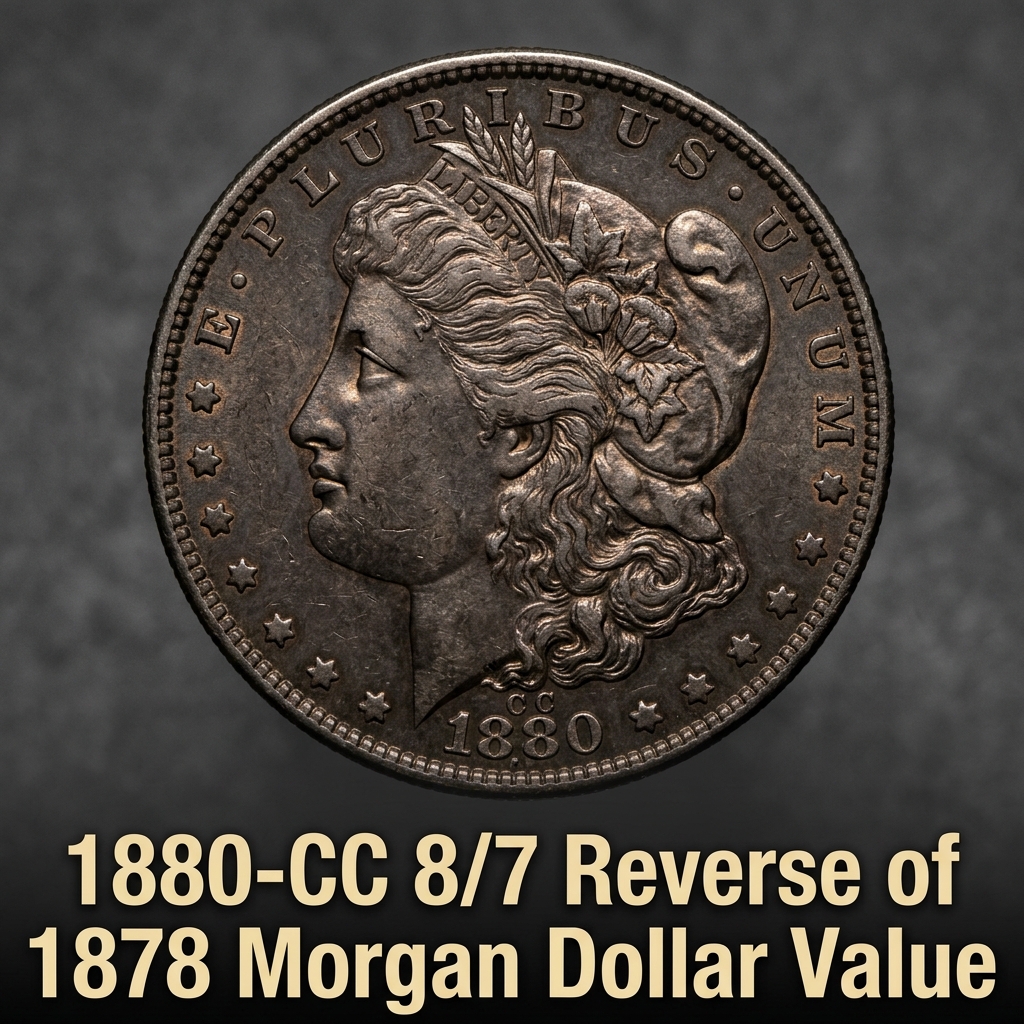
The 1880-CC 8/7 Reverse of 1878 Morgan Dollar is worth anywhere from $200 in heavily worn condition to well over $2,000 or more in higher mint state grades — and if you’ve got one sitting in an old coin collection, you might be holding something genuinely special.
What Makes the 1880-CC 8/7 Reverse of 1878 So Unusual
Not all Morgan Dollars are created equal, and this one stands out for a couple of very specific reasons. The “8/7” in the name refers to an overdate — the engraver punched an 8 into a die that already had a 7 from the previous year, 1879. If you look closely under magnification, you can actually see the ghost of the 7 underneath the 8 in the date.
The “Reverse of 1878” part refers to the design on the back of the coin. In 1878, the U.S. Mint used a slightly different eagle design — with eight tail feathers and a different breast style — before switching to an updated reverse. Some 1880-CC coins were struck using leftover dies from the 1878 design, which gives this coin a distinctive look that collectors have chased for generations.
If you’ve found one of these and aren’t sure what you’re looking at, downloading a free coin identifier app is a quick way to confirm what you have before assuming it’s common.
How Much Is the 1880-CC 8/7 Reverse of 1878 Morgan Dollar Worth Today
Value depends heavily on the condition of your coin. The grading scale runs from Poor (P-1) all the way to Perfect Mint State (MS-70), and with a coin like this, even a few grade points can mean hundreds of dollars difference.
Here’s a general breakdown of current market values:
| Grade | Condition Description | Estimated Value |
|---|---|---|
| VG-8 | Well worn, main features visible | $200 – $280 |
| F-12 | Moderate wear, clear lettering | $280 – $380 |
| EF-40 | Light wear on high points | $500 – $750 |
| AU-55 | Slight wear, much luster remains | $900 – $1,400 |
| MS-62 | Uncirculated, minor blemishes | $1,600 – $2,200 |
| MS-64 | Bright, sharp, minimal marks | $3,000 – $5,000+ |
You can explore up-to-date 1880 Morgan Dollar price data by grade at CoinHix to see how recent auction results are trending for this specific issue.
Why the Carson City Mint Adds Extra Value
The “CC” mintmark on this coin means it was struck at the Carson City Mint in Nevada — and that alone adds a serious premium in the collector market. The Carson City Mint operated from 1870 to 1893, and its coins are beloved because of their Wild West connection and relatively low mintage numbers compared to Philadelphia.
The 1880-CC combined mintage (all varieties) was around 495,000 coins — modest for a Morgan Dollar year. When you factor in how many were melted, lost, or heavily worn over more than 140 years, the surviving population of high-grade examples is genuinely limited.
Collectors specifically hunting for the 8/7 overdate with the Reverse of 1878 design are competing for a small pool of coins, which keeps prices firm even in soft markets. CoinHix tracks auction results for coins exactly like this one, making it easy to see what buyers are actually paying right now.
How to Tell If Your Coin Has the Right Reverse
If you think you might have this variety, here’s what to look for. On the Reverse of 1878, the eagle’s breast feathers are more parallel and flat-looking, and the top of the arrow feathers on the eagle’s left talon has a distinctive “V” or slanted look. The reverse also shows eight tail feathers rather than seven.
On the date side, use a 5x or 10x loupe to look for the traces of a “7” beneath the second “8” in the date. It appears as a small serif or curved line peeking out from behind the upper loop of the 8. Not every example shows it dramatically — some are much clearer than others.
If you’re unsure, CoinHix lets you photograph your coin and compare it against known examples in its database, which is genuinely helpful for variety identification. You can also check detailed 1880 Silver Dollar value information by variety and grade to make sure you’re looking at the right coin type before making any decisions about selling or getting it graded.
Should You Get It Graded or Sell It As Is
If your coin looks uncirculated or close to it, professional grading through PCGS or NGC is absolutely worth considering. A certified MS-63 or better example of the 1880-CC 8/7 Reverse of 1878 Morgan Dollar will almost always sell for a meaningful premium over a raw (ungraded) coin of similar appearance.
For worn examples in the Fine to EF range, grading fees may eat into your profit. In those cases, selling to a reputable dealer or through a coin auction site can get you fair market value without the wait.
Either way, knowing what you have is the first step. Tools like CoinHix can help you understand where your coin falls before you commit to any path.
Frequently Asked Questions
Q: How do I know if my 1880-CC Morgan Dollar is the 8/7 overdate variety?
A: Look at the date under magnification — specifically at the second “8.” If you can see traces of a “7” underneath it (look for a curved line or serif poking through), you likely have the overdate. The reverse design is a secondary check: the Reverse of 1878 has parallel breast feathers and eight tail feathers on the eagle.
Q: Is the 1880-CC 8/7 Reverse of 1878 rare enough to be worth getting appraised?
A: Yes, especially if the coin appears uncirculated or has strong eye appeal. This is a recognized variety among serious Morgan Dollar collectors, and certified examples in mint state can bring thousands of dollars at major coin auctions. Even in circulated grades, it’s worth more than a common Morgan.
Q: Where can I find real-time prices for the 1880-CC Morgan Dollar varieties?
A: The best approach is to check recent auction records on platforms that track certified coin sales. CoinHix is a solid option that aggregates pricing data across grades and varieties, so you can see what the market is actually paying rather than relying on outdated price guides.