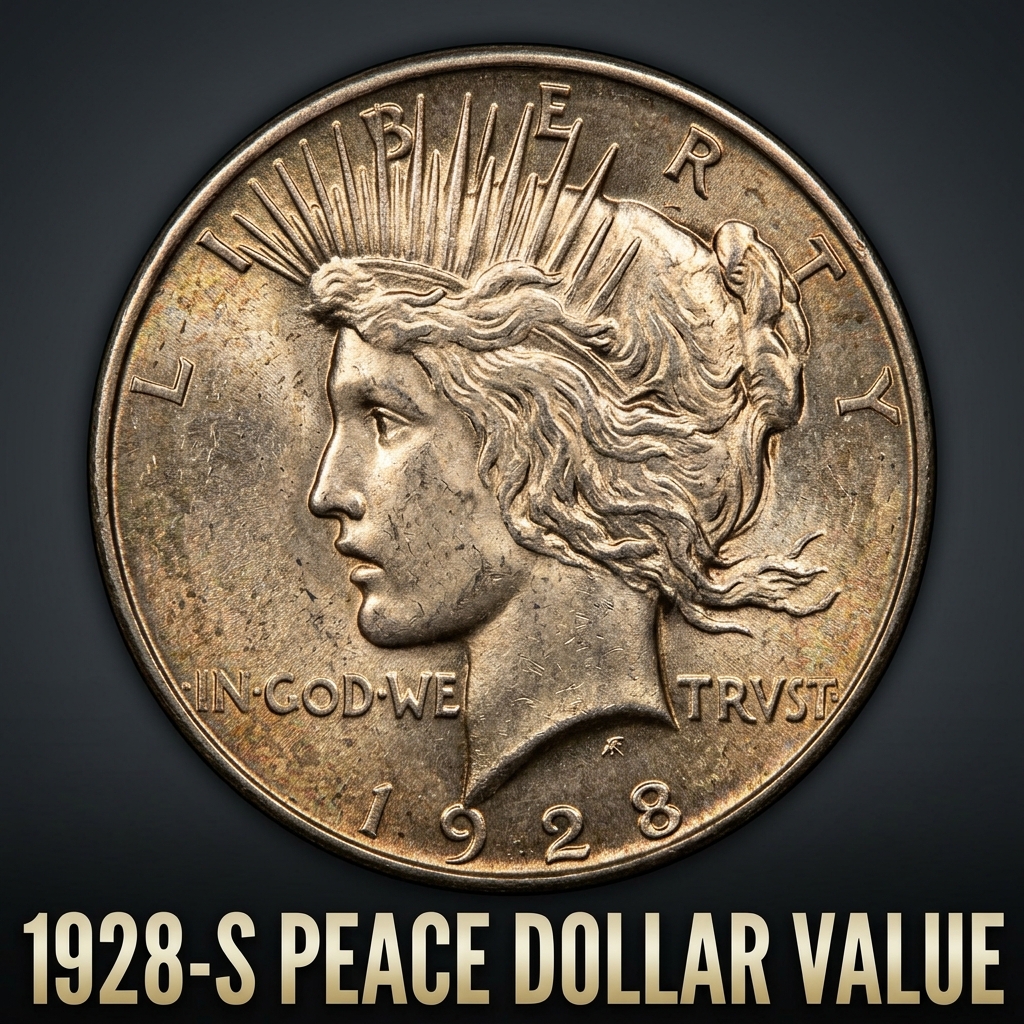
The 1928-S Peace Dollar is worth anywhere from $25 to $50 in heavily worn condition, but in mint state grades it can command anywhere from $200 to well over $1,000 — making it one of the more sought-after coins in the entire Peace Dollar series. If you stumbled across one of these in an old coin collection or a grandparent’s drawer, you’re holding something genuinely valuable. Read on to find out exactly what you’ve got.
What Makes the 1928-S Peace Dollar Special
The 1928-S Peace Dollar was struck at the San Francisco Mint during a period when Peace Dollar production was winding down significantly. The “S” mintmark you’ll find on the reverse — just below the eagle and to the left of the word “ONE” — identifies it as a San Francisco issue. That year, the Philadelphia Mint struck only 360,649 Peace Dollars, making the 1928 (no mintmark) the true key date of the series. But the San Francisco coin, with a mintage of 1,632,000 pieces, is far from common in higher grades.
If you’re not sure whether what you have is a Peace Dollar or something else entirely, a free coin identifier app can help you confirm the coin’s identity in seconds using just your smartphone camera.
Because millions of these coins circulated heavily through the late 1920s and into the Depression era, most survivors show significant wear. Finding one in truly crisp, uncirculated condition is a real challenge, and collectors will pay handsomely for it.
1928-S Peace Dollar Value by Grade
The value of your 1928-S Peace Dollar depends almost entirely on its condition, or “grade” in coin collecting terms. A coin that was passed hand to hand for decades looks very different from one that was tucked away shortly after it was minted.
Here’s a quick look at approximate retail values across different grades:
| Grade | Description | Approximate Value |
|---|---|---|
| Good (G-4) | Heavily worn, design visible | $25 – $35 |
| Very Fine (VF-20) | Moderate wear, details clear | $45 – $65 |
| Extremely Fine (EF-40) | Light wear on high points | $80 – $120 |
| About Uncirculated (AU-50) | Slight friction, mostly sharp | $150 – $220 |
| MS-63 | Uncirculated, some marks | $350 – $500 |
| MS-65 | Gem uncirculated, sharp luster | $1,000+ |
For a deeper look at 1928-S Peace Dollar prices across mint state grades, it’s worth checking current auction and dealer records to get the most up-to-date numbers.
How to Tell What Grade Your Coin Is
You don’t need to be a professional numismatist to get a rough sense of your coin’s grade. Start with the highest points on the design — Liberty’s cheek and hair on the obverse, and the eagle’s breast feathers on the reverse. If those areas look flat or smooth, the coin has circulated significantly.
Hold the coin under a single light source and tilt it gently. Uncirculated coins will show a full, flowing luster that moves like a cartwheel effect across the surface.
Coins with cleaning, scratches, or environmental damage are worth considerably less, even if they look shiny. A coin that’s been polished or dipped is considered damaged by collectors, and that can cut the value in half or more. If you want a trusted professional opinion, CoinHix offers grading and value tools that can walk you through the process without needing to visit a coin shop.
Silver Melt Value and Why It Sets a Floor
Every Peace Dollar — including your 1928-S — contains 0.7734 troy ounces of 90% silver. That means even a beat-up, barely recognizable example has a base value tied directly to the silver market. With silver prices generally ranging between $28 and $32 per troy ounce in recent times, the melt value of any Peace Dollar sits around $22 to $25.
That’s the absolute floor. No 1928-S Peace Dollar in any condition is worth less than its silver content, and most are worth significantly more due to their collector premium.
If you want a comprehensive breakdown of 1928 silver dollar value including melt, circulated, and uncirculated examples, you’ll find it useful to cross-reference multiple sources before selling.
CoinHix also tracks live silver prices alongside numismatic premiums, so you always know whether you’re getting fair market value or leaving money on the table.
Where to Sell a 1928-S Peace Dollar
If you’ve decided to sell, you have several solid options. Online platforms like eBay give you access to a nationwide pool of collectors, which often means better prices than a local pawn shop. Coin dealers — especially those who specialize in U.S. silver coins — are another reliable route, though they’ll typically offer wholesale prices.
For coins in MS-63 or better condition, consider submitting to a third-party grading service like PCGS or NGC before selling. A certified, slabbed coin almost always fetches a higher price and gives buyers confidence in what they’re purchasing.
No matter which route you take, knowing your coin’s approximate value beforehand is essential. CoinHix makes it easy to look up real-time market data so you walk into any negotiation informed and confident.
FAQ
Q: How do I know if my Peace Dollar is the 1928-S or another year?
A: Look at the date on the obverse (front) of the coin — it will clearly read “1928.” Then check the reverse just below the eagle’s tail feathers and to the left of “ONE DOLLAR” for a small “S” mintmark. If there’s no mintmark, you have the Philadelphia issue, which is actually rarer and more valuable.
Q: Is a 1928-S Peace Dollar worth more than its silver melt value?
A: Yes, in almost every case. Even heavily worn examples carry a collector premium above the silver melt value. The cleaner and sharper the coin, the larger that premium becomes. A gem uncirculated example can be worth 40 to 50 times the melt value.
Q: Should I clean my 1928-S Peace Dollar before selling it?
A: Absolutely not. Cleaning a coin — even with gentle soap and water — removes the natural surface patina that collectors value. A cleaned coin is considered damaged in the numismatic world and will sell for significantly less than an original, untouched example in the same grade. Leave it exactly as you found it.