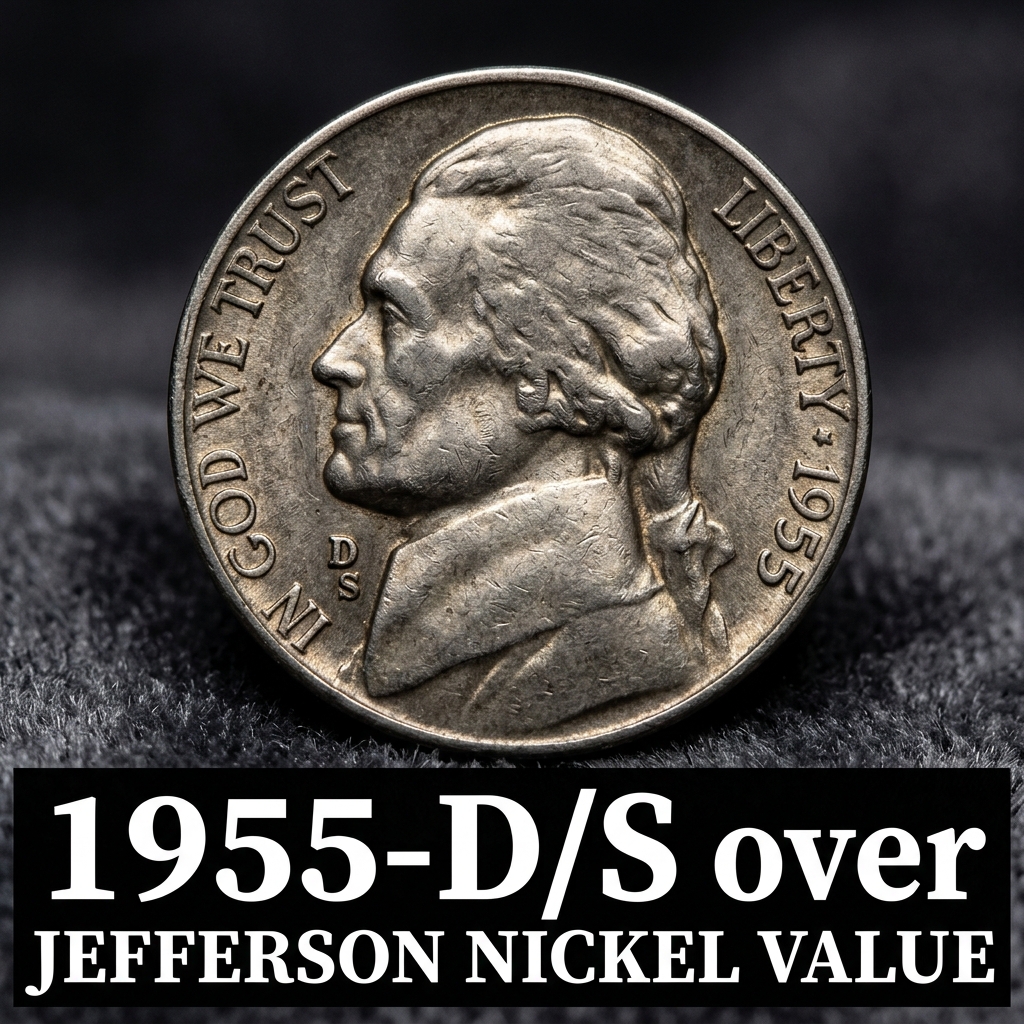
The 1955-D/S Jefferson Nickel is one of the most fascinating error coins from the mid-20th century, worth anywhere from $50 in circulated condition to well over $1,500 in pristine mint state grades. If you stumbled across one of these in an old coin jar or inherited collection, you may be sitting on a genuinely valuable piece of American history. Read on to find out exactly what you have and what it’s worth today.
What Makes the 1955-D/S Jefferson Nickel So Special
The 1955-D/S Jefferson Nickel is what’s known as an overmintmark error coin. This means that a “D” mintmark (for the Denver Mint) was punched over an existing “S” mintmark (San Francisco) on the die. The result is a coin that shows traces of both letters — a visible layering effect that collectors call an OMM, or Over Mint Mark error.
This kind of mistake happened during a transitional period at the U.S. Mint when dies were being repurposed and repunched. Rather than discard a usable die, mint workers would simply stamp a new mintmark over the old one. Sometimes they didn’t line up perfectly — and that’s exactly what happened in 1955.
Finding one of these nickels in your change back then was completely unremarkable. Nobody knew they were errors. Today, that’s a different story entirely.
If you want to use a free coin identifier app to quickly scan your coin and confirm what you have, that’s one of the easiest first steps you can take before doing any deeper research.
How to Identify a 1955-D/S Nickel
Identifying a genuine 1955-D/S Jefferson Nickel requires a good magnifying glass or loupe — at least 5x to 10x magnification. You’re looking at the mintmark area on the reverse of the coin, just to the right of Monticello.
On a true D/S variety, you’ll notice that the “D” mintmark appears slightly thicker or doubled at the base, and in strong examples, a clear remnant of the “S” is visible underneath or behind it. The overlap can be subtle, so don’t give up after a quick glance.
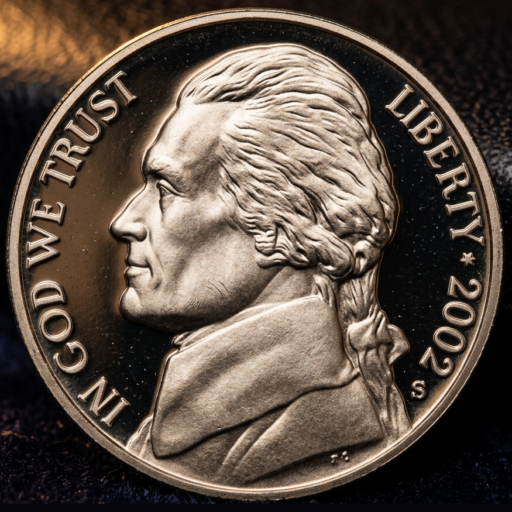
The coin’s obverse shows Thomas Jefferson’s portrait facing left, and the date 1955 should be sharp and readable. Coins with worn or damaged mintmark areas are harder to authenticate, which is one reason condition plays such a big role in pricing.
1955-D/S Jefferson Nickel Value by Grade
Condition is everything when it comes to coin values. Here’s a breakdown of what the 1955-D/S Jefferson Nickel typically sells for depending on its grade:
| Grade | Description | Estimated Value |
|---|---|---|
| G-4 (Good) | Heavy wear, design visible | $50 – $75 |
| VF-20 (Very Fine) | Moderate wear, details clear | $100 – $175 |
| EF-40 (Extremely Fine) | Light wear, sharp details | $200 – $350 |
| MS-63 (Mint State) | Uncirculated, minor marks | $600 – $900 |
| MS-65 (Gem Mint State) | Brilliant, nearly flawless | $1,200 – $1,500+ |
For the most current auction results and dealer prices, you can check out live 1955 Jefferson Nickel price data across mint state grades, which is updated regularly to reflect real market activity.
Where to Get Your 1955-D/S Nickel Appraised
If you believe you have one of these error nickels, the smartest move is to get it professionally graded. PCGS and NGC are the two most trusted third-party grading services in the United States. A certified holder (called a “slab”) not only confirms the coin’s grade but also its authenticity — and that matters enormously to buyers.
Before you send it off, you can do some homework at home. CoinHix is a popular coin identification and valuation app that lets you photograph your coin and get an instant estimate of its potential value. It’s a great starting point and costs you nothing to try.
You can also review detailed 1955 nickel value information broken down by grade and mintmark to compare what your coin might realistically be worth before pursuing grading.
Avoid cleaning your coin under any circumstances. Even light polishing can drop its grade dramatically and erase hundreds of dollars in value overnight.
Tips for Selling a 1955-D/S Jefferson Nickel
Once you know what you have, your options for selling are wider than ever. Online platforms like eBay, Heritage Auctions, and Great Collections all see strong demand for certified error coins. Local coin shows are another option if you prefer an in-person experience.
CoinHix can also help you track recent sale prices for comparable coins so you’re not going in blind when negotiating with dealers. Knowledge is leverage, especially for error coins where values can vary widely depending on the visible strength of the overmintmark.
If you’re not ready to sell, holding onto a coin like this may not be a bad idea either. Error coins from the 1950s have shown consistent long-term appreciation, and a gem-grade example today could be worth significantly more in another decade.
Frequently Asked Questions
Q: How do I know if my 1955 nickel is a D/S variety and not just a regular D?
A: You’ll need at least 5x magnification to look at the mintmark closely. On a D/S variety, you should see traces of an “S” beneath or overlapping the “D.” If the mintmark looks clean and singular, it’s likely just a standard 1955-D nickel, which is far less valuable. When in doubt, use CoinHix to photograph and compare your coin to known examples.
Q: Is a 1955-D/S nickel rare?
A: Yes, it’s considered a scarce error variety. While not the rarest coin in American numismatics, the 1955-D/S Jefferson Nickel is genuinely hard to find in higher grades, and many collectors actively seek it out for type sets and error collections. Demand consistently outpaces supply at the upper grade levels.
Q: Do I need to get it graded before selling?
A: You don’t have to, but it’s strongly recommended. A raw (ungraded) coin will almost always sell for less than a certified one because buyers can’t independently verify its condition or authenticity. For a coin potentially worth several hundred dollars or more, the grading fee is usually well worth it.