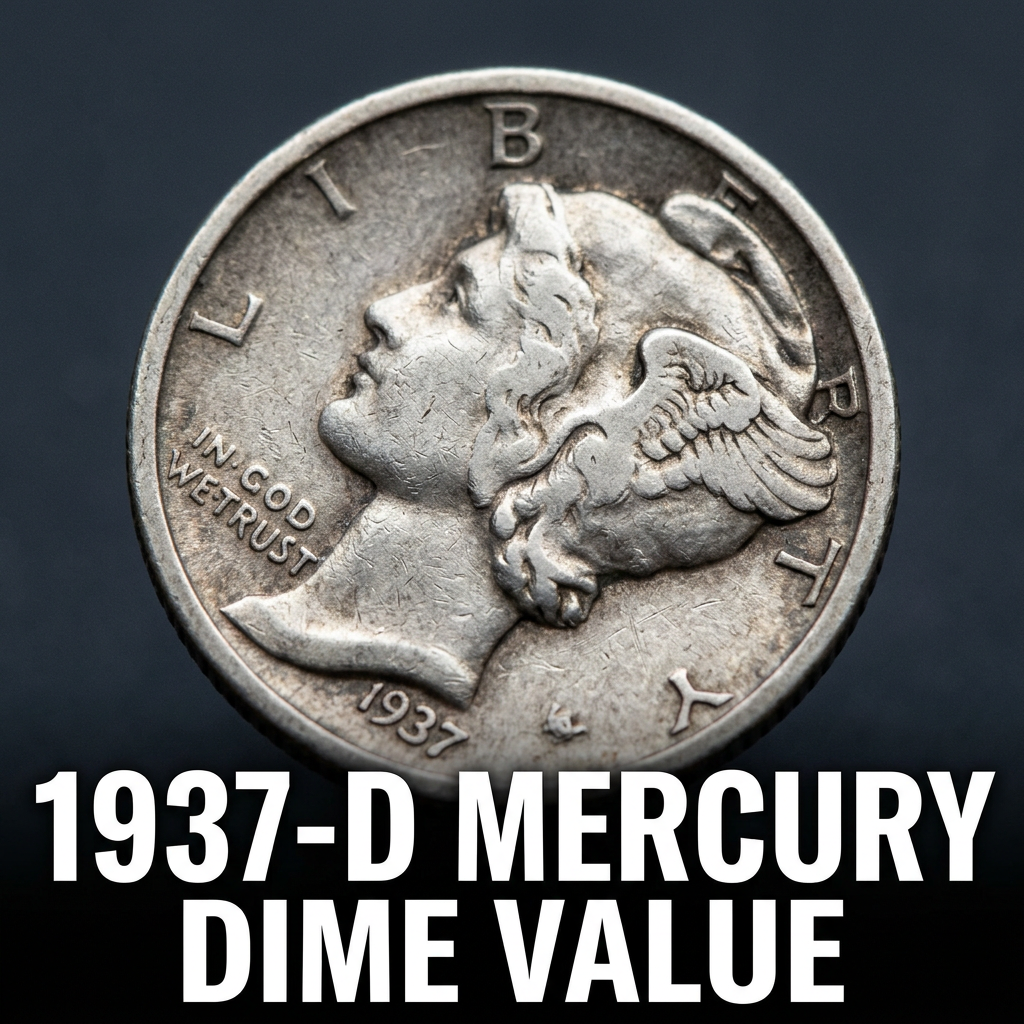
The 1937-D Mercury Dime is worth anywhere from $3 to $5 in heavily circulated condition, all the way up to $50 or more in uncirculated grades — and top-quality examples with Full Bands designation have sold for hundreds of dollars at auction. If you found one of these small silver coins tucked away in a drawer or jar, you might be holding more than just a dime.
What Makes the 1937-D Mercury Dime Special
The 1937-D Mercury Dime was struck at the Denver Mint and carries a small “D” mint mark on the reverse, just to the left of the fasces design. It’s part of the beloved Mercury Dime series, officially known as the Winged Liberty Head Dime, which ran from 1916 to 1945.
These coins were designed by Adolph A. Weinman and are widely considered one of the most beautiful American coin designs ever produced. Collectors love them, and everyday people are often surprised to learn their old dimes carry real silver content — each one contains 90% silver.
If you’re not sure what you have, a free coin identifier app can help you quickly confirm the date, mint mark, and grade before you decide what to do with your coin.
1937-D Mercury Dime Value by Grade
The condition of your coin matters a lot. A worn 1937-D Mercury Dime that’s been circulated heavily will show flat details, especially on the bands across the fasces on the reverse. The better the detail, the higher the value.
Here’s a general breakdown of what the 1937-D Mercury Dime is worth across different grades:
| Grade / Condition | Estimated Value |
|---|---|
| Good (G-4) | $3 – $4 |
| Fine (F-12) | $4 – $6 |
| Extremely Fine (EF-40) | $8 – $12 |
| About Uncirculated (AU-55) | $15 – $25 |
| Mint State (MS-63) | $35 – $55 |
| MS-65 Full Bands (FB) | $150 – $400+ |
For the most current market prices, you can check out detailed 1937-D Mercury Dime price data across mint state grades to see how recent auction results compare to these estimates.
The Full Bands Detail That Changes Everything
One of the most important factors in Mercury Dime collecting is whether the horizontal bands across the fasces on the reverse are fully struck and separated. Coins that achieve the “Full Bands” (FB) designation are significantly rarer and more valuable than regular uncirculated examples.
On the 1937-D, getting a Full Bands strike was not guaranteed. The Denver Mint sometimes produced softer strikes compared to Philadelphia, which means finding a sharply struck FB example takes some luck.
If your coin looks crisp and detailed under magnification, it’s worth having it professionally graded by PCGS or NGC. A certified MS-65 FB coin can easily be worth five to ten times more than a regular MS-65. CoinHix is a great resource for tracking these certified coin values in real time.
Silver Melt Value and Why It Matters
Even a heavily worn 1937-D Mercury Dime is worth more than ten cents. Each Mercury Dime contains 0.07234 troy ounces of pure silver. With silver prices hovering around $28–$30 per troy ounce in recent years, the melt value alone puts the floor at roughly $2.00 to $2.20 per coin.
This means you’ll almost always get more than face value when selling, even for coins in poor shape.
If you want to understand the full 1937-D Mercury Dime value picture — from melt value to collector premiums — this complete guide to 1937 Mercury Dime values across all mint marks breaks it down clearly.
How to Check Your 1937-D Mercury Dime at Home
You don’t need to be an expert to get a rough idea of what your coin is worth. Start by looking for the “D” mint mark on the reverse side of the coin, just to the left of where the stick bundle (fasces) meets the olive branch. If there’s no letter, it’s a Philadelphia Mint coin — also valuable, but a separate variety.
Next, check the overall wear. Look at the hair strands on Liberty’s head and the diagonal bands on the fasces. Sharper detail almost always means more money.
You can also use CoinHix to scan and identify your coin instantly, or browse their database to compare your coin’s condition to graded examples with photos. It takes the guesswork out of the process and helps everyday collectors make smarter decisions.
FAQ
Q: How do I know if my 1937-D Mercury Dime is valuable?
A: Check the condition first — look for sharp detail on Liberty’s face and the bands on the reverse. Then confirm the “D” mint mark. Coins in excellent condition or with Full Bands details are worth significantly more. Use CoinHix or a coin value guide to compare your coin to graded examples.
Q: Is the 1937-D Mercury Dime rare?
A: Not especially rare in circulated grades — the Denver Mint struck over 14 million of them. However, high-grade examples with Full Bands certification are genuinely scarce and can command strong premiums from collectors.
Q: Where can I sell my 1937-D Mercury Dime?
A: You can sell through online platforms like eBay or Heritage Auctions, visit a local coin dealer, or attend a coin show. For accurate pricing before you sell, check current market data on sites like CoinHix so you know what your coin is actually worth.