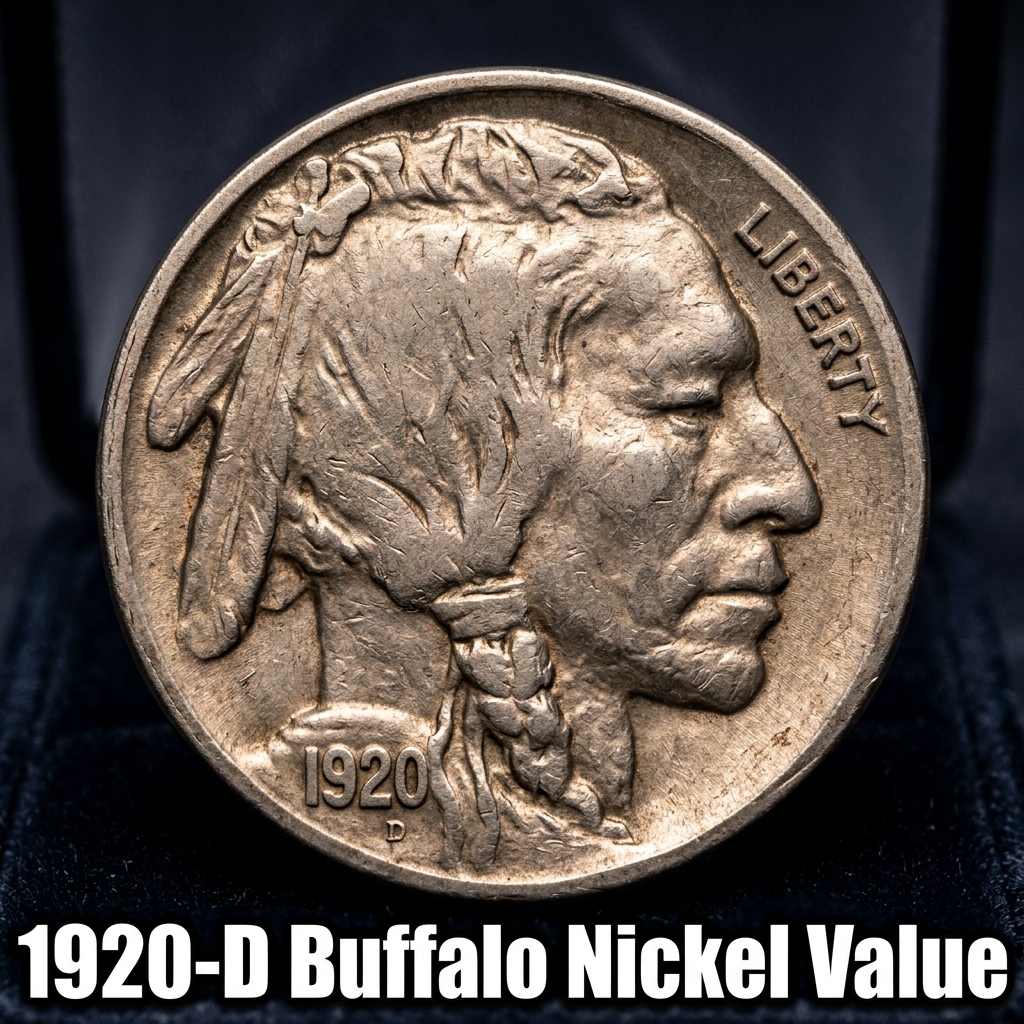
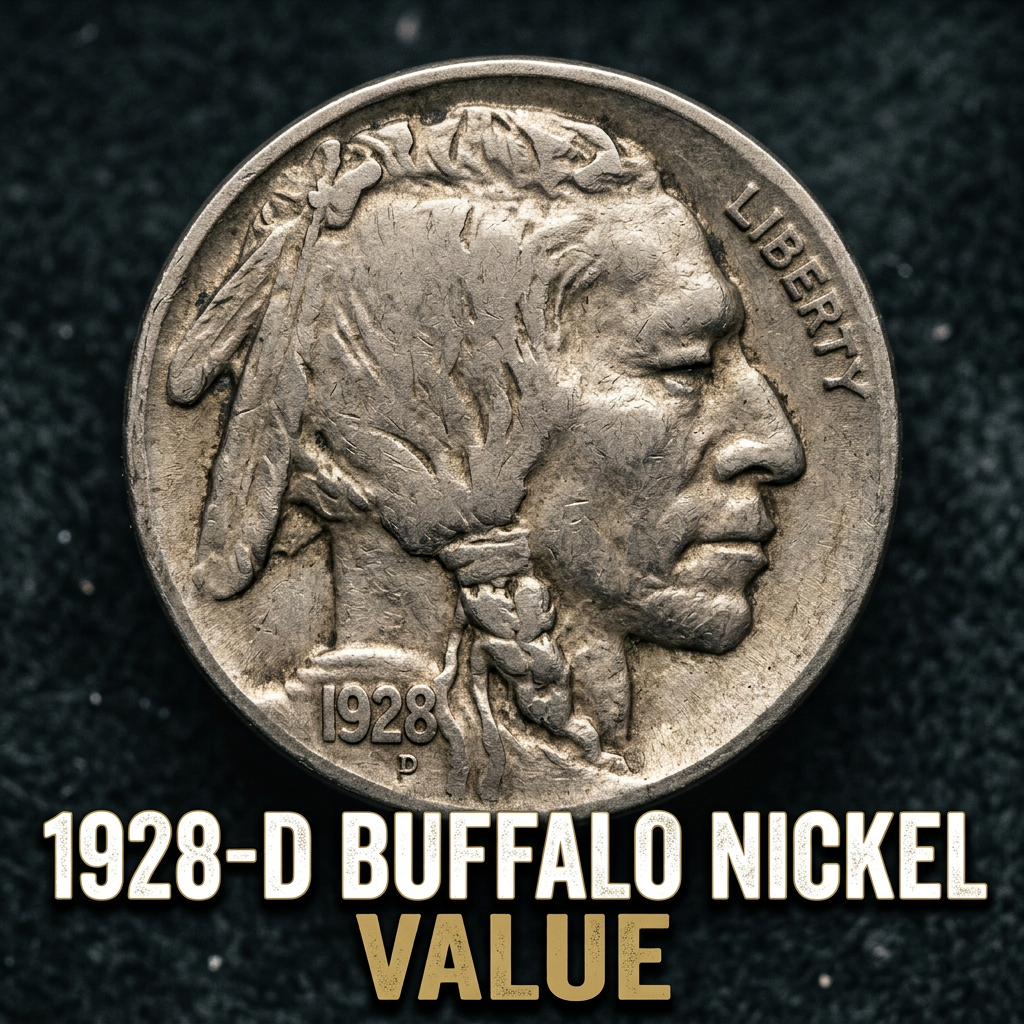
The 1928-D Buffalo Nickel is worth anywhere from $1.50 in heavily worn condition to over $500 or more in high mint state grades. If you found one of these old nickels in a jar, a drawer, or an old collection, you’re in the right place to find out exactly what you’ve got.
What Makes the 1928-D Buffalo Nickel Special
The “D” in 1928-D stands for the Denver Mint, which struck this coin during a period when the Buffalo Nickel — officially called the Indian Head Nickel — was a staple of everyday American commerce. Designed by sculptor James Earle Fraser, this coin features a bold Native American portrait on the obverse and an American bison on the reverse.
The Denver Mint produced about 6,436,000 Buffalo Nickels in 1928, making the “D” mintmark version less common than the Philadelphia issue but more available than the San Francisco “S” version. That mintage number matters when it comes to determining value — lower supply means higher collector demand.
If you want a quick way to identify what you have, a free coin identifier app can help you snap a photo and get an instant read on your coin’s details before you dig deeper into its value.
1928-D Buffalo Nickel Value by Grade
Coin value depends almost entirely on condition — or what coin collectors call “grade.” A coin that has been sitting in a pocket for decades looks very different from one that was carefully stored in a collection. The difference in value between a worn example and a pristine one can be dramatic.
Here’s a general breakdown of what the 1928-D Buffalo Nickel is worth at various grades:
| Grade | Description | Estimated Value |
|---|---|---|
| Good (G-4) | Heavy wear, date visible | $1.50 – $3 |
| Fine (F-12) | Moderate wear, details visible | $6 – $12 |
| Extremely Fine (EF-40) | Light wear on high points | $35 – $60 |
| About Uncirculated (AU-55) | Slight wear, mostly sharp | $80 – $140 |
| Mint State (MS-63) | Uncirculated, minor marks | $200 – $350 |
| Mint State (MS-65+) | Gem uncirculated | $500 – $1,000+ |
For the most current auction results and market trends, you can check out the 1928-D Buffalo Nickel price data across mint state grades to see what collectors are actually paying right now.
How to Tell What Grade Your 1928-D Nickel Is
Grading can feel intimidating, but you can do a basic assessment at home with just a magnifying glass and decent lighting. Start by looking at the highest points of the design — the bison’s shoulder and the Native American’s cheekbone. These areas wear down first.
If those details are completely flat and featureless, you’re likely looking at a Good or Fine grade coin. If you can still see some texture and definition in those areas, you might have an Extremely Fine or better example on your hands. A coin with absolutely no wear at all — looking as crisp as the day it was made — could be graded Mint State.
CoinHix makes this process much easier. The app lets you compare your coin to reference images and gives you a ballpark grade based on what it sees. It’s a great first step before spending money on professional grading.
Should You Get Your 1928-D Buffalo Nickel Professionally Graded
Professional grading from services like PCGS or NGC costs money — usually $20 to $50 or more per coin — so it only makes financial sense if your coin is likely worth significantly more than that. As a general rule, if your 1928-D Buffalo Nickel appears to be in Extremely Fine condition or better, it could be worth the investment.
A certified, slabbed coin (one in a graded plastic holder) typically sells for more than a raw coin of the same quality because buyers trust the grade. For a coin potentially worth $200 or more, professional grading protects your investment and gives you more confidence when selling.
You can get a comprehensive look at the full value breakdown for the 1928 Buffalo Nickel including all mint marks to compare how the “D” stacks up against the Philadelphia and San Francisco versions.
Tips for Selling Your 1928-D Buffalo Nickel
Once you know what you have, you’ve got several options for selling. Online marketplaces like eBay give you access to the widest pool of collectors, but you’ll pay fees and need to handle shipping. Local coin dealers offer convenience, but may offer lower prices since they need room for profit.
Coin shows are another great option — you can get multiple opinions and offers in one place. Before you sell anywhere, do your homework on recent sales prices. CoinHix tracks real-time market data so you know exactly what your coin should sell for before you walk into any negotiation.
Whatever you decide, don’t clean your coin. A cleaned coin is worth far less to collectors, even if it looks shinier to you.
Frequently Asked Questions
Q: How do I know if my 1928-D Buffalo Nickel is genuine?
A: Look for the “D” mintmark on the reverse, just below “FIVE CENTS.” Genuine coins have sharp, consistent lettering and a natural patina. If the coin looks artificially shiny or has mushy details, it may have been cleaned or could be a fake. Using CoinHix or a professional coin identifier can help you verify authenticity quickly.
Q: Is a 1928-D Buffalo Nickel with a missing date worth anything?
A: Unfortunately, a Buffalo Nickel with a worn-off date has very little collector value — usually just a few cents as a “space filler.” The date is critical to identifying the coin. However, there is a coin restoration product called “Nic-a-Date” that can sometimes reveal a faded date using acid, though this permanently alters the coin.
Q: What is the most valuable 1928-D Buffalo Nickel ever sold?
A: Top-grade examples in MS-66 or MS-67 can fetch well over $1,000 at major auction houses. A pristine gem-quality 1928-D in MS-67 could potentially sell for several thousand dollars depending on eye appeal and strike quality. These are rare, but they do exist — so it’s always worth checking your coin carefully.