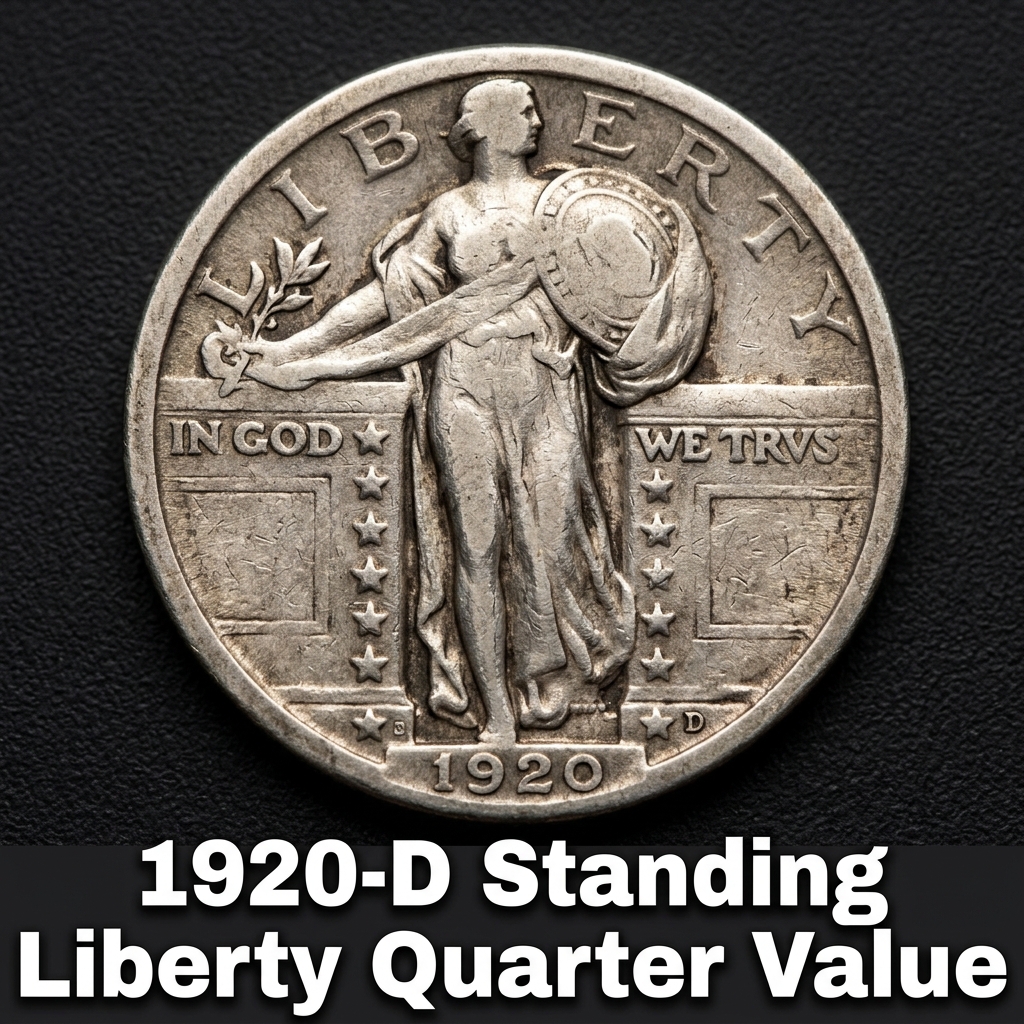
The 1920-D Standing Liberty Quarter is worth anywhere from $20 in heavily worn condition to well over $500 in high-grade mint state — and certain certified examples have sold for thousands at auction. If you found one of these silver coins in an old jar or inherited collection, you may be holding something more valuable than you think.
What Makes the 1920-D Standing Liberty Quarter Special
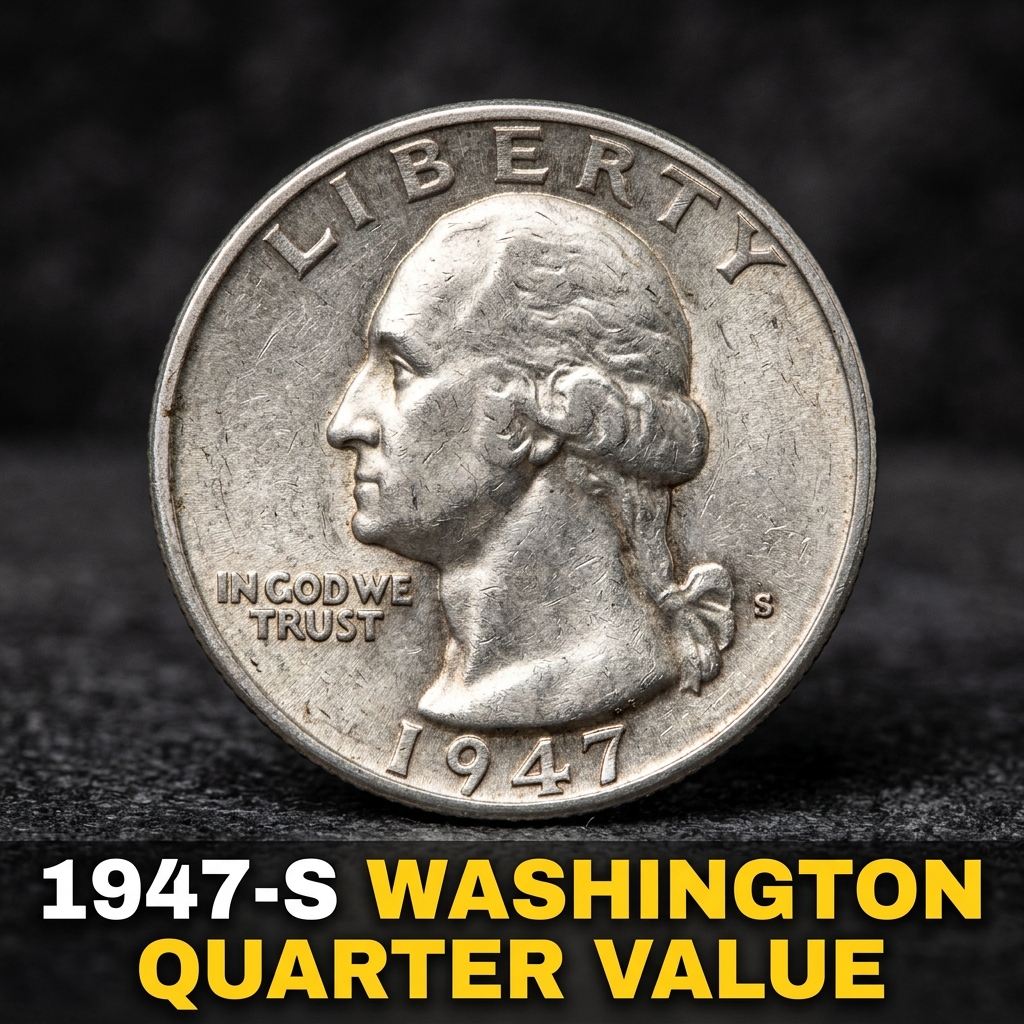
The 1920-D Standing Liberty Quarter was struck at the Denver Mint, identified by the small “D” mintmark on the coin’s obverse. It’s part of the beloved Standing Liberty series designed by Hermon Atkins MacNeil, which ran from 1916 to 1930.
Denver produced 1,551,000 of these quarters in 1920 — a relatively modest mintage compared to the Philadelphia issues of the same year. That lower production number, combined with the coin’s age and silver content, makes surviving examples genuinely collectible.
The design itself is iconic. Lady Liberty stands in a gateway holding a shield, and the reverse features an eagle in flight. If you’re not sure whether your coin is a 1920-D or another date and mint, you can use a free coin identifier app to scan and identify it in seconds — no experience needed.
How Much Is a 1920-D Standing Liberty Quarter Worth?
The value of your 1920-D Standing Liberty Quarter depends almost entirely on its condition. Coin collectors grade coins on a scale from Poor (P-1) to Perfect Mint State (MS-70), and even small differences in grade can mean big differences in price.
Here’s a general breakdown of 1920-D Standing Liberty Quarter values based on grade:
| Grade / Condition | Estimated Value |
|---|---|
| Good (G-4) | $20 – $30 |
| Very Good (VG-8) | $35 – $55 |
| Fine (F-12) | $60 – $90 |
| Very Fine (VF-20) | $100 – $150 |
| Extremely Fine (EF-40) | $175 – $250 |
| About Uncirculated (AU-55) | $300 – $450 |
| Mint State (MS-63) | $500 – $800 |
| Mint State (MS-65+) | $1,500+ |
For the most current market data, you can check the 1920-D Standing Liberty Quarter price trends across mint state grades to see how recent sales compare to these estimates.
How to Tell What Condition Your Coin Is In
If your 1920-D looks flat and worn smooth — especially on Liberty’s head and the shield — it’s likely in Good to Fine condition, which still carries solid value for a silver coin this old.
If you can clearly see the details of Liberty’s gown, the individual feathers on the eagle’s wings, and some of the original luster peeking through, you may have a Very Fine or better example on your hands.
One important thing to check: the date. Early Standing Liberty Quarters had a shallow date that wore away quickly. If the date is fully visible on your 1920-D, that’s already a positive sign for collectors.
CoinHix is a great tool for beginners trying to understand coin grades. The app shows you side-by-side grade comparisons so you can visually match your coin to real graded examples — no guessing required.
Silver Melt Value and Why It Matters
Even if your 1920-D Standing Liberty Quarter is heavily worn and not worth much to collectors, it still has silver melt value. The coin is made of 90% silver and contains 0.1808 troy ounces of pure silver.
With silver prices fluctuating around $28–$32 per ounce in recent years, the base melt value of this quarter is roughly $5 to $6. That’s your floor — the absolute minimum the coin is worth regardless of condition.
Of course, as a collector coin, the 1920-D is almost always worth more than melt. Even a worn example at $20–$30 represents a solid premium above silver content alone.
You can find a full breakdown of the 1920 Standing Liberty Quarter value including silver content and grade-by-grade pricing to better understand the complete picture.
Should You Get It Graded or Sell It As Is?
If your 1920-D appears to be in AU or Mint State condition, professional grading by PCGS or NGC is absolutely worth the investment. A certified MS-63 can fetch $500 or more, while an uncertified coin of similar quality might sell for 20–30% less simply because buyers can’t verify the grade.
For coins in lower circulated grades, selling raw (ungraded) is usually the more cost-effective route.
Before you make any decisions, try scanning your coin with CoinHix. It can give you an instant estimated value based on the coin’s details and condition — useful for deciding whether professional grading is worth pursuing.
—
Frequently Asked Questions
Q: How do I know if my quarter is a 1920-D and not a 1920 Philadelphia?
A: Look for a small “D” mintmark on the obverse (front) of the coin, just to the left of the date. No mintmark means it was struck in Philadelphia.
Q: Is a worn 1920-D Standing Liberty Quarter still worth keeping?
A: Yes, absolutely. Even in Good condition, the coin is worth $20–$30 and carries historical significance as a 100-year-old silver piece. Many collectors actively seek circulated examples for type sets.
Q: Where can I sell my 1920-D Standing Liberty Quarter?
A: Options include eBay, local coin dealers, coin shows, and auction houses like Heritage or Stack’s Bowers. For a quick estimated value before selling, CoinHix can help you set realistic price expectations so you don’t leave money on the table.