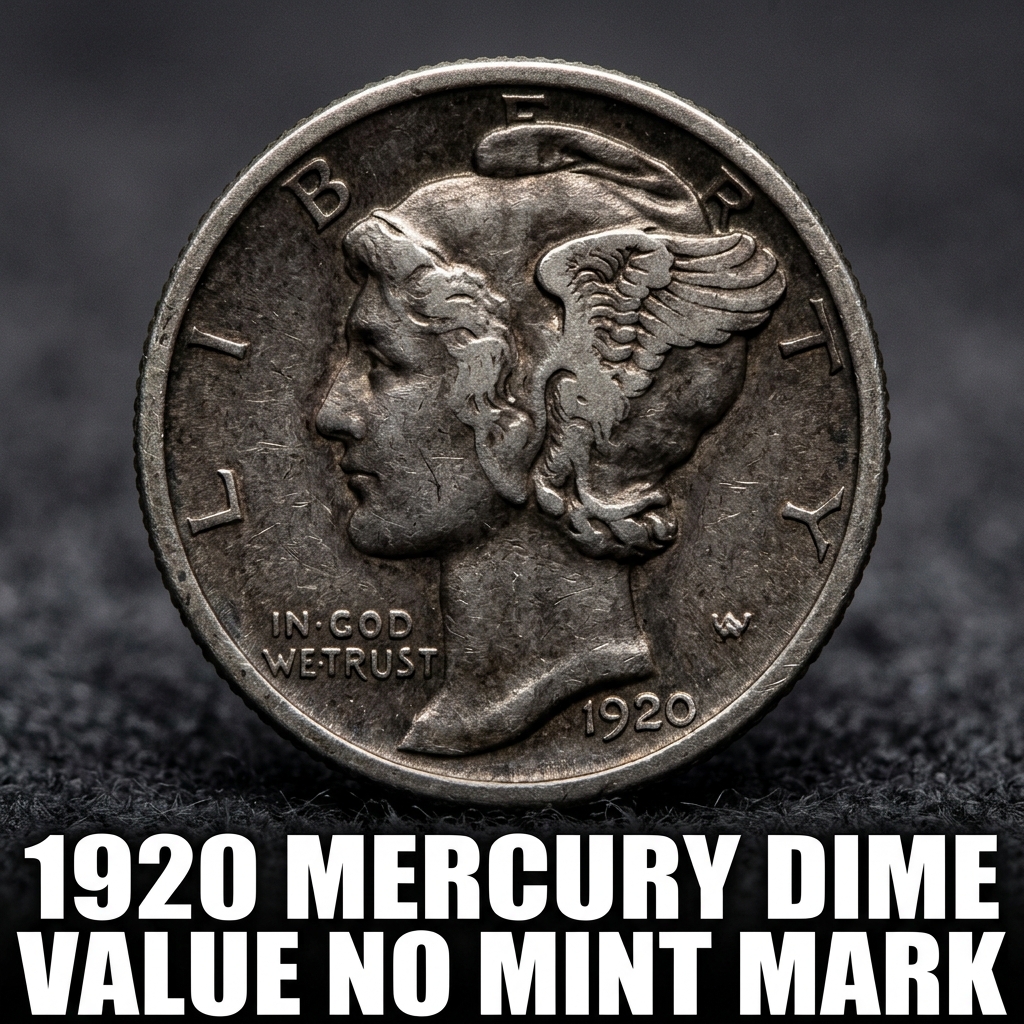
The 1920 Mercury Dime (Philadelphia Mint, no mint mark) is worth anywhere from $3 to $5 in well-worn condition, climbing to $25–$60 in fine to extremely fine grades, and potentially reaching $100 or more in mint state examples. If you’ve found one of these old dimes in a drawer or coin jar, you might be sitting on more than just ten cents.
What Is the 1920 Mercury Dime?
The 1920 Mercury Dime was struck at the Philadelphia Mint and carries no mint mark — that’s actually how you identify it as a Philly coin. Look at the reverse of the coin near the bottom; if there’s no letter, it came from Philadelphia.
This coin is part of the Winged Liberty Head dime series, often called the Mercury Dime because the portrait of Liberty wearing a winged cap resembles the Roman god Mercury. Designed by Adolph A. Weinman, these dimes are widely considered one of the most beautiful coin designs in American history.
Using a free coin identifier app is a great first step if you’re unsure what you’re holding. Many collectors and everyday people use apps to quickly identify coins before looking up their value.
The Philadelphia Mint produced over 59 million Mercury Dimes in 1920, making them relatively common compared to the lower-mintage branch mint versions from Denver and San Francisco. But common doesn’t mean worthless — condition is everything.
How Much Is the 1920 Mercury Dime Worth?
Value depends almost entirely on the coin’s condition, also called its “grade.” A coin that’s been heavily circulated for decades will show significant wear on Liberty’s hair and the fasces on the reverse. That’s normal, and these circulated examples are still collectible.
Here’s a general breakdown of what the 1920 no mint mark Mercury Dime is worth:
| Grade | Description | Estimated Value |
|---|---|---|
| Good (G-4) | Heavy wear, outlines visible | $3 – $5 |
| Fine (F-12) | Moderate wear, some detail | $8 – $15 |
| Extremely Fine (EF-40) | Light wear on high points | $25 – $40 |
| About Uncirculated (AU-55) | Slight wear, most luster intact | $45 – $70 |
| Mint State (MS-63+) | No wear, full luster | $100 – $300+ |
For the most up-to-date market pricing, you can check the 1920 Mercury Dime price data across mint state grades to see recent auction trends and certified coin values.
What Makes Some 1920 Mercury Dimes Worth More?
One of the most exciting features collectors look for on Mercury Dimes is Full Bands (FB) designation. This refers to the horizontal bands on the fasces (the bundled rods) on the reverse. When those bands are fully struck and separated — not mushed together from wear or weak strikes — the coin earns a “Full Bands” designation from grading services like PCGS or NGC.
A 1920 Mercury Dime in MS-65 might sell for around $150–$200. That same coin with Full Bands (MS-65 FB) could jump to $400 or more.
Strike quality, luster, and the absence of contact marks also play a major role in final value. Coins with sharp, bright, and clean surfaces will always command a premium.
CoinHix is a great tool for tracking certified coin values and comparing prices from recent sales. If you’re serious about knowing what your 1920 Mercury Dime is actually worth in today’s market, CoinHix gives you real-time data in a clean, easy-to-use format.
Silver Content and Melt Value
Don’t forget — the 1920 Mercury Dime is made of 90% silver. Even heavily worn examples have intrinsic metal value beyond their numismatic worth.
Each Mercury Dime contains approximately 0.07234 troy ounces of pure silver. When silver prices are around $25 per ounce, that gives the coin a base melt value of roughly $1.80. At $30 per ounce, it’s closer to $2.15.
So even if your coin is in rough shape, it’s never truly worthless. And in good condition or better, the collector value far outpaces the silver value alone. For a full breakdown of the 1920 Mercury Dime value across all grades and mint marks, it’s worth bookmarking that reference for future lookups.
How to Check Your 1920 Mercury Dime Value
If you want a quick way to identify and value your coin at home, CoinHix is one of the most reliable tools available today. Just enter the coin’s details and get instant pricing information backed by real market data.
You can also look up your coin through PCGS or NGC’s online price guides, or submit it for professional grading if you believe it’s in high mint state condition. A certified grade from a major grading service adds credibility and often increases the selling price significantly.
Always handle old coins by their edges, store them in proper coin flips or holders, and avoid cleaning them — cleaning a coin can dramatically reduce its collector value.
—
Frequently Asked Questions
Q: How do I know if my 1920 dime is from Philadelphia?
A: If there’s no mint mark on the reverse of the coin (near the bottom, between the “E” of “ONE” and the rim), it was minted in Philadelphia. Branch mints like Denver (D) and San Francisco (S) always added their letter.
Q: Is the 1920 Mercury Dime rare?
A: The Philadelphia version is not considered rare — over 59 million were minted. However, high-grade examples, especially those with Full Bands designation, are genuinely scarce and can be quite valuable to collectors.
Q: Should I clean my 1920 Mercury Dime before selling it?
A: No — never clean an old coin. Even gentle cleaning removes the natural patina and surface luster, which collectors and grading services look for. A cleaned coin is almost always worth less than an uncleaned one in the same physical condition.