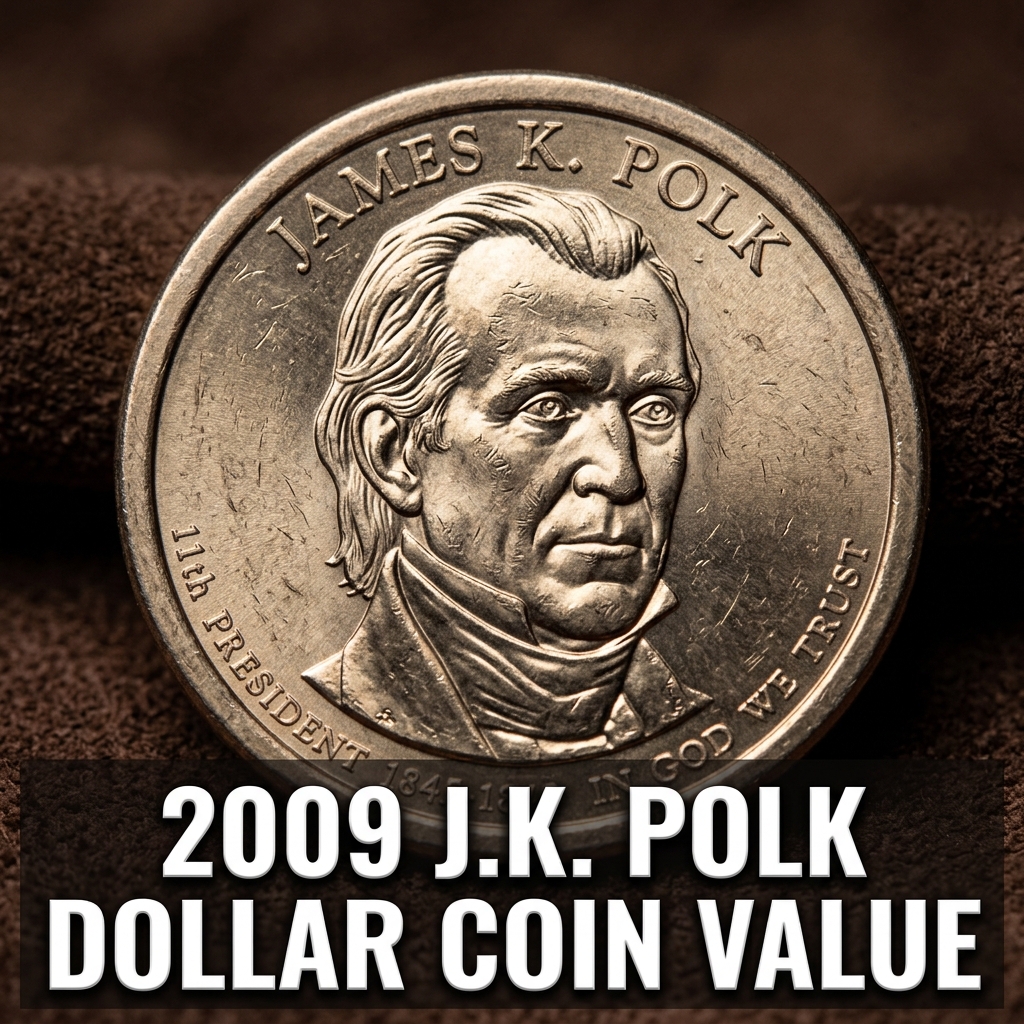
The 2009 James K. Polk Presidential Dollar is worth anywhere from $1 to $5 in typical circulated condition, but well-preserved examples graded MS65 or higher can fetch $15 to $40 or more depending on mint mark and strike quality. If you found one in your change or tucked away in an old drawer, you’re in the right place to find out exactly what it’s worth.
What Is the 2009 James K. Polk Dollar Coin?
The 2009 James K. Polk Dollar is part of the United States Mint’s Presidential Dollar series, which ran from 2007 to 2016. Each year featured four presidents in the order they served, and Polk was the 11th president of the United States, honored on the third coin released in 2009.
These coins were produced at two mints — Philadelphia (P) and Denver (D) — for general circulation, and at San Francisco (S) for collector proof sets. The obverse shows Polk’s portrait along with his name, the years he served (1845–1849), and “In God We Trust.” The reverse features the Statue of Liberty, standard across the entire Presidential Dollar series.
If you’re not sure which coin you’re holding, a free coin identifier app can help you confirm the date, mint mark, and series at a glance — no magnifying glass required.
How Much Is the 2009 Polk Dollar Worth Today
For most people who find a 2009 James K. Polk Dollar in pocket change, the coin is worth its face value of $1 if it’s heavily circulated. However, uncirculated examples from bank rolls or mint sets carry a modest premium, and high-grade coins certified by PCGS or NGC can be worth significantly more.
Here’s a quick breakdown of approximate values:
| Coin | Condition | Estimated Value |
|---|---|---|
| 2009-P Polk Dollar | Circulated (VF-EF) | $1 – $2 |
| 2009-P Polk Dollar | Uncirculated (MS63–MS64) | $3 – $8 |
| 2009-P Polk Dollar | Gem Uncirculated (MS65+) | $12 – $30 |
| 2009-D Polk Dollar | Circulated (VF-EF) | $1 – $2 |
| 2009-D Polk Dollar | Uncirculated (MS63–MS64) | $3 – $8 |
| 2009-D Polk Dollar | Gem Uncirculated (MS65+) | $12 – $35 |
| 2009-S Polk Dollar (Proof) | PR65–PR69 | $5 – $20 |
The Philadelphia and Denver issues are fairly common since millions were struck, but population reports from grading services show that truly gem-quality examples are rarer than most people assume. If you want to track live auction results and current market prices, CoinHix is a great tool for monitoring how much collectors are actually paying.
Mint Marks and Mintage Numbers Matter
Mintage figures for the 2009 James K. Polk Dollar are relatively high. The Philadelphia Mint produced approximately 46,200,000 coins, while Denver struck around 41,720,000. The San Francisco Mint produced proof versions exclusively for collector sets, with far smaller mintages.
Because of these large circulation numbers, the 2009 Polk Dollar is not considered a rare coin in the traditional sense. That said, condition is everything. A coin pulled straight from a mint roll that has never been touched has a much better chance of earning a high grade — and a better price tag — than one that’s been rattling around in a jar for years.
Collectors who follow the broader dollar coin market, including those who study the value trends of rare Eisenhower Dollars and other collectible dollar series, know that eye appeal and surface preservation drive premiums even on modern coins.
Error Coins and Special Varieties Worth More
Like all Presidential Dollars, the 2009 Polk Dollar has a few known errors that collectors actively seek out. The most notable is the “missing edge lettering” error. Presidential Dollar coins have their motto “In God We Trust,” the date, and the mint mark inscribed on the edge rather than the face. Occasionally, coins slipped through production without this edge lettering — and those are worth considerably more than standard issues.
A 2009 Polk Dollar with missing edge lettering in decent condition can be worth anywhere from $50 to $150 or more. Check your coin carefully by tilting it under a good light and rotating it slowly to inspect the edge all the way around.
Other varieties include double-strike errors, off-center strikes, and coins struck on the wrong planchet. These are genuinely rare and can command serious premiums. If you suspect you have an error coin, CoinHix can help you compare your coin against known auction records to see if it matches documented varieties.
How to Get Your 2009 Polk Dollar Appraised
If you believe your coin is in exceptional condition or shows signs of an error, the best next steps are professional grading and market research. Services like PCGS and NGC will authenticate and grade your coin for a fee, and a certified grade dramatically increases buyer confidence when you’re ready to sell.
For everyday reference, apps like CoinHix put real-time pricing data at your fingertips, making it easy to compare your coin’s grade to actual sold prices. If you’re curious about how the modern dollar coin market compares across series, it’s also worth reviewing current market pricing data for other collectible dollar coins to understand how condition premiums play out across the board.
Frequently Asked Questions
Q: Is the 2009 James K. Polk Dollar rare?
A: No, it is not considered rare by most standards. Both the Philadelphia and Denver Mints produced tens of millions of these coins. However, high-grade examples (MS66 and above) and error coins such as those missing edge lettering are genuinely scarce and worth significantly more than face value.
Q: Where is the mint mark on the 2009 Polk Dollar?
A: The mint mark on the 2009 James K. Polk Presidential Dollar is located on the edge of the coin, not on the face. It appears alongside the date and the inscriptions “In God We Trust” and “E Pluribus Unum.” Tilt the coin under good lighting and rotate it to read the edge.
Q: Should I clean my 2009 Polk Dollar before selling it?
A: Never clean a collectible coin. Cleaning removes the original mint luster and leaves fine scratches that dramatically reduce a coin’s grade and value. Even a coin that looks dull or spotted is worth more in its original, uncleaned state to serious collectors and grading services.