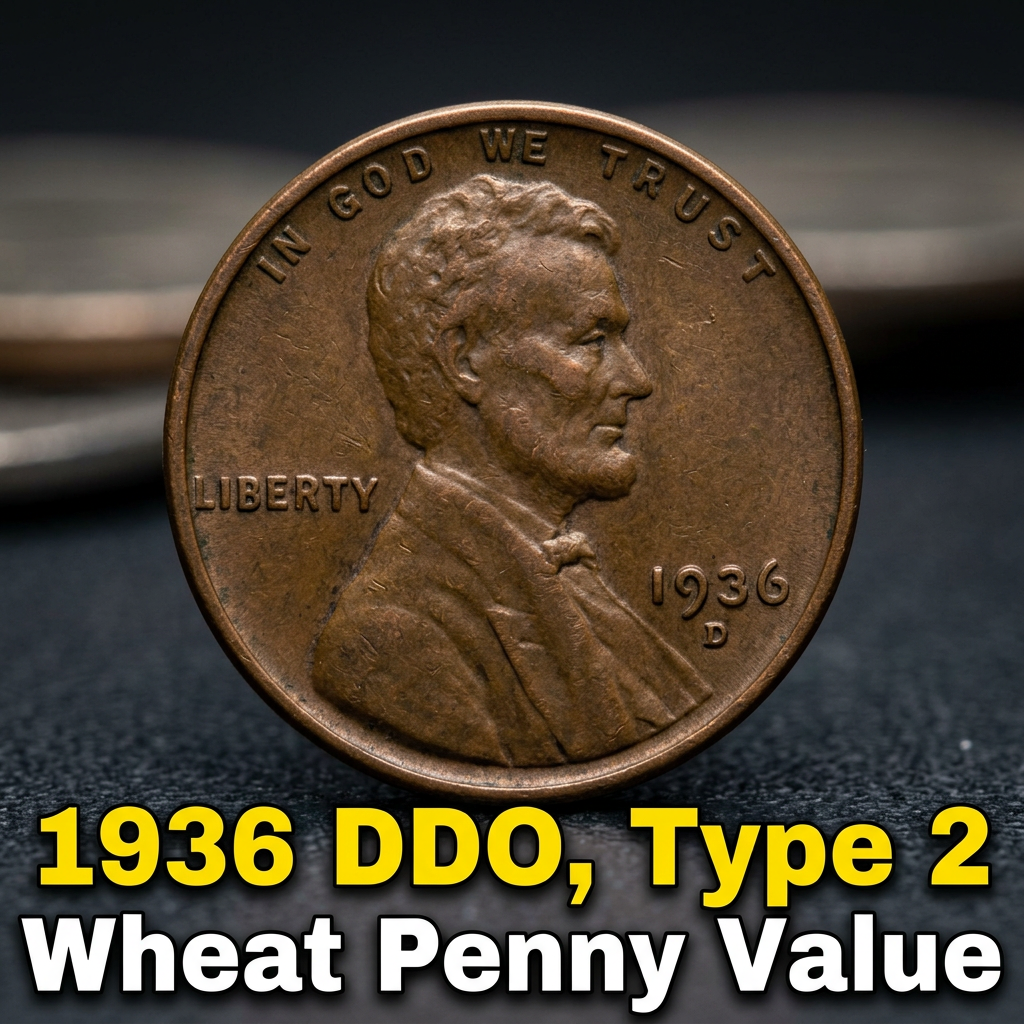
The 1936 DDO Type 2 Wheat Penny is worth anywhere from $15 in heavily worn condition to well over $500 in high-grade mint state — and the best examples have sold for thousands at auction. If you found one of these in an old jar, a coin album, or your grandparents’ drawer, you might be sitting on something genuinely valuable.
What Makes the 1936 DDO Type 2 Different from a Regular Wheat Penny?
The 1936 Lincoln Wheat Penny was produced in massive quantities — over 309 million coins struck at the Philadelphia Mint alone. But the DDO variety, which stands for Doubled Die Obverse, is a completely different story.
A doubled die happens when the coin’s die receives two misaligned impressions during the hubbing process. On the Type 2 version, you’ll notice clear doubling on the date, the word LIBERTY, and Lincoln’s eye. This isn’t something that happens from wear or damage — it’s a true mint error baked right into the die itself.
That’s exactly what makes it so collectible. Everyday people using a free coin identifier app have discovered these hiding in old penny jars. The doubling is visible to the naked eye with a little practice, and once you know what to look for, you’ll never overlook one again.
How to Identify the 1936 DDO Type 2 Wheat Penny
Grab a 10x magnifying loupe — that’s really all you need to start. Tilt the coin under good lighting and look closely at the date “1936.” On a genuine DDO Type 2, the numbers will appear slightly separated or shadow-like, as though they were printed twice.
Next, check LIBERTY along the left rim. The letters should show a distinct secondary image pushed slightly north or south of the primary. Lincoln’s eye and brow area are also key spots — experienced collectors often look here first because the doubling tends to be strong and undeniable on high-quality specimens.
Don’t confuse machine doubling with a true doubled die. Machine doubling creates a flat, shelf-like appearance, while a genuine DDO shows raised, rounded secondary elements. CoinHix has a great visual reference guide built into the app that helps you compare your coin to certified examples side by side — a huge help if you’re new to variety collecting.
1936 DDO Type 2 Wheat Penny Value by Grade
Condition is everything in coin collecting. A heavily circulated coin with smooth, worn details is worth far less than a crisp, lightly handled example. Here’s a general value breakdown:
| Grade | Description | Estimated Value |
|---|---|---|
| Good (G-4) | Heavy wear, flat details | $15 – $30 |
| Fine (F-12) | Moderate wear, doubling visible | $40 – $90 |
| Extremely Fine (EF-40) | Light wear, strong doubling | $120 – $250 |
| Mint State (MS-63) | Uncirculated, some marks | $350 – $600 |
| Mint State (MS-65+) | Gem uncirculated, full luster | $800 – $2,000+ |
For the most up-to-date auction results and certified sale prices, you can check the 1936 Wheat Penny MS-RD price data on CoinHix, which tracks real transactions across major platforms.
Should You Get It Graded?
If your coin looks uncirculated or shows strong doubling in EF condition, professional grading is worth serious consideration. PCGS and NGC are the two most trusted grading services, and a certified grade can dramatically increase both buyer confidence and resale value.
Grading fees typically run $30–$50 per coin for standard submissions, which makes sense if you think your coin could fetch $200 or more. For a detailed breakdown of what your 1936 penny might be worth before you spend on grading, the 1936 penny value guide at Coin Value App gives you solid context on what certified and raw examples are actually selling for.
CoinHix also lets you log your coin collection and track how values shift over time, which is a smart move if you plan to sell later.
Where to Sell a 1936 DDO Type 2 Wheat Penny
You have several solid options. eBay remains the most popular platform for individual coin sales and reaches millions of buyers worldwide. For higher-value examples, Heritage Auctions and Stack’s Bowers are the go-to choices among serious collectors.
Local coin shows are great too, especially if you want a quick, face-to-face transaction without shipping concerns. Coin dealers at shows will often give you a fair offer on the spot for a variety coin with visible doubling.
Whatever you decide, do your research first. CoinHix makes it easy to compare recent sold prices across multiple platforms so you know your coin’s market value before you name a price or accept an offer.
FAQ
Q: How do I know if my 1936 penny is the DDO Type 2 variety?
A: Look for clear doubling on the date, LIBERTY, and Lincoln’s eye under a 10x loupe. The doubling on Type 2 is visible and raised — not flat or shelf-like. Comparing your coin to certified examples on a grading app can help confirm what you’re seeing.
Q: Is the 1936 DDO Type 2 rare?
A: Yes, relative to the standard 1936 Lincoln Wheat Penny. The DDO Type 2 is a recognized variety with confirmed collector demand, and high-grade examples in particular are quite scarce. It’s not a coin you stumble across every day, which is exactly why collectors pay a premium for it.
Q: Can I clean my 1936 DDO Wheat Penny to make it look better before selling?
A: Never clean a collectible coin. Even gentle cleaning with soap or metal polish removes the natural patina and microscopic surface details that graders look for. A cleaned coin will almost always receive a lower grade — or a “details” designation — which can cut the value in half or more. Leave it exactly as you found it.