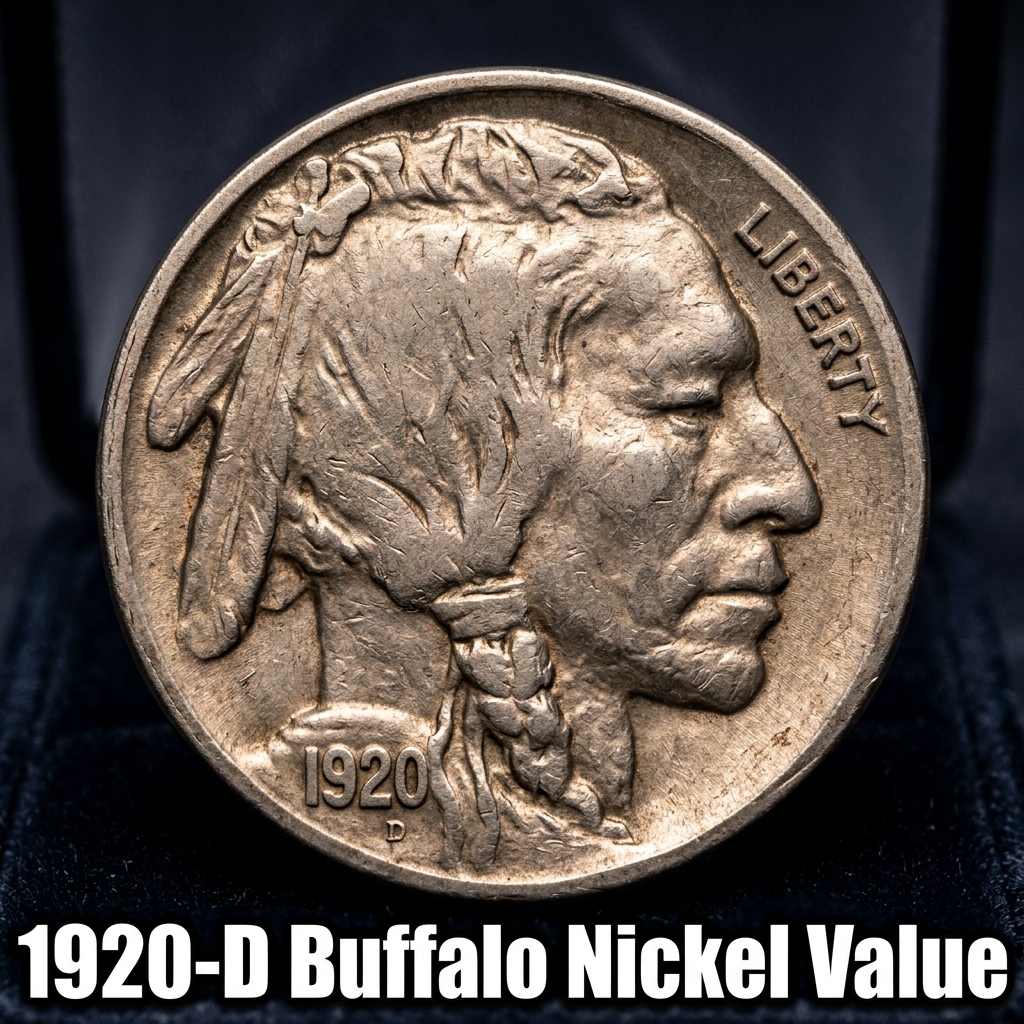
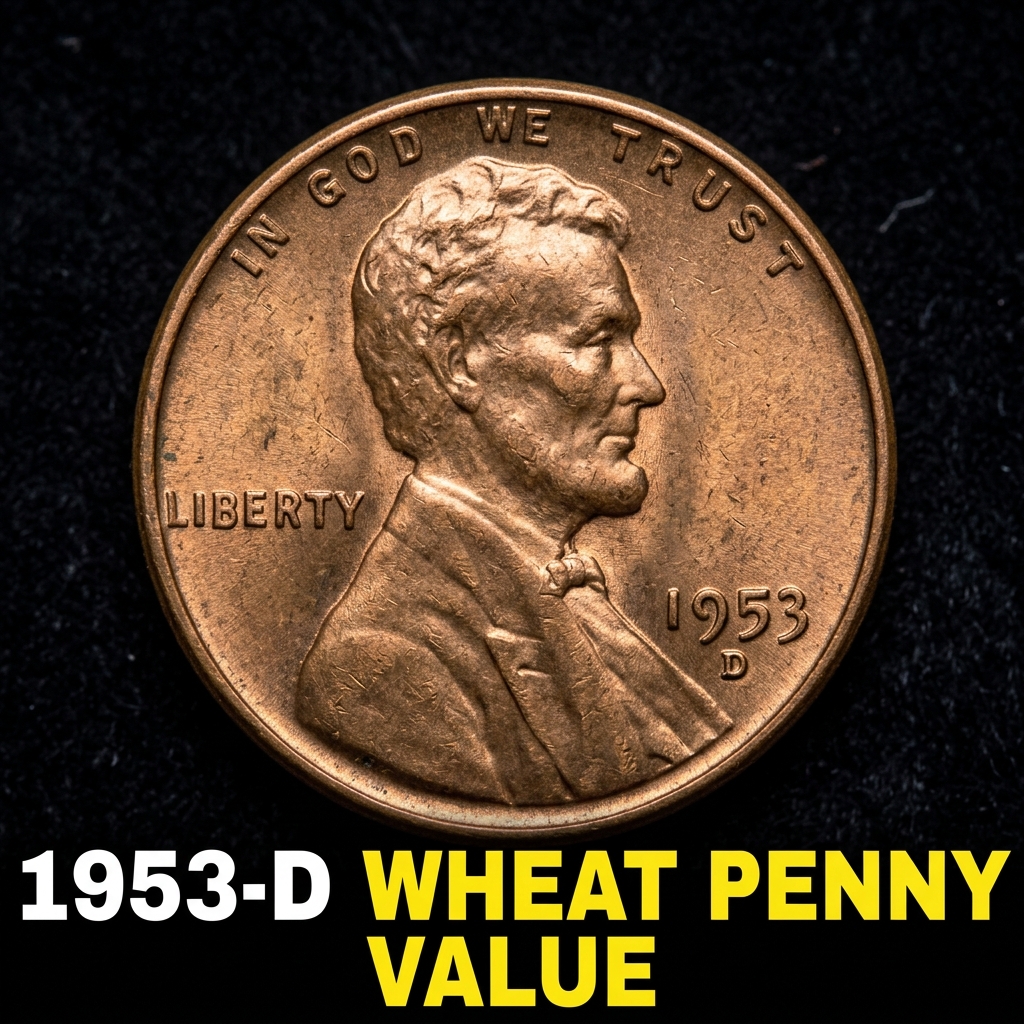
The 1953-D Wheat Penny is worth anywhere from $0.10 in heavily worn condition to over $10 in well-preserved circulated grades — and in top mint state examples, it can fetch $50 or more. If you found one of these small copper coins tucked away in a jar or an old wallet, you’re in the right place to find out exactly what it’s worth.
What Is the 1953-D Wheat Penny?
The 1953-D Wheat Penny was struck at the Denver Mint, indicated by the small “D” mintmark you’ll find just below the date on the obverse (front) of the coin. It features Abraham Lincoln on the front and two wheat stalks framing the words “ONE CENT” on the reverse — a classic design that was used from 1909 to 1958.
Denver produced a massive 700,515,000 of these coins in 1953, making it one of the highest-mintage Lincoln Wheat Pennies ever made. Because so many were produced, they’re not rare in circulated condition. But condition is everything in coin collecting — and a well-preserved example can still turn heads at a coin show.
If you’re not sure how to read mintmarks or grade your coins, a free coin identifier app can help you get started quickly, right from your phone.
1953-D Wheat Penny Value by Grade
The value of a 1953-D Wheat Penny depends heavily on its condition, or “grade.” Here’s a general breakdown of what you can expect:
| Grade / Condition | Description | Estimated Value |
|---|---|---|
| Good (G-4) | Heavy wear, flat details | $0.10 – $0.25 |
| Fine (F-12) | Moderate wear, readable details | $0.25 – $0.50 |
| Extremely Fine (EF-40) | Light wear on high points | $1 – $3 |
| About Uncirculated (AU-55) | Slight wear, most luster remains | $3 – $7 |
| MS-63 Red (Mint State) | Uncirculated, original red color | $10 – $20 |
| MS-65 Red (Gem) | Gem uncirculated, full red luster | $35 – $75+ |
For more detailed 1953-D Wheat Penny price data across mint state grades, you can check up-to-date auction records and registry population reports to see exactly where your coin fits in the market.
What Makes Some 1953-D Pennies Worth More?
Color is the biggest value driver for uncirculated Wheat Pennies. Coins graded “Red” (RD) retain their original bright copper color and command the highest prices. “Red-Brown” (RB) coins have partial original color and fall in the middle. “Brown” (BN) coins have fully toned and are worth the least among uncirculated examples.
Strike quality also matters. A coin with sharp, well-defined wheat stalks, a crisp Lincoln portrait, and no strike weakness will always be more desirable to collectors.
Error coins are another wild card. While major errors on 1953-D pennies are uncommon, doubled die varieties or off-center strikes do occasionally surface. If something looks “off” about your coin, don’t dismiss it — it could be worth significantly more than face value.
CoinHix is a great tool to scan and identify potential errors on your coins. The app can help you quickly compare your coin’s features against known varieties in its database.
How to Evaluate Your 1953-D Wheat Penny at Home
Start by examining your coin under a good light source — natural daylight works great. Look at the high points of Lincoln’s portrait: his cheekbone, jaw, and hair above the ear. Heavy wear on these areas usually means a lower grade coin.
Next, check the reverse. The wheat stalks should show clear individual lines if the coin is in decent shape. A magnifying glass or loupe (10x is standard) will help you spot fine details.
Don’t clean your coin. This is one of the most common mistakes people make. Cleaning removes the natural patina and drastically reduces collector value — even on a common coin like the 1953-D penny. Leave it as-is and let a professional or app evaluate it naturally.
You can also check comprehensive 1953 penny value information including all mint marks to compare how your D-mint example stacks up against Philadelphia and San Francisco coins from the same year.
Should You Hold On to Your 1953-D Wheat Penny?
If your coin is heavily worn, it’s worth a few cents to maybe a quarter — a fun piece of American history, but not a retirement fund. However, if your coin still has bright copper color, strong details, and no damage, it’s worth getting a proper assessment.
Professional grading services like PCGS or NGC can certify high-quality examples, which can significantly boost resale value. For everyday collectors just getting started, CoinHix offers an accessible way to research values, track your collection, and get a ballpark estimate without spending money on professional grading right away.
The 1953-D Wheat Penny may be common, but every coin tells a story — and the right example can absolutely be worth more than you’d expect.
—
FAQ
Q: How do I know if my penny is a 1953-D or a regular 1953?
A: Look just below the date on the front of the coin. If you see a small “D,” it was made at the Denver Mint. No mintmark means Philadelphia, and an “S” means San Francisco.
Q: Is a 1953-D Wheat Penny made of silver?
A: No. The 1953-D Wheat Penny is made of 95% copper and 5% tin and zinc. It contains no silver. Its copper content gives it that warm reddish-brown color.
Q: Where is the best place to sell a 1953-D Wheat Penny?
A: For common circulated examples, eBay or a local coin shop works fine. For higher-grade mint state coins, consider getting it certified first and listing through a reputable auction house or using CoinHix to connect with collectors actively looking for quality Wheat Pennies.