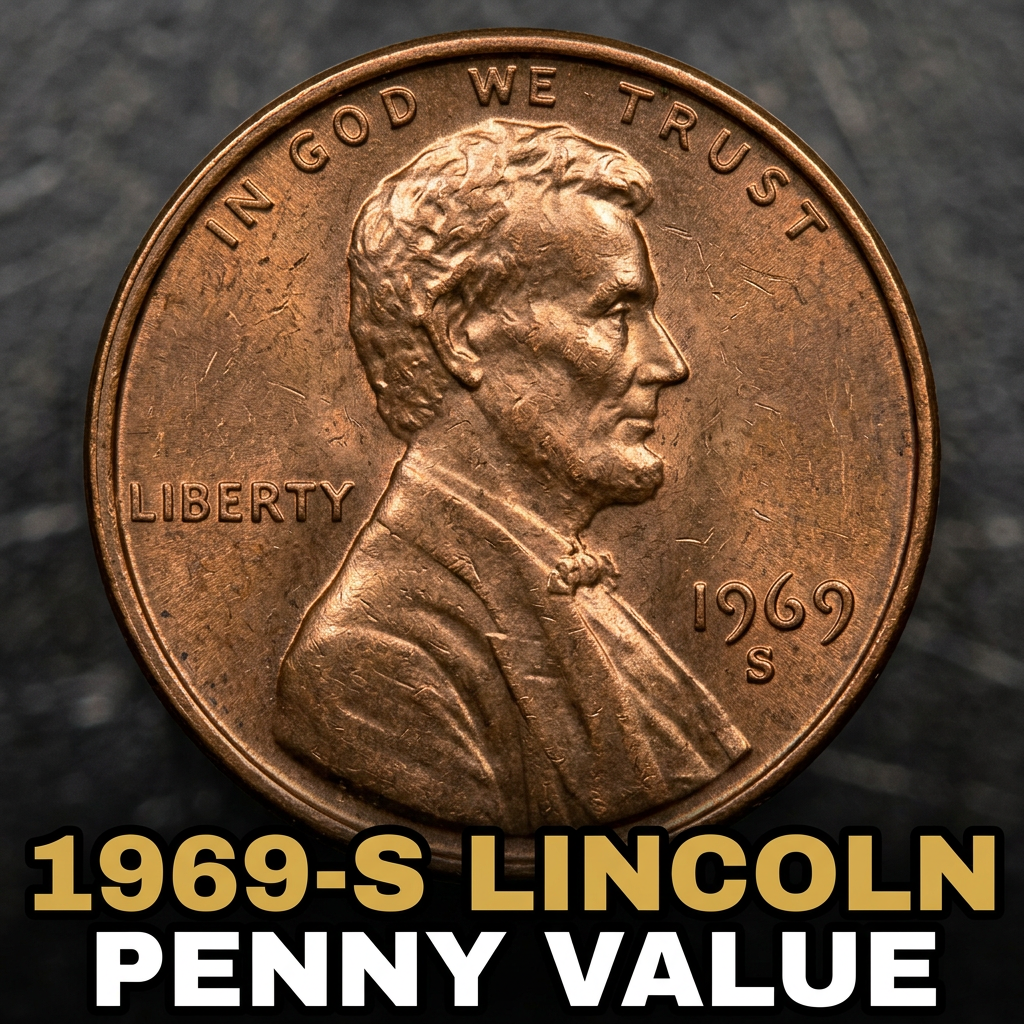
The 1969-S Lincoln Penny is worth anywhere from a few cents in heavily worn condition to thousands of dollars if you happen to have the rare doubled die variety. Most circulated examples are common coins, but knowing exactly which version you have can make a huge difference in its value.
What Makes the 1969-S Penny Special
The 1969-S Lincoln cent was struck at the San Francisco Mint, which is why it carries the small “S” mintmark just below the date on the obverse. That year, the San Francisco facility produced over 544 million pennies for circulation, so most examples are not considered rare.
However, the 1969-S is famous in the coin collecting world for one very specific reason — the doubled die obverse variety. This error coin is one of the most dramatic and valuable doubled dies in the entire Lincoln cent series, and collectors have been chasing it for decades.
If you’ve found a 1969-S penny and you’re wondering whether it’s worth serious money, the first thing you need to do is look closely at the date, lettering, and the word “LIBERTY” on the front of the coin. On the doubled die variety, all of those elements appear noticeably doubled to the naked eye — no magnifying glass needed.
1969-S Lincoln Penny Value by Condition
For the standard 1969-S Lincoln penny (no doubling), value is modest. A circulated coin in average condition is worth face value to maybe a few cents. But as the grade improves, so does the price.
Here’s a general value table for the regular 1969-S Lincoln cent:
| Grade / Condition | Estimated Value |
|---|---|
| Good (G-4) | $0.01 – $0.05 |
| Fine (F-12) | $0.05 – $0.15 |
| Extremely Fine (EF-40) | $0.20 – $0.50 |
| Mint State (MS-63) | $1 – $5 |
| Mint State (MS-65 Red) | $10 – $30 |
| 1969-S Doubled Die (Any Grade) | $10,000 – $100,000+ |
As you can see, the difference between a regular coin and the doubled die variety is staggering. For detailed pricing data on certified examples, you can check out auction records and registry prices for the 1969-S Doubled Die Lincoln Penny in MS Red to see what top-grade specimens have actually sold for.
How to Spot the 1969-S Doubled Die Error
The 1969-S Doubled Die Obverse (DDO) is listed as one of the Top 100 Lincoln cent varieties, and for good reason. The doubling is bold and dramatic, showing clear separation on “IN GOD WE TRUST,” “LIBERTY,” and the date “1969.”
This is not the subtle machine doubling you sometimes see on common coins. True doubled die errors are created during the hubbing process at the mint, where the die receives two impressions at slightly different angles. The result is a coin that looks like it was stamped twice.
To check your coin, hold it under good lighting and look at the lettering without any magnification. If the text appears thick, bold, and clearly shifted with visible separation between the doubled elements, you might have something special on your hands.
A free coin identifier app can help you get a quick visual match to see if your penny’s features align with the known doubled die variety. Apps like CoinHix use image recognition to compare your coin against a massive database of known varieties and error coins, which is a great starting point before spending money on professional grading.
Should You Get It Graded?
If you genuinely believe you have a 1969-S doubled die penny, professional grading is absolutely worth the investment. Third-party grading services like PCGS or NGC authenticate and grade coins in tamper-evident holders, which is essential for selling a coin worth thousands of dollars.
Counterfeits of this coin do exist. In fact, the U.S. Secret Service has seized fake 1969-S doubled die pennies in the past. Buyers in the collector market will only pay premium prices for coins that have been authenticated by a trusted grading service.
Before you send anything in, do your homework. You can read more about what your 1969 penny is worth based on mintmark, condition, and variety to better understand whether the investment in grading makes sense for your specific coin.
CoinHix is also a handy tool at this stage — it can help you track estimated values and compare your coin’s characteristics to verified examples in its database before you commit to any submission fees.
Other 1969 Lincoln Penny Varieties Worth Knowing
Beyond the famous 1969-S doubled die, there are a few other 1969 cents worth mentioning.
The 1969 Philadelphia cent (no mintmark) had a mintage of over 1.1 billion — extremely common. The 1969-D from Denver is also widely available with over 4 billion minted, making it one of the most common pennies of the era.
Proof versions of the 1969-S were also struck for collectors and can carry small premiums in perfect condition. A 1969-S Proof penny graded PR-65 Red Cameo might fetch $10 to $25, while a PR-69 Deep Cameo can reach over $100.
Using an app like CoinHix lets you quickly sort through these varieties and find current market comparisons without digging through price guides manually.
FAQ
Q: How do I know if my 1969-S penny is the valuable doubled die?
A: Look at the lettering and date on the front of the coin under good lighting. On the genuine doubled die, you can clearly see two distinct impressions on “LIBERTY,” “IN GOD WE TRUST,” and the date — with visible separation between them. If the doubling is barely noticeable, it’s likely just machine doubling and not a true doubled die.
Q: How much is a regular 1969-S penny worth?
A: A typical circulated 1969-S Lincoln penny is worth very little — usually just face value to around 10 or 15 cents. In high mint state grades with full red color (MS-65 RD or better), it might bring $10 to $30. Only the doubled die variety carries truly significant value.
Q: Is it worth getting my 1969-S penny professionally graded?
A: Only if you have strong reason to believe it’s the doubled die variety. Professional grading costs money, and for a common circulated 1969-S penny, the fees far outweigh any potential return. But if your coin shows clear, dramatic doubling on the obverse lettering, authentication by PCGS or NGC is highly recommended before attempting to sell.