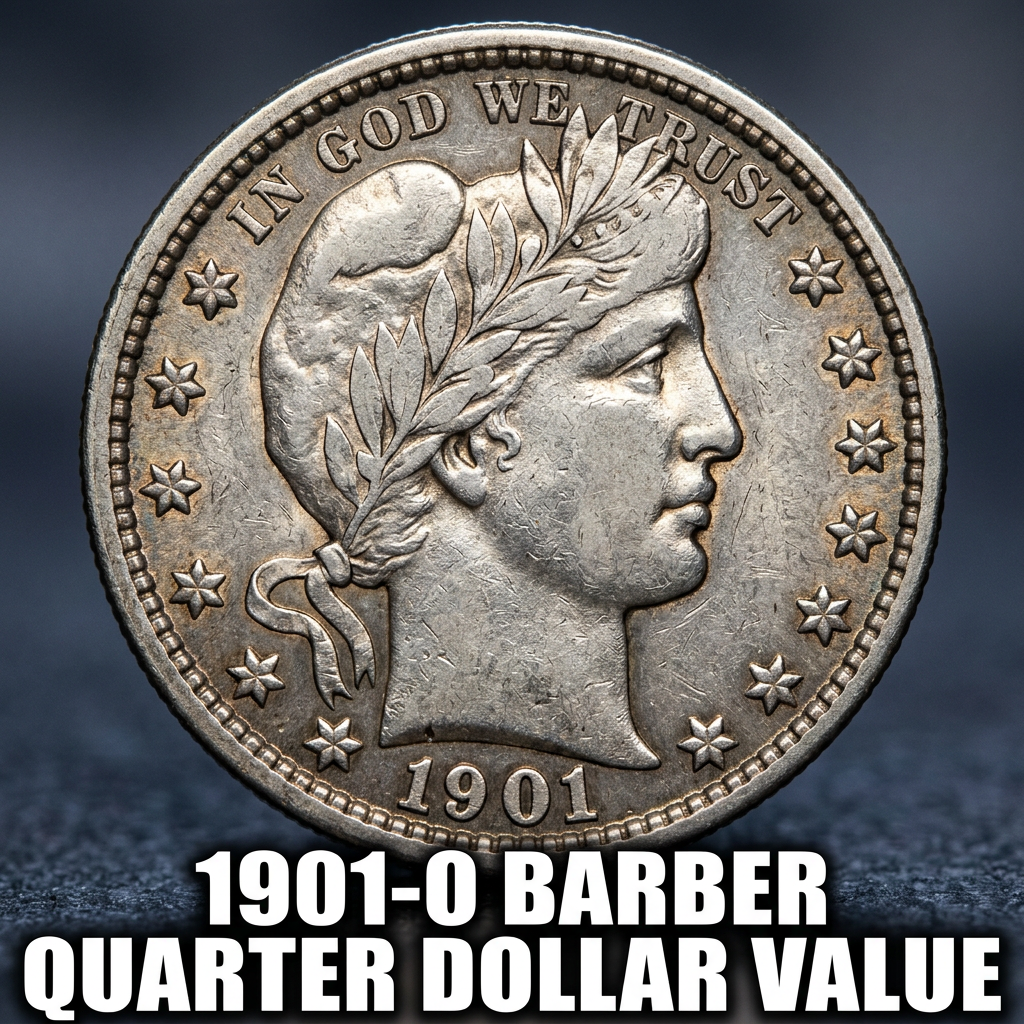
If you’ve stumbled across a 1901-O Barber Quarter Dollar, you’re holding a coin that’s worth anywhere from $10 in heavily worn condition to well over $5,000 or more in pristine mint state. Most circulated examples fall somewhere in between, and the exact value depends heavily on condition, mint mark, and eye appeal. Keep reading — this guide breaks it all down in plain English.
What Makes the 1901-O Barber Quarter Special
The 1901-O Barber Quarter was struck at the New Orleans Mint, indicated by the small “O” mint mark on the reverse side just below the eagle. Charles E. Barber designed this classic series, which ran from 1892 to 1916. These coins were made from 90% silver, giving them intrinsic metal value on top of their collectible appeal.
What makes the 1901-O stand out is its relatively low mintage compared to some other dates in the Barber Quarter series. The New Orleans Mint produced around 1.6 million of these coins — not exactly rare, but not a coin you’ll find in everyone’s change jar either. Surviving examples in decent condition are harder to come by than you might expect, since most were heavily circulated and worn down over decades of use.
If you’re not sure what you’ve got, try using a free coin identifier app to quickly confirm the date, mint mark, and series before you dig deeper into valuation.
How Much Is a 1901-O Barber Quarter Worth by Grade
Coin value is almost entirely driven by condition, and that’s especially true with Barber Quarters. Collectors use a grading scale from 1 (barely identifiable) to 70 (perfect). Here’s a straightforward look at what the 1901-O Barber Quarter is worth at different grade levels:
| Grade | Condition Description | Estimated Value |
|---|---|---|
| AG-3 / G-4 | Heavily worn, design barely visible | $10 – $20 |
| VG-8 | Well worn, major details visible | $30 – $50 |
| F-12 | Moderate wear, all lettering clear | $60 – $90 |
| VF-20 / VF-30 | Light to moderate wear, good detail | $120 – $200 |
| EF-40 / EF-45 | Light wear on high points only | $300 – $500 |
| AU-50 / AU-58 | Slight wear, nearly uncirculated | $600 – $1,200 |
| MS-60 to MS-63 | Uncirculated with some blemishes | $1,500 – $3,500 |
| MS-64 and above | Gem uncirculated, exceptional quality | $5,000+ |
These figures reflect recent market trends, but coin values shift over time. For the most current pricing on related silver coins, you can check out detailed silver dollar value information for the 1901 series to understand how silver content and collector demand interact.
How to Check the Condition of Your 1901-O Barber Quarter
Grading a coin yourself doesn’t require a magnifying glass and a decade of experience — though both help. Start with the basics. Look at Lady Liberty’s head on the obverse. In lower grades, the hair detail above the ear disappears completely, and the word “LIBERTY” on her headband fades away. A coin that still shows a full “LIBERTY” is generally considered Fine condition or better.
On the reverse, examine the eagle’s breast feathers and the shield detail. Significant wear flattens these features noticeably.
Good lighting and a loupe (small magnifier) are your best friends here. Hold the coin at an angle under a single light source and rotate it slowly — this technique, called “coin roll,” reveals surface marks, luster, and wear patterns that flat lighting hides.
If you want a fast second opinion, CoinHix is a popular app that lets you photograph your coin and get an instant AI-powered grade estimate. It’s a handy starting point before you invest in a professional appraisal.
Silver Melt Value and Why It Matters
Even a heavily worn 1901-O Barber Quarter isn’t worthless. Because these coins are 90% silver, they carry what collectors call “melt value” — the value of the silver metal itself regardless of collectible appeal.
Each Barber Quarter contains approximately 0.1808 troy ounces of pure silver. With silver prices hovering around $27–$30 per ounce in recent years, that puts the base melt value of any 1901-O Barber Quarter at roughly $4.90 to $5.50 at minimum. So even the most beat-up example has some real-money value.
This silver floor is actually one reason collectors love the Barber series — you’re never buying something worthless, no matter how worn the coin is. CoinHix can help you calculate real-time melt value based on current silver spot prices, which is a useful tool to have in your pocket.
Tips for Selling Your 1901-O Barber Quarter
Ready to cash in? Here are a few practical tips. First, don’t clean the coin. Cleaning destroys surface luster and can cut the value in half or more. Collectors strongly prefer original, natural surfaces — even with some dirt and toning.
Second, consider getting the coin professionally graded by PCGS or NGC if you believe it’s in EF-40 condition or better. A certified grade dramatically increases buyer confidence and can meaningfully boost your selling price.
Third, compare prices across multiple platforms — eBay sold listings, Heritage Auctions, and local coin shows all give you a real-world sense of what buyers are actually paying. And before you list anywhere, run the coin through CoinHix for a quick valuation benchmark so you’re not leaving money on the table.
FAQ About the 1901-O Barber Quarter
Q: How do I know if my quarter is the 1901-O and not another year?
A: Flip the coin to the reverse and look just below the eagle’s tail feathers. You’ll see a small letter — “O” for New Orleans. Then check the obverse (front) for the date 1901. Both elements together confirm you have the 1901-O Barber Quarter.
Q: Is the 1901-O Barber Quarter rare?
A: It’s not considered one of the key dates in the Barber Quarter series, but it’s far from common. With a mintage of about 1.6 million, and most coins surviving in heavily worn grades, finding a nice mid-grade or better example takes some effort. In high mint state grades, it becomes genuinely scarce and commands strong premiums.
Q: Should I get my 1901-O Barber Quarter graded?
A: If your coin appears to be in VF-20 or better condition, professional grading through PCGS or NGC is worth considering. The certification fee typically pays for itself many times over on higher-grade examples. For coins in Good or Very Good condition, the cost of grading may outweigh the added value — in that case, selling raw (ungraded) to a reputable dealer is a perfectly reasonable option.