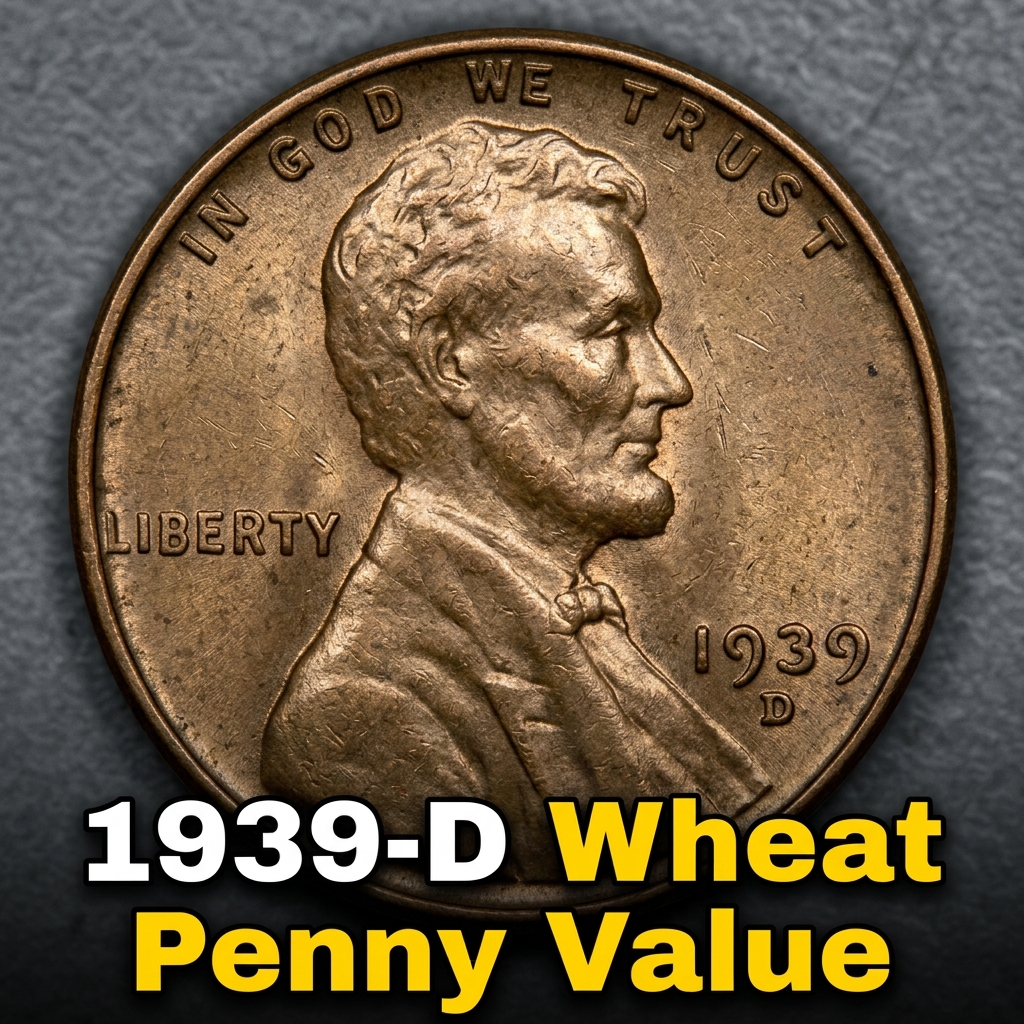
The 1939-D Wheat Penny is worth anywhere from $0.15 in heavily worn condition to over $50 or more in high-grade mint state. If you found one of these old Lincoln cents in a jar, a drawer, or an inherited coin collection, you’re in the right place to find out exactly what it’s worth.
What Makes the 1939-D Wheat Penny Special
The 1939-D Wheat Penny was struck at the Denver Mint, which is why you’ll see a small “D” mintmark just below the date on the obverse side of the coin. Denver produced over 15 million of these pennies in 1939, making them relatively available but still collectible today.
These coins feature Victor David Brenner’s classic Lincoln portrait on the front and two stalks of wheat framing the words “ONE CENT” on the reverse — which is why collectors lovingly call them “Wheat Pennies.” The design ran from 1909 all the way to 1958, and the 1939-D sits right in the middle of that beloved series.
If you’re just getting started identifying old coins, using a free coin identifier app can help you confirm what you have before diving into the value details.
1939-D Wheat Penny Value by Grade
The condition of your coin — what collectors call its “grade” — is the single biggest factor in determining its value. A coin that looks shiny and sharp is worth far more than one that’s been circulating in pockets for decades.
Here’s a general breakdown of what you can expect your 1939-D Wheat Penny to be worth based on condition:
| Grade / Condition | Description | Estimated Value |
|---|---|---|
| Good (G-4) | Heavy wear, design visible | $0.15 – $0.35 |
| Fine (F-12) | Moderate wear, clear details | $0.50 – $1.00 |
| Extremely Fine (EF-40) | Light wear on high points | $2.00 – $5.00 |
| About Uncirculated (AU-55) | Slight wear, most luster present | $6.00 – $12.00 |
| Mint State Red (MS-65+) | No wear, original red luster | $25.00 – $60.00+ |
For a deeper look at 1939-D Wheat Penny mint state price data and auction records, it’s worth checking certified sale results to see what top-grade examples have actually sold for.
How to Tell What Grade Your Coin Is
You don’t need to be a professional numismatist to get a rough idea of your coin’s grade. Start by looking at Lincoln’s cheekbone and the wheat stalks on the reverse — these are the highest points on the coin and the first places to show wear.
If those areas look flat or smooth, your coin has seen a lot of circulation and is likely in Good or Fine condition. If you can still see sharp, distinct lines in Lincoln’s hair and the wheat grains are crisp and well-defined, you may have a coin in Extremely Fine or better grade.
Coins that still show their original reddish-copper color (called “Red” or RD coins by collectors) are the most valuable. A brown or spotted coin, even in high grade, will be worth less than a fully red example.
CoinHix is a great tool for checking real market prices and recent auction data right from your phone — it takes the guesswork out of figuring out what buyers are actually paying.
Errors and Varieties That Can Boost the 1939-D Wheat Penny Value
Like many coins from this era, the 1939-D Wheat Penny has a few known varieties and errors that collectors actively search for. A doubled die obverse, repunched mintmark (RPM), or off-center strike can all add significant value above the normal price guide.
RPM varieties — where the “D” mintmark was punched more than once and you can see a ghost or shadow of a second “D” — are especially popular among Wheat Penny collectors. These can sell for two to five times more than a normal example in the same grade.
If you think your coin might have an error, look at it under a loupe or strong magnifying glass in good lighting. You can also use CoinHix to browse known varieties and compare your coin to documented examples, which makes the identification process much easier.
For a full overview of 1939 Wheat Penny values across all mintmarks including Denver, Philadelphia, and San Francisco, that breakdown is a helpful reference if you have more than one 1939 penny to evaluate.
Is Your 1939-D Wheat Penny Worth Selling
Most circulated 1939-D Wheat Pennies you find in everyday rolls or old jars are worth a few cents to a dollar or two. That’s not nothing — it’s more than face value — but it’s probably not enough to retire on.
However, if you have a coin that’s clearly uncirculated, still red, and free of major marks or scratches, it could be worth having it professionally graded by PCGS or NGC. A certified MS-65 RD example can easily sell for $30 to $60 or more, and top-pop coins at MS-67 RD have sold at auction for well over $100.
The key is knowing what you have before you decide to sell, trade, or just keep it as a cool piece of American history. Using CoinHix to track current market prices gives you the confidence to make that decision wisely.
FAQ
Q: How many 1939-D Wheat Pennies were made?
A: The Denver Mint struck approximately 15,160,000 Lincoln Wheat Pennies in 1939. That’s a decent mintage, which is why most circulated examples are modestly priced — but high-grade survivors are still genuinely scarce and desirable.
Q: What does the “D” mintmark on a 1939 penny mean?
A: The “D” stands for Denver, one of three mints that produced Lincoln cents in 1939. You’ll find the mintmark on the obverse (front) of the coin, just below the “1939” date. Coins without a mintmark were made in Philadelphia, and “S” coins came from San Francisco.
Q: Is a 1939-D Wheat Penny made of silver?
A: No, the 1939-D Wheat Penny is made of 95% copper and 5% tin and zinc — not silver. The U.S. Mint didn’t switch Lincoln cents to steel until 1943 due to wartime copper shortages. The silver-like appearance you might notice on some old pennies is usually just toning or cleaning, not a change in metal composition.