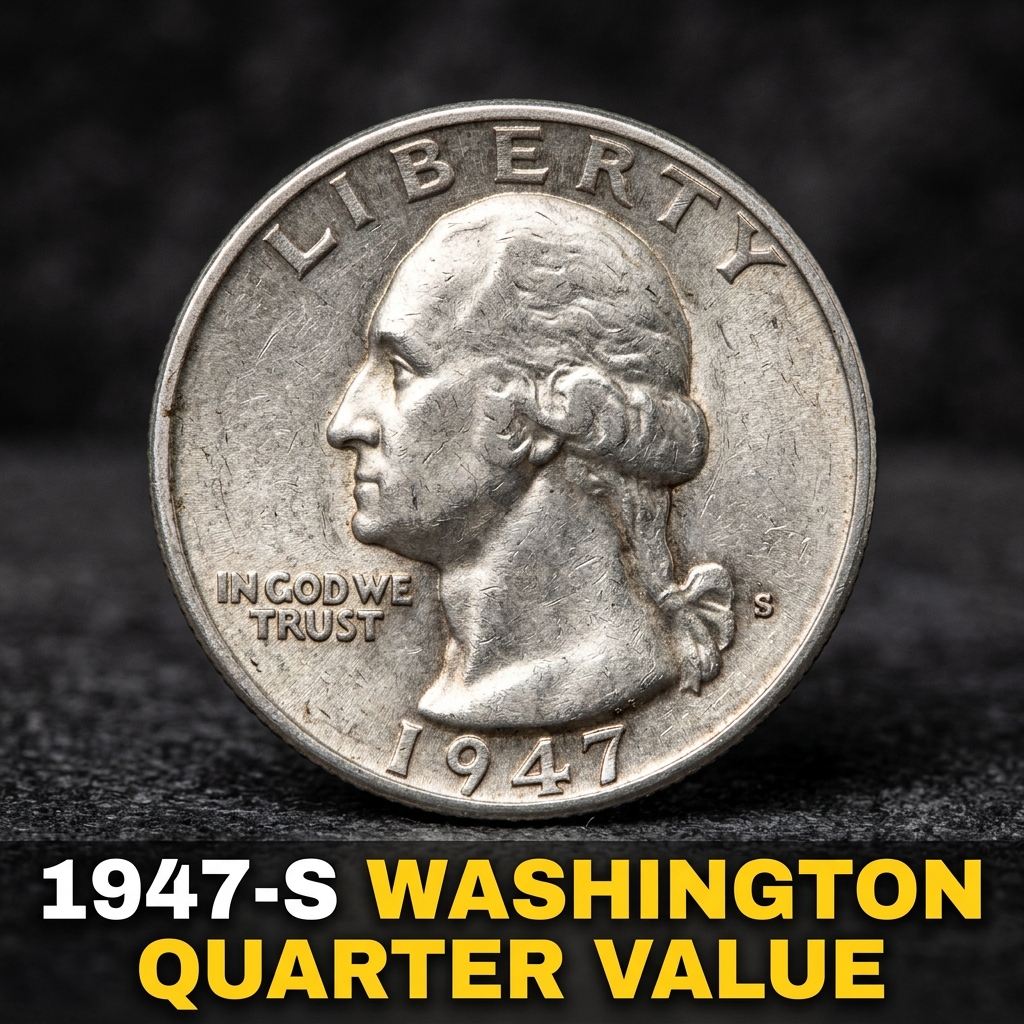
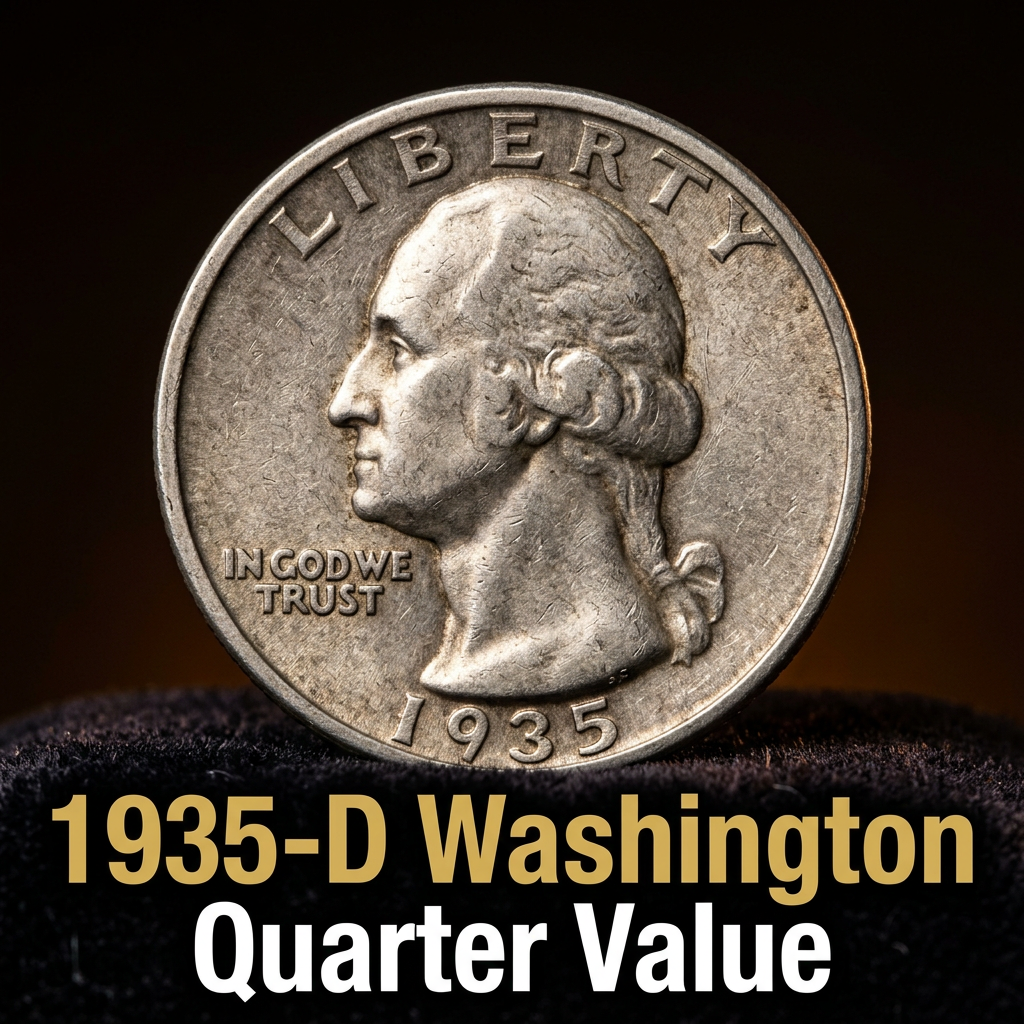
The 1935-D Washington Quarter is worth anywhere from $6 in heavily circulated condition to over $150 or more in well-preserved mint state grades. If you’ve just found one of these old silver coins in a collection, a jar, or an inherited estate, you might be sitting on more than you think.
What Makes the 1935-D Washington Quarter Special
The 1935-D Washington Quarter was struck at the Denver Mint, indicated by the small “D” mintmark found on the reverse side of the coin, just below the eagle. It was the second year of production for the Washington Quarter series, which launched in 1932 to honor President George Washington’s 200th birthday.
Denver struck approximately 5,780,000 quarters that year — a relatively modest mintage compared to the Philadelphia issue. That lower production number plays an important role in why these coins attract collector interest today.
The coin is composed of 90% silver and 10% copper, giving it an intrinsic metal value even in worn condition. With silver prices fluctuating, the melt value alone can be worth a few dollars, making even well-worn examples meaningful finds.
If you’re not sure what you have, using a free coin identifier app is a great first step to confirm the date, mintmark, and condition before you do anything else with the coin.
How Condition Affects 1935-D Quarter Value
When it comes to coin values, condition is everything. Collectors use a grading scale from 1 to 70, where higher numbers mean better preservation. Even a small jump in grade can mean a significant difference in price.
A coin that shows heavy wear — where Washington’s hair detail has flattened out and the eagle’s feathers are barely visible — is considered “Good” (G-4) grade and typically sells for around $6 to $9. Move up to “Fine” (F-12), where the design is clearer but still shows obvious wear, and values climb to roughly $10 to $15.
In “Extremely Fine” (EF-40) condition, where most design details are sharp and only light wear shows on the highest points, a 1935-D quarter can bring $25 to $40. And in uncirculated mint state grades (MS-63 and above), values can push $75 to $200 or higher depending on eye appeal and surface quality.
You can explore detailed 1935-D Washington Quarter price data by grade on CoinHix, which tracks real auction results and market trends for this coin.
1935-D Washington Quarter Value Chart
Here’s a quick reference table to give you a clear picture of what these coins typically sell for:
| Grade | Description | Estimated Value |
|---|---|---|
| G-4 (Good) | Heavy wear, outline visible | $6 – $9 |
| F-12 (Fine) | Moderate wear, details present | $10 – $15 |
| VF-20 (Very Fine) | Light wear on high points | $18 – $28 |
| EF-40 (Extremely Fine) | Minimal wear, sharp detail | $25 – $40 |
| MS-63 (Mint State) | Uncirculated, minor marks | $75 – $120 |
| MS-65 (Gem Mint State) | Gem quality, strong luster | $150 – $250+ |
Where to Find the Mintmark and How to Identify Your Coin
Not sure if your coin is a “D” mintmark issue? Flip the coin over to the reverse side and look just above the word “QUARTER” and below the eagle. The mintmark is a small letter — “D” for Denver, “S” for San Francisco, or no letter for Philadelphia.
The 1935-D is a mid-level key date in the early Washington Quarter series. It’s not the rarest coin in the series, but its lower mintage and collector demand make it more valuable than common later-date quarters.
For a fuller breakdown of the 1935 Washington Quarter value across all three mint varieties, including the Philadelphia and San Francisco strikes, it’s worth comparing all three to understand what you have.
If you want to quickly identify and value your coin on the go, CoinHix is a popular tool among collectors and casual finders alike. It lets you look up real market prices for thousands of U.S. coins by date, mintmark, and grade.
Should You Clean or Sell Your 1935-D Quarter?
One of the most common mistakes people make is cleaning old coins before selling them. Please don’t do this. Even gentle scrubbing removes the original surface patina that collectors value, and a cleaned coin can lose 30% to 70% of its value compared to an original, unaltered example.
If your coin looks dark or toned, that’s often completely normal — and sometimes even desirable to serious buyers.
Before selling, consider getting a rough grade estimate using CoinHix or another reputable pricing tool. If you think you have a high-grade example, professional grading through PCGS or NGC can significantly increase buyer confidence and potentially the selling price.
For everyday worn examples, local coin dealers, eBay, or coin shows are all reasonable places to sell.
FAQ
Q: How do I know if my 1935 quarter is the Denver Mint version?
A: Look at the reverse of the coin just below the eagle. A small “D” mintmark indicates it was made at the Denver Mint. No letter means Philadelphia, and “S” means San Francisco.
Q: Is the 1935-D Washington Quarter made of real silver?
A: Yes. Like all Washington Quarters made before 1965, the 1935-D contains 90% silver. Even a worn example has some silver melt value, which is typically around $4 to $5 depending on current silver spot prices.
Q: What’s the best way to find out exactly what my 1935-D quarter is worth?
A: Start by assessing the condition honestly — is it worn, lightly circulated, or uncirculated? Then use a trusted pricing resource like CoinHix to look up recent sale prices by grade. For high-value examples, professional grading is always worth considering.