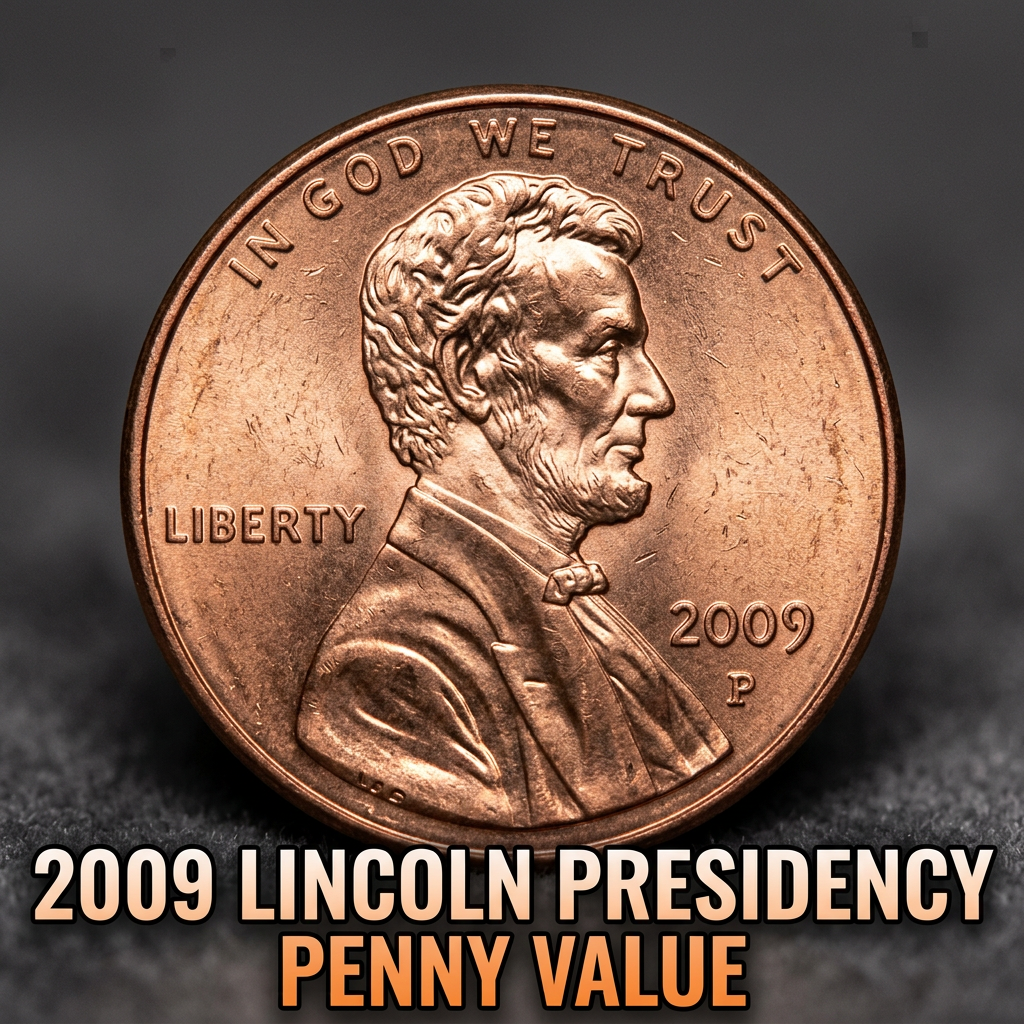
The 2009 Lincoln Presidency Penny is worth anywhere from face value to over $25 or more depending on condition, mint mark, and whether it’s a proof or uncirculated example. If you stumbled across one of these in a coin jar or old collection, you’re holding a special piece of American history — and it might be worth more than you think.
These pennies were released as part of a four-coin commemorative series honoring Abraham Lincoln’s 200th birthday. Each design represents a different stage of Lincoln’s life, and the “Presidency” design — showing the U.S. Capitol building — is the fourth and final coin in that series. Released in late 2009, millions were minted, but certain varieties and high-grade examples are genuinely sought after by collectors today.
If you want a quick and accurate way to identify and value your coin, try a free coin identifier app — it can save you a lot of guesswork before you decide whether to sell, hold, or grade your coin.
What Makes the 2009 Lincoln Presidency Penny Special
The 2009 Lincoln cent series was a one-time event. The U.S. Mint produced four different reverse designs that year, each tied to a chapter of Lincoln’s life: Birth and Early Childhood, Formative Years, Professional Life, and Presidency. This was the first time since 1909 that the Lincoln penny had a new reverse design, making the entire series historically significant.
The Presidency penny features a detailed image of the half-completed U.S. Capitol dome, referencing Lincoln’s decision to continue construction during the Civil War as a symbol of national unity. That symbolism resonates with collectors, and it makes this coin more than just spare change.
Most circulated examples are worth only face value or slightly more — usually $0.05 to $0.25. But uncirculated coins in top condition can climb much higher in value depending on the mint mark and grade.
2009 Lincoln Presidency Penny Values by Mint Mark and Grade
Three mints produced this coin in 2009: Philadelphia (no mint mark), Denver (D), and San Francisco (S — proof only). The Philadelphia and Denver coins were struck for general circulation, while San Francisco produced special proof versions for collectors.
Here’s a quick breakdown of current estimated values:
| Coin Variety | Condition | Estimated Value |
|---|---|---|
| 2009 P (Philadelphia) | Circulated | $0.05 – $0.25 |
| 2009 P (Philadelphia) | Uncirculated MS63–MS65 | $1 – $5 |
| 2009 P (Philadelphia) | Gem Uncirculated MS67+ | $15 – $30+ |
| 2009 D (Denver) | Circulated | $0.05 – $0.25 |
| 2009 D (Denver) | Uncirculated MS63–MS65 | $1 – $5 |
| 2009 D (Denver) | Gem Uncirculated MS67+ | $15 – $35+ |
| 2009 S Proof (San Francisco) | PR65–PR69 | $5 – $25+ |
For more detailed 2009 Lincoln Presidency Penny price data across all grades and mint marks, it’s worth checking a dedicated numismatic price database to stay current with auction results.
How Condition Affects the 2009 Presidency Penny Value
Coin grading is everything when it comes to value. A 2009 Lincoln Presidency Penny that has been in circulation — rubbed, dinged, and dull — is worth almost nothing above face value. But the same coin pulled fresh from a mint set or an original roll, with full luster and no contact marks, can be worth many times more.
Coins are graded on the Sheldon scale from 1 to 70. Anything MS60 and above is considered uncirculated. The closer you get to MS70 (theoretically perfect), the more valuable the coin becomes. Even small differences between MS65 and MS67 can mean a price jump of $10 to $20 or more.
To really know what grade your coin is, you’d need to submit it to a third-party grading service like PCGS or NGC. But before spending money on that, CoinHix can give you a fast, reliable estimate of your coin’s approximate condition and market value — a great first step before making any decisions.
Proof and Special Mint Set Versions Are Worth More
If you have a 2009 S Proof Lincoln Presidency Penny, you’re looking at a coin produced specifically for collectors. These were struck with polished dies on specially prepared planchets, giving them a mirror-like finish and sharper detail than regular business strikes.
Proof versions are typically sold as part of sets and don’t enter normal circulation. A 2009 S Proof in PR69 Deep Cameo condition can fetch $15 to $25 or more, while a perfect PR70 can push well past that in the right auction.
You can explore the full value breakdown for 2009 penny varieties including proof and business strike versions to compare current retail and auction prices side by side.
Should You Sell or Hold Your 2009 Lincoln Presidency Penny
Most common circulated examples aren’t going to make you rich — but they’re still a meaningful piece of U.S. numismatic history. If your coin is uncirculated, especially if it’s in an original government-issued set, holding onto it may be the smarter play as collector interest in the 2009 series remains steady.
If you’re unsure where to start, download CoinHix on your phone. It lets you scan your coin, check its grade estimate, and see real market prices in seconds. Whether you’re a first-time finder or a casual collector, CoinHix makes it easy to understand what you’ve got before heading to a dealer or auction.
—
FAQ
Q: How do I know if my 2009 Lincoln Presidency Penny is valuable?
A: The biggest factors are condition and mint mark. Coins with no wear, original luster, and sharp details are worth the most. A coin in MS67 or higher can sell for $25 or more, while circulated examples are typically worth face value.
Q: What is the rarest version of the 2009 Presidency Penny?
A: High-grade MS67 or MS68 examples from Philadelphia and Denver are among the hardest to find in top condition. Proof 70 Deep Cameo versions from San Francisco are also considered rare and highly desirable among serious collectors.
Q: Is the 2009 Lincoln Presidency Penny made of real copper?
A: No. Like most modern pennies, the 2009 Lincoln Presidency Penny is made of zinc with a thin copper plating — 97.5% zinc and 2.5% copper. Genuine solid copper versions were produced as special collector’s coins in limited quantities and are worth significantly more.