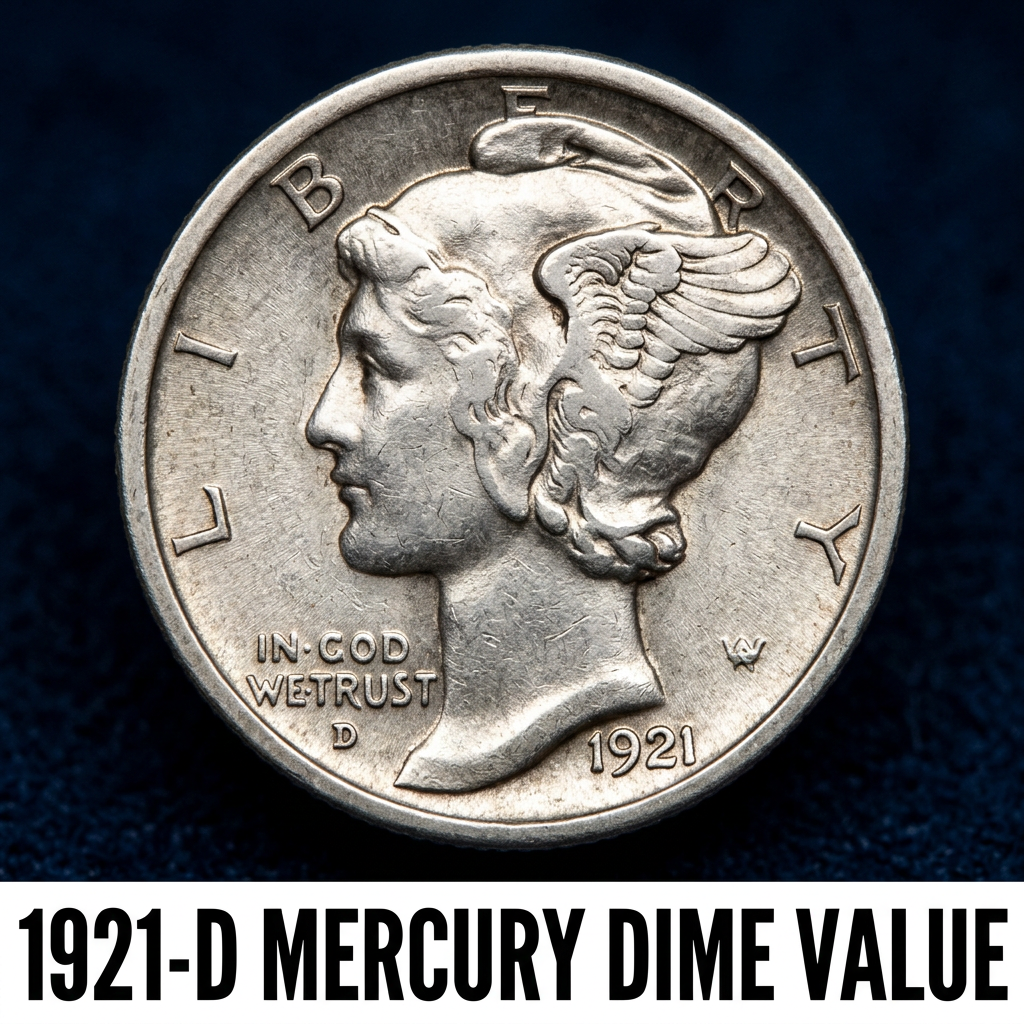
The 1921-D Mercury Dime is worth anywhere from $150 in heavily worn condition to well over $15,000 in top mint state grades — making it one of the most valuable regular-issue Mercury Dimes in the entire series. If you’ve recently come across one of these small silver coins, you may be sitting on something truly special. This guide breaks down exactly what it’s worth, what to look for, and how to tell if yours is the real deal.
Why the 1921-D Mercury Dime Is So Rare
The “D” in 1921-D stands for Denver, meaning this coin was struck at the Denver Mint. What makes it so significant is simple: very few were made. The Denver Mint produced only 1,080,000 Mercury Dimes in 1921, a staggeringly low mintage compared to other years in the series.
To put that in perspective, the Philadelphia Mint struck over 1.2 billion dimes during the Mercury Dime era (1916–1945). Denver’s 1921 output was a fraction of that. Low mintage combined with heavy circulation means that finding a well-preserved example today is genuinely rare.
Most surviving 1921-D dimes show heavy wear from decades of use in everyday transactions. Coins in Fine or Very Fine condition are already considered solid finds. Anything above Extremely Fine is a collector’s dream. If you’re not sure which grade yours falls into, a free coin identifier app can give you a quick starting point before you seek a professional appraisal.
1921-D Mercury Dime Value by Grade
The value of your 1921-D Mercury Dime depends almost entirely on its condition. Here’s a breakdown of approximate retail values across common grades:
| Grade | Description | Estimated Value |
|---|---|---|
| G-4 (Good) | Heavy wear, date visible | $150 – $180 |
| VG-8 (Very Good) | Clear lettering, flat details | $200 – $275 |
| F-12 (Fine) | Moderate wear, design clear | $300 – $400 |
| VF-20 (Very Fine) | Light to moderate wear | $500 – $700 |
| EF-40 (Extremely Fine) | Light wear on high points | $1,000 – $1,500 |
| AU-50 (About Uncirculated) | Slight wear, much luster | $2,500 – $4,000 |
| MS-63 (Mint State) | Uncirculated, minor marks | $8,000 – $12,000 |
| MS-65 and above | Gem uncirculated | $15,000+ |
For the most up-to-date auction results and certified coin prices, you can check detailed 1921-D Mercury Dime price data by grade on CoinHix, which tracks real-time market activity across major coin platforms.
How to Identify Your 1921-D Mercury Dime
Before you get too excited, make sure you’re actually looking at a genuine 1921-D. Here’s what to check:
Date and Mint Mark: The date should clearly read “1921.” Flip the coin over to the reverse (the side with the bundle of sticks, known as a fasces). Near the bottom right, you should see a small “D” — that’s the Denver mint mark. If there’s no mint mark, you have the Philadelphia version, which is also rare and valuable but a different coin.
Silver Content: Mercury Dimes are 90% silver, so the coin should feel slightly lighter than a modern dime and have a distinctly different color — a warm gray or silver-white tone rather than the copper-nickel look of post-1964 coins.
Design Details: The obverse shows Liberty wearing a winged cap (often mistaken for the Roman god Mercury, which is where the name comes from). The reverse features a fasces — a Roman symbol of authority — with an olive branch. Both sides should be recognizable even on heavily worn specimens.
If you’re unsure about authenticity, CoinHix offers a database of verified coin images and auction records that can help you compare your coin to known genuine examples.
What Affects the 1921-D Mercury Dime Value Beyond Grade
Grading isn’t the only factor. A few other things can significantly move the price up or down.
Full Bands (FB): On the reverse, the horizontal bands crossing the fasces are called “bands.” When both sets of bands are fully separated and sharply struck, the coin receives a “Full Bands” designation from grading services like PCGS or NGC. A 1921-D with Full Bands can be worth several times more than a regular example in the same grade — we’re talking tens of thousands of dollars for top-tier FB specimens.
Cleaning and Damage: A coin that has been cleaned with chemicals or polished loses significant collector value. Even if it looks shiny and bright, a cleaned coin is generally worth far less than a naturally toned, original-surface example. Grading services will label cleaned coins as “details” grades, which dramatically reduces resale value.
Certification: Having your coin professionally graded and slabbed by PCGS or NGC protects it, verifies authenticity, and makes it easier to sell at full market value. For a coin worth hundreds or thousands of dollars, the grading fee is almost always worth it.
For a deeper look at how all these factors combine to affect pricing, this comprehensive guide to 1921 Mercury Dime values breaks it down in plain language.
Should You Sell, Hold, or Get It Graded?
If you’ve found a 1921-D Mercury Dime, the smartest first step is to figure out exactly what you have before making any decisions. Don’t clean it. Don’t store it in a plastic bag that could scratch the surface. Handle it by the edges only.
Download CoinHix to scan and identify the coin, compare it against auction results, and get a quick sense of its approximate grade and value. It’s one of the easiest ways for everyday collectors and first-time finders to get reliable information fast.
If the coin looks to be in Fine condition or better, seriously consider sending it to PCGS or NGC for professional grading. The authentication and encapsulation can mean the difference between selling for $250 and selling for $2,500 or more.
The 1921-D Mercury Dime is genuinely one of the great key dates in American coinage. Whether yours is worth $150 or $15,000, it’s a piece of history — and knowing its true value is always worth the effort.
—
Frequently Asked Questions
Q: How do I know if my dime is a 1921-D and not just a regular 1921 dime?
A: Look at the reverse of the coin near the bottom right of the design. A small “D” mint mark indicates it was struck in Denver. If there’s no mint mark at all, you have a Philadelphia Mint coin (1921 with no letter), which is also rare but a separate coin with its own value.
Q: Is the 1921-D Mercury Dime made of silver?
A: Yes. All Mercury Dimes, including the 1921-D, are made of 90% silver and 10% copper. The coin contains approximately 0.0723 troy ounces of pure silver, which gives it an inherent silver melt value regardless of its collector grade.
Q: Where’s the best place to sell a 1921-D Mercury Dime?
A: For high-value examples, major coin auction houses like Heritage Auctions or Stack’s Bowers will get you the best price. For lower-grade coins, reputable coin dealers or certified marketplace platforms work well. Always get at least two or three independent offers before selling. Using CoinHix to research recent auction prices beforehand will help you know if an offer is fair.