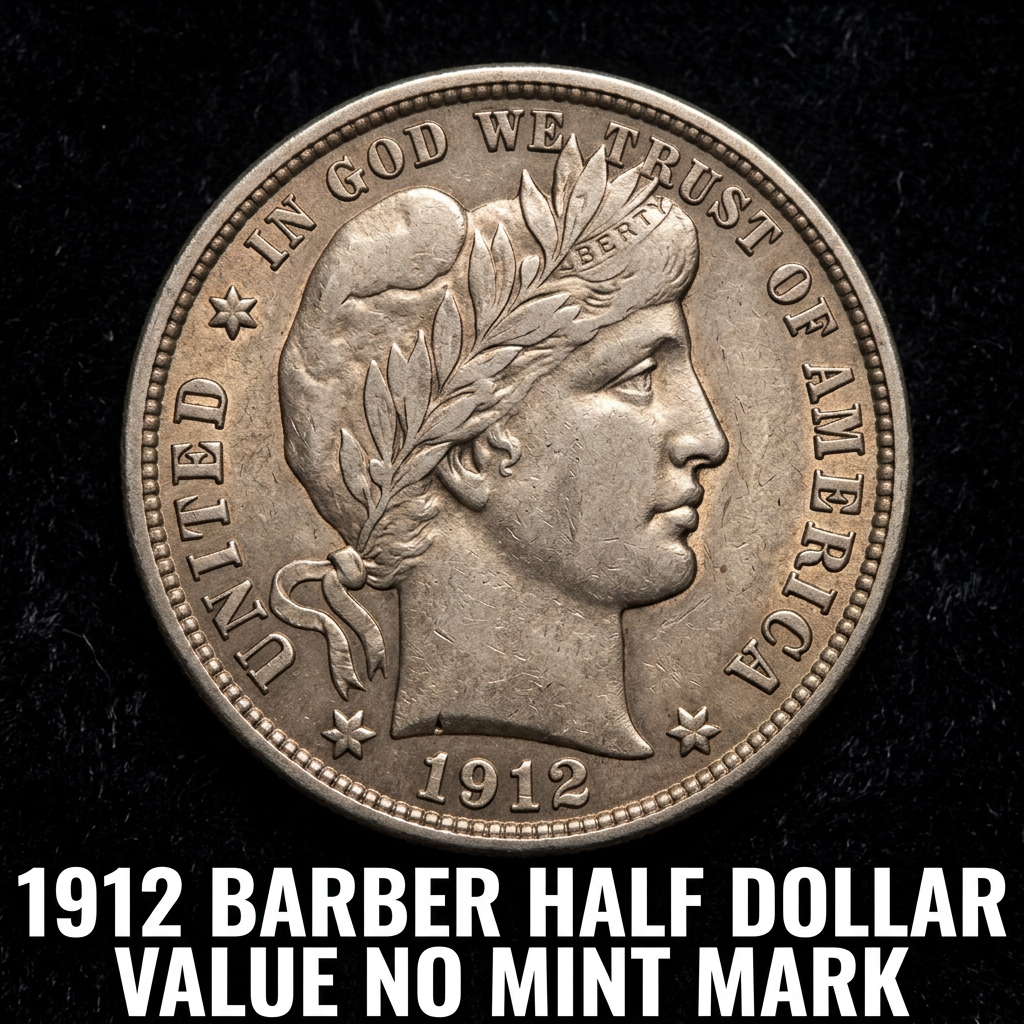
The 1912 Barber Half Dollar (no mint mark) is worth anywhere from $15 in heavily worn condition to well over $500 in higher mint state grades — and rare, well-preserved examples can climb even higher. If you just found one of these old silver coins, you’re in the right place to find out exactly what you’ve got.
What Makes the 1912 No Mint Mark Barber Half Dollar Special
The 1912 Barber Half Dollar with no mint mark was struck at the Philadelphia Mint, which was the standard practice at the time — Philadelphia coins carried no mint mark at all.
Designed by Charles E. Barber, the Chief Engraver of the U.S. Mint, this coin features Lady Liberty wearing a Phrygian cap on the obverse and a heraldic eagle on the reverse. The series ran from 1892 to 1915, making the 1912 issue one of the later coins in the series.
Philadelphia produced 1,550,700 examples of the 1912 Barber Half Dollar — a relatively modest mintage that contributes to its collectibility today. These coins are made of 90% silver, which alone gives them a base metal value that fluctuates with the silver market.
If you’re trying to identify what coin you have, a free coin identifier app can help you quickly confirm the date, mint mark location, and variety before you estimate its value.
How Condition Affects the 1912 Barber Half Dollar Value No Mint Mark
With old coins like this one, condition — or “grade” in collector terms — makes an enormous difference in value. A heavily circulated coin where Liberty’s head is worn almost flat is worth far less than one with sharp details still visible.
Here’s a general value table for the 1912 Barber Half Dollar with no mint mark:
| Grade / Condition | Estimated Value |
|---|---|
| Good (G-4) | $15 – $20 |
| Very Good (VG-8) | $22 – $30 |
| Fine (F-12) | $35 – $55 |
| Very Fine (VF-20) | $60 – $90 |
| Extremely Fine (EF-40) | $110 – $160 |
| About Uncirculated (AU-50) | $200 – $280 |
| Mint State (MS-60 and above) | $400 – $800+ |
Keep in mind these are approximate retail values. Actual prices at auction can vary based on eye appeal, toning, and current silver prices.
The Silver Value Factor You Shouldn’t Ignore
Even a heavily worn 1912 Barber Half Dollar with no mint mark isn’t worthless. Because it’s made of 90% silver and weighs 12.5 grams, it contains about 0.3617 troy ounces of pure silver.
With silver prices fluctuating around $28–$32 per troy ounce at the time of writing, the melt value alone sits around $10–$12. So even the most beat-up examples have a floor in silver content.
For a broader look at which half dollars are worth the most money and why collectors prize them, it’s worth doing your research before selling or trading your coin.
This silver base is one reason coin collectors and investors both pay attention to Barber Half Dollars — they hold value even when numismatic premiums are minimal.
How to Check Your 1912 Barber Half Dollar’s Value Quickly
The easiest way to get a quick estimate without heading to a coin dealer is to use CoinHix. This app lets you scan your coin with your phone camera and instantly pulls up values based on current market data.
CoinHix is especially useful for Barber series coins because it can help you determine the grade range your coin falls into based on visible detail, toning, and wear patterns. It takes the guesswork out of the process for everyday people who aren’t seasoned numismatists.
Once you have an estimate from CoinHix, you can cross-reference with recent sold listings on auction sites to confirm whether your coin is on the low or high end of the value range.
—
FAQ
Q: How do I know if my 1912 Barber Half Dollar has no mint mark?
A: Look at the reverse side of the coin, just below the eagle. If you don’t see a small letter (like S for San Francisco or D for Denver), your coin was made in Philadelphia and carries no mint mark. This is completely normal for Philadelphia-issued coins of this era.
Q: Is the 1912 Barber Half Dollar rare?
A: It’s not considered rare in lower grades — over 1.5 million were minted. However, finding one in About Uncirculated or Mint State condition is genuinely uncommon, and those examples command significantly higher prices from serious collectors.
Q: Should I clean my 1912 Barber Half Dollar before selling it?
A: Absolutely not. Cleaning a coin — even with gentle soap and water — can permanently damage its surface and drastically reduce its collector value. Dealers and graders can spot cleaned coins immediately, and they’ll offer you far less for a cleaned example than for a naturally toned one, even if the natural coin looks darker or dirtier to the untrained eye.