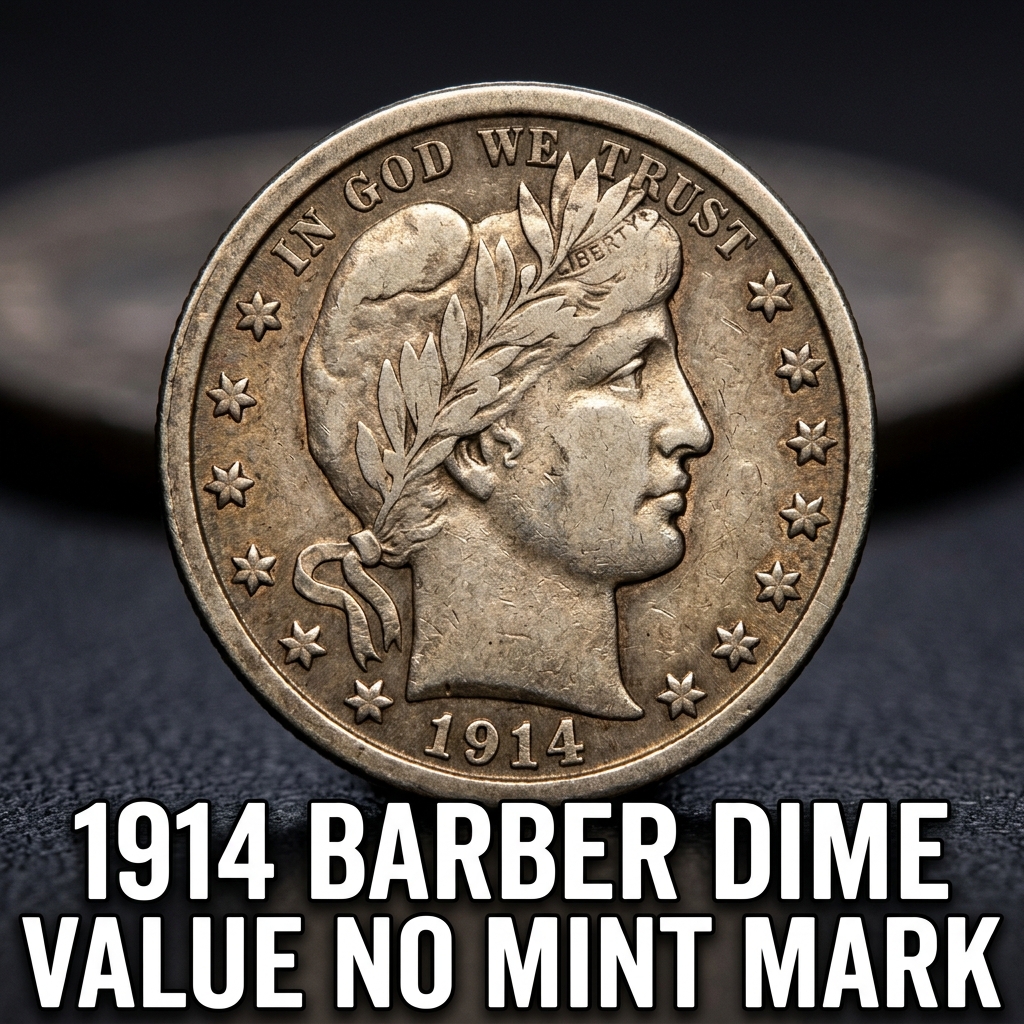
The 1914 Barber Dime (Philadelphia Mint, no mint mark) is worth anywhere from $4 to $10 in heavily worn condition, up to $50 or more in fine shape, and can fetch several hundred dollars in uncirculated grades. If you found one of these old silver dimes tucked away in a drawer or old coin jar, you’re holding a piece of American history that’s well worth a closer look.
What Is the 1914 Barber Dime and Why Does It Matter
The Barber Dime was designed by U.S. Mint Chief Engraver Charles E. Barber and was produced from 1892 to 1916. The obverse features Lady Liberty wearing a laurel wreath and a Phrygian cap, while the reverse shows a simple wreath with the denomination. These coins were everyday pocket change for Americans during the early twentieth century, which means most surviving examples show significant wear.
The 1914 no mint mark dime was struck at the Philadelphia Mint — the main U.S. Mint facility. Coins from Philadelphia during this era carry no mint mark, which is the key identifier. The Philadelphia Mint produced 17,360,655 Barber Dimes in 1914, making it a relatively common date compared to some rarer issues in the series.
If you’re trying to figure out exactly what you have, using a free coin identifier app can save you a lot of guesswork and help you get a fast, reliable read on your coin’s grade and approximate value before you do anything else with it.
How Much Is the 1914 Barber Dime Worth by Grade
The value of a 1914 Barber Dime with no mint mark depends heavily on its condition, also called its grade. Coin grading runs from Poor (P-1) at the low end all the way up to Mint State (MS-65 and above) for coins that were never circulated.
Most coins found in old jars, envelopes, or inherited collections will fall into the Good to Fine range. In Good condition, where the date and basic design are visible but most detail is gone, these coins are worth around $4 to $6. Step up to Very Fine — where you can still see hair detail on Liberty and clear legend lettering — and values climb to around $20 to $30.
Uncirculated examples are where things get exciting. A 1914 Philadelphia Barber Dime in MS-63 condition can bring $150 to $250 at auction, and exceptional gem examples graded MS-65 or better can reach $500 or more. These high-grade pieces are rare because most dimes from this era were well-used in commerce.
| Grade | Description | Estimated Value |
|---|---|---|
| Good (G-4) | Heavy wear, date visible, design outlined | $4 – $6 |
| Very Good (VG-8) | Moderate wear, some lettering clear | $7 – $10 |
| Fine (F-12) | Moderate wear, most features visible | $12 – $18 |
| Very Fine (VF-20) | Light wear on high points | $20 – $30 |
| Extremely Fine (EF-40) | Slight wear, sharp details | $40 – $60 |
| About Uncirculated (AU-55) | Trace wear only, most luster present | $70 – $110 |
| Mint State (MS-63) | No wear, minor contact marks | $150 – $250 |
| Gem Mint State (MS-65+) | No wear, sharp strike, strong luster | $500+ |
For a more detailed breakdown of 1914 Barber Dime values across all grades and mint marks, it’s worth checking a dedicated coin value resource to compare recent auction results and price trends.
Key Things to Check Before You Sell or Keep Your 1914 Dime
Before you take your coin to a dealer or list it online, there are a few things every everyday coin finder should do. First, do not clean the coin. Cleaning a coin — even gently rinsing it — can destroy its surface luster and drop its value dramatically. Collectors and dealers strongly prefer original, uncleaned coins.
Second, check for a mint mark. The 1914 Barber Dime was also struck at the Denver Mint (D) and San Francisco Mint (S). The mint mark, if present, appears on the reverse side of the coin near the bottom, just above the word “DIME.” No mint mark means Philadelphia. The 1914-S in particular had a low mintage of just 2,100,000, making it significantly rarer and more valuable than the Philadelphia issue.
Third, take a look at the overall sharpness and eye appeal of the coin. Even within the same grade, coins with strong strikes and pleasing surfaces command higher prices. CoinHix is a great tool to get a visual grade estimate right from your smartphone — just snap a photo and let the app do the initial work for you.
Is the 1914 Barber Dime a Good Coin to Collect or Sell
The 1914 Philadelphia Barber Dime is a solid collectible. It’s not a key date (those are the super-rare, high-value coins like the 1894-S), but it’s a genuine antique silver coin with real collector demand. These dimes are 90% silver, which also gives them an intrinsic melt value tied to the silver market — currently worth roughly $1.60 to $1.80 just for the metal, though collectors always pay more than melt.
If you inherited a collection or found a small stash of old dimes, it’s smart to sort them by date and mint mark before selling. A single rare date hiding among common ones could be worth ten times more than the rest combined. CoinHix lets you scan multiple coins quickly and flag the ones worth a professional appraisal.
Whether you decide to sell, hold, or add the 1914 Barber Dime to your own collection, knowing what you have is the first step — and now you do.
FAQ
Q: How do I know if my 1914 dime has no mint mark?
A: Flip the coin to the reverse side and look at the bottom of the design, just above the word “DIME.” If there’s no letter there, it was made in Philadelphia and carries no mint mark. A “D” means Denver, and an “S” means San Francisco.
Q: Is the 1914 Barber Dime rare?
A: The 1914 Philadelphia issue is not considered rare — over 17 million were minted. However, finding one in high, uncirculated condition is uncommon, and those examples carry strong premiums. The 1914-S is the scarcer coin in this year.
Q: Can I use an app to find out what my 1914 Barber Dime is worth?
A: Yes, absolutely. CoinHix is one of the most user-friendly options for everyday people who find old coins. You can photograph your coin and get an instant estimate of its grade and approximate value, which is a great starting point before consulting a professional dealer or grading service.