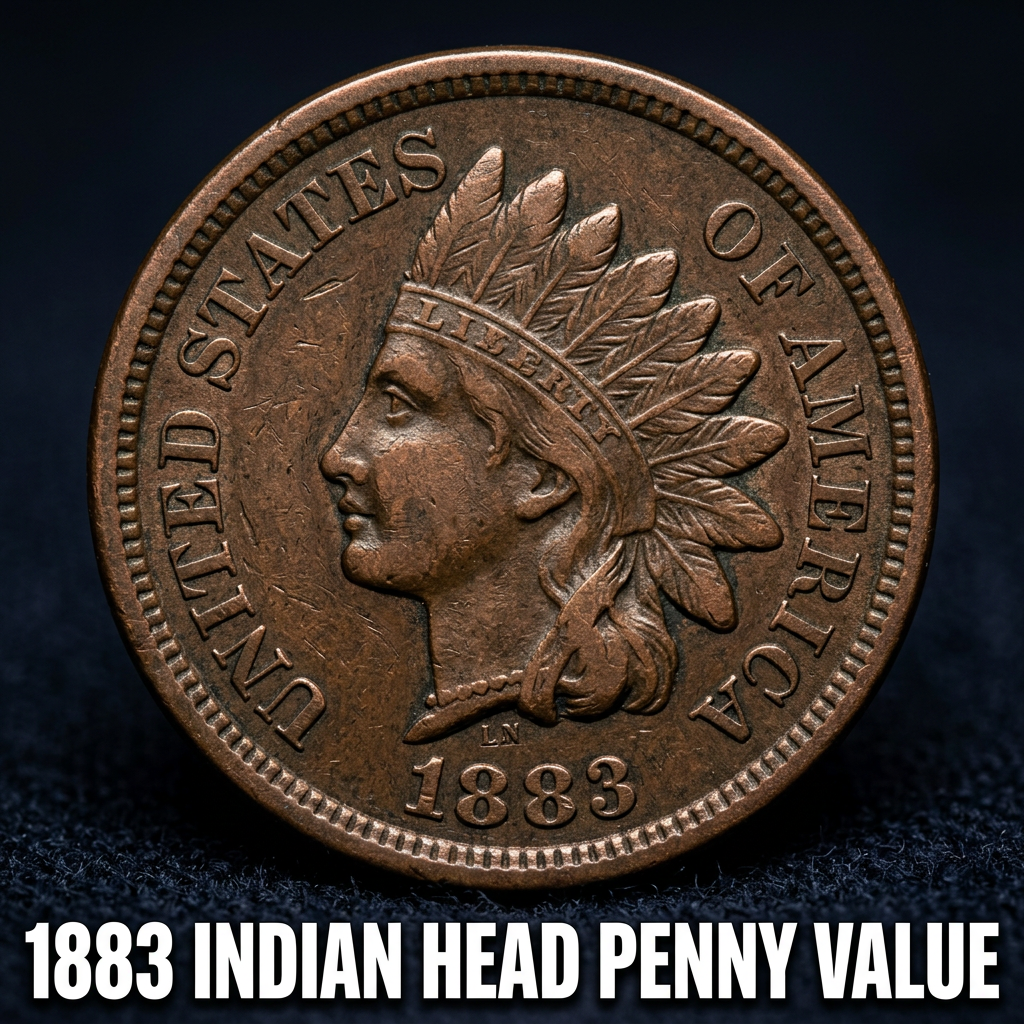
The 1883 Indian Head Penny is worth anywhere from $2 in heavily worn condition to over $150 or more in mint state. If you’ve stumbled across one of these old cents in a drawer, a jar of coins, or an inherited collection, you might be sitting on something genuinely valuable. Read on to find out exactly what your coin could be worth.
—
What Makes the 1883 Indian Head Penny Special
The 1883 Indian Head Penny was struck at the Philadelphia Mint and features the iconic portrait of Lady Liberty wearing a Native American headdress — a design created by James Barton Longacre. This coin was minted during a fascinating era in American history, just after the Civil War era economic turbulence had settled, and coin collecting was starting to grow as a popular hobby.
Over 45 million of these cents were produced in 1883, making them relatively available compared to some other Indian Head years. However, finding one in good condition is a different story entirely.
Most examples that survive today have seen heavy circulation — passing through countless hands, sitting in pocket change for decades, and picking up significant wear along the way. The coins that managed to escape circulation and survive in higher grades are the ones that really catch collectors’ eyes.
If you want a quick way to check what your specific coin looks like, a free coin identifier app can help you match your coin to known grades and values before you visit a dealer.
—
How Much Is the 1883 Indian Head Penny Worth by Grade
Coin value is almost entirely tied to condition, or “grade” in collector terms. A coin graded Poor (P-1) might fetch just a dollar or two, while a pristine, uncirculated example in Mint State can command prices well above $100.
Here’s a general value breakdown for the 1883 Indian Head Penny:
| Grade | Condition | Estimated Value |
|---|---|---|
| G-4 (Good) | Heavy wear, design visible | $2 – $4 |
| VG-8 (Very Good) | Moderate wear, some detail | $4 – $7 |
| F-12 (Fine) | Light to moderate wear | $8 – $14 |
| VF-20 (Very Fine) | Light wear on high points | $15 – $25 |
| EF-40 (Extremely Fine) | Slight wear, sharp detail | $30 – $50 |
| MS-63 (Mint State) | Uncirculated, minor marks | $80 – $150 |
| MS-65 (Gem Mint State) | Gem quality, full luster | $200+ |
For the most up-to-date auction results and grade-by-grade pricing, you can browse live 1883 Indian Head Penny price data in mint red condition to see what these coins are actually selling for in today’s market.
—
Key Factors That Affect Your 1883 Indian Head Penny Value
Beyond the basic grade, a few other things can push the value of your 1883 Indian Head Penny up or down significantly.
Color designation matters a great deal for uncirculated Indian Head cents. Coins that retain their original red copper luster (designated RD) are worth considerably more than coins that have toned to brown (BN). A red-brown (RB) example falls somewhere in between.
Strike quality also plays a role. Some 1883 cents came from the mint with weak strikes, especially on the diamond pattern of the headdress feathers and the letters of LIBERTY on the ribbon. A well-struck coin with sharp detail is always preferred by collectors.
Surface preservation is another major consideration. Cleaning a coin — even gently — can destroy its value to serious collectors. If your coin looks “too shiny” or shows fine hairline scratches, it may have been cleaned at some point, which will lower the grade and the price a dealer will offer.
CoinHix is a great tool to run a quick visual check on your coin’s surfaces and color before bringing it to a professional grader or dealer.
—
How to Know If Your Indian Head Penny Is Worth Grading
If your 1883 Indian Head Penny looks like it’s in Extremely Fine or better condition, it may be worth spending $20–$30 to have it professionally graded by PCGS or NGC. A graded coin in a sealed holder almost always sells for more than a raw ungraded example.
For everyday worn coins in Good to Very Fine condition, professional grading usually isn’t cost-effective. In those cases, a quick check using CoinHix can give you a solid idea of what your coin is realistically worth on the open market without the extra expense.
You might also want to explore how values compare across different years in the series. For example, the 1898 Indian Head Penny value guide gives you a useful sense of how later-date Indian Heads are priced and what to look for when comparing your coins.
Knowing the year-to-year differences in mintage and scarcity helps you understand why some years in the Indian Head series command big premiums while others remain affordable for new collectors.
—
FAQ
Q: Is the 1883 Indian Head Penny rare?
A: Not particularly. With over 45 million minted, it’s one of the more common dates in the Indian Head cent series. However, high-grade examples with original red luster are genuinely scarce and desirable to collectors.
Q: Should I clean my 1883 Indian Head Penny to make it look better?
A: No — never clean a coin. Cleaning removes the natural patina and leaves microscopic scratches that experienced collectors and dealers can easily spot. A cleaned coin is almost always worth significantly less than an uncleaned one in the same grade.
Q: Where is the best place to sell a 1883 Indian Head Penny?
A: For common circulated examples, local coin dealers or eBay are practical options. For higher-grade or red mint state coins, submitting to a major auction house or selling through a certified coin marketplace will generally get you the best price. Using CoinHix to research recent sale prices beforehand puts you in a much stronger negotiating position.