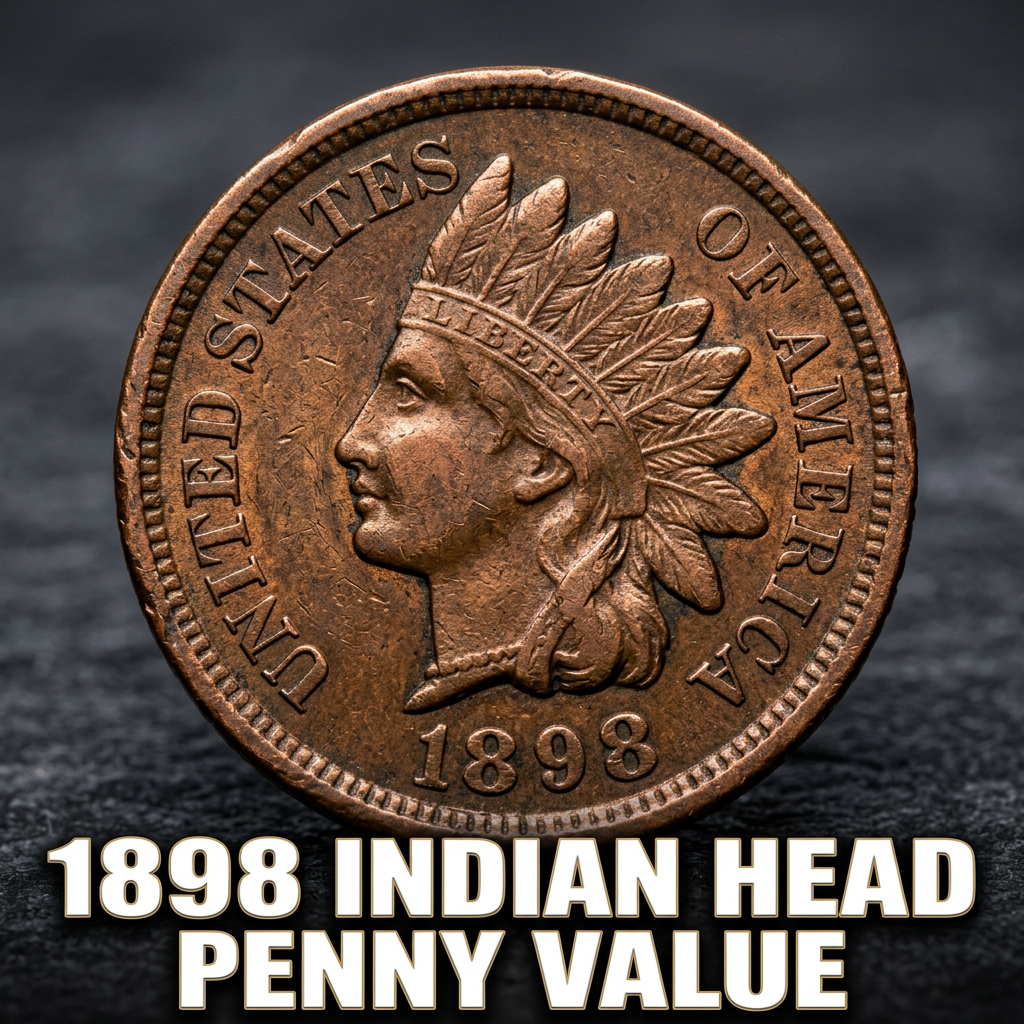
The 1898 Indian Head Penny is worth anywhere from $2 in heavily worn condition to over $100 or more in mint state — and if you’ve got one sitting in an old jar or drawer, it’s definitely worth a closer look. These small bronze coins have been quietly gaining collector interest for years, and even a circulated example can put a few dollars in your pocket.
What Makes the 1898 Indian Head Penny Special
The Indian Head Penny was minted from 1859 to 1909, and the 1898 issue is one of the later dates in the series. By 1898, the U.S. Mint in Philadelphia was producing millions of these coins each year, which means they’re not rare — but that doesn’t mean they’re worthless either.
These coins were struck in a composition of 95% copper and 5% tin and zinc. The obverse features Lady Liberty wearing a Native American headdress (yes, it’s Liberty, not an actual Native American), and the reverse shows a laurel wreath surrounding the denomination “ONE CENT.”
What coin collectors really care about is condition. A 1898 Indian Head Penny that still shows sharp details, original luster, and minimal wear can be worth many times more than a heavily circulated example. That’s why grading matters so much when it comes to these old pennies.
If you’re not sure what you have, you can use a free coin identifier app to get a quick read on your coin before spending money on a professional appraisal.
1898 Indian Head Penny Value by Grade
Coin value is almost entirely driven by condition, or “grade” in collector speak. Here’s a general breakdown of what you might expect for a 1898 Indian Head Penny in different grades:
| Grade | Description | Estimated Value |
|---|---|---|
| Good (G-4) | Heavy wear, major details visible | $2 – $4 |
| Very Good (VG-8) | Moderate wear, design clear | $4 – $7 |
| Fine (F-12) | Even wear, all features visible | $7 – $12 |
| Extremely Fine (EF-40) | Light wear on high points only | $20 – $35 |
| Mint State (MS-63) | Uncirculated, minor blemishes | $60 – $100 |
| Mint State (MS-65 RD) | Gem uncirculated, full red luster | $150 – $300+ |
For the most accurate and up-to-date market data, you can check the 1898 Indian Head Penny MS-RD price history and recent auction results to see exactly what collectors are paying right now.
How to Tell If Your 1898 Penny Is in Good Condition
The first thing you want to do is check the details on Lady Liberty’s headdress. On a well-preserved coin, you should be able to see individual feather tips and the word “LIBERTY” stamped into the headband. If those details are blurry or completely flat, the coin has seen a lot of circulation.
Next, look at the color. Indian Head Pennies in the best condition often show a reddish-brown or full red (RD) tone. Coins that have turned dark brown or greenish have oxidized over time, which typically lowers their value — though a coin with a smooth, original brown surface is still collectible.
One important tip: don’t clean your coin. A lot of people instinctively want to polish an old penny to make it look better, but cleaning actually destroys the coin’s surface and significantly drops its value in the eyes of collectors.
CoinHix is a great tool for tracking current market values. With the CoinHix app, you can look up recent sales for specific grades of the 1898 Indian Head Penny and get a realistic sense of what yours might fetch at auction or in a dealer sale.
Mint Mark and Mintage Facts for 1898
The 1898 Indian Head Penny was only produced at the Philadelphia Mint, which means there is no mint mark on this coin. Philadelphia coins of this era don’t carry a “P” — they simply have no mint mark at all.
The total mintage for 1898 was approximately 49,821,284 coins — nearly 50 million pieces. That’s a high number, which explains why circulated examples are relatively common and affordable.
However, mint-state survivors with original red luster are far scarcer than the mintage suggests. Most of these coins were actually used as everyday currency and eventually wore down or were lost. Finding one in truly uncirculated condition is a genuine discovery.
For a full breakdown of the 1898 Indian Head Penny’s value across all grades and conditions, including proof versions and error coins, it’s worth digging into a dedicated coin value resource.
Where to Sell Your 1898 Indian Head Penny
If you’ve decided your coin is worth selling, you have a few good options. Online marketplaces like eBay let you reach a wide audience of collectors, especially if you can provide clear photos showing both sides of the coin.
Local coin dealers are another solid choice — you’ll get an immediate offer, though it may be lower than what you’d earn selling directly to a collector.
For coins graded MS-63 or higher, it may be worth submitting to PCGS or NGC for professional grading and encapsulation. A certified, graded example sells for more money and gives buyers confidence in what they’re purchasing.
No matter which route you take, CoinHix can help you benchmark your coin’s current market value before you walk into any negotiation.
FAQ
Q: Is the 1898 Indian Head Penny rare?
A: Not particularly. With nearly 50 million minted, circulated examples are common and affordable. However, mint-state coins with full red color are genuinely scarce and command strong premiums from serious collectors.
Q: Can I tell the grade of my 1898 Indian Head Penny at home?
A: You can get a rough idea by examining the detail on the headdress and headband lettering. For a more precise grade — especially if you think you have an uncirculated coin — consider using a grading guide or submitting to a professional grading service like PCGS or NGC.
Q: Does cleaning my old Indian Head Penny increase its value?
A: No — quite the opposite. Cleaning removes the coin’s natural patina and creates tiny surface scratches that experienced collectors and graders can easily spot. A cleaned coin is almost always worth less than an unclean one in the same condition. Leave it as-is.