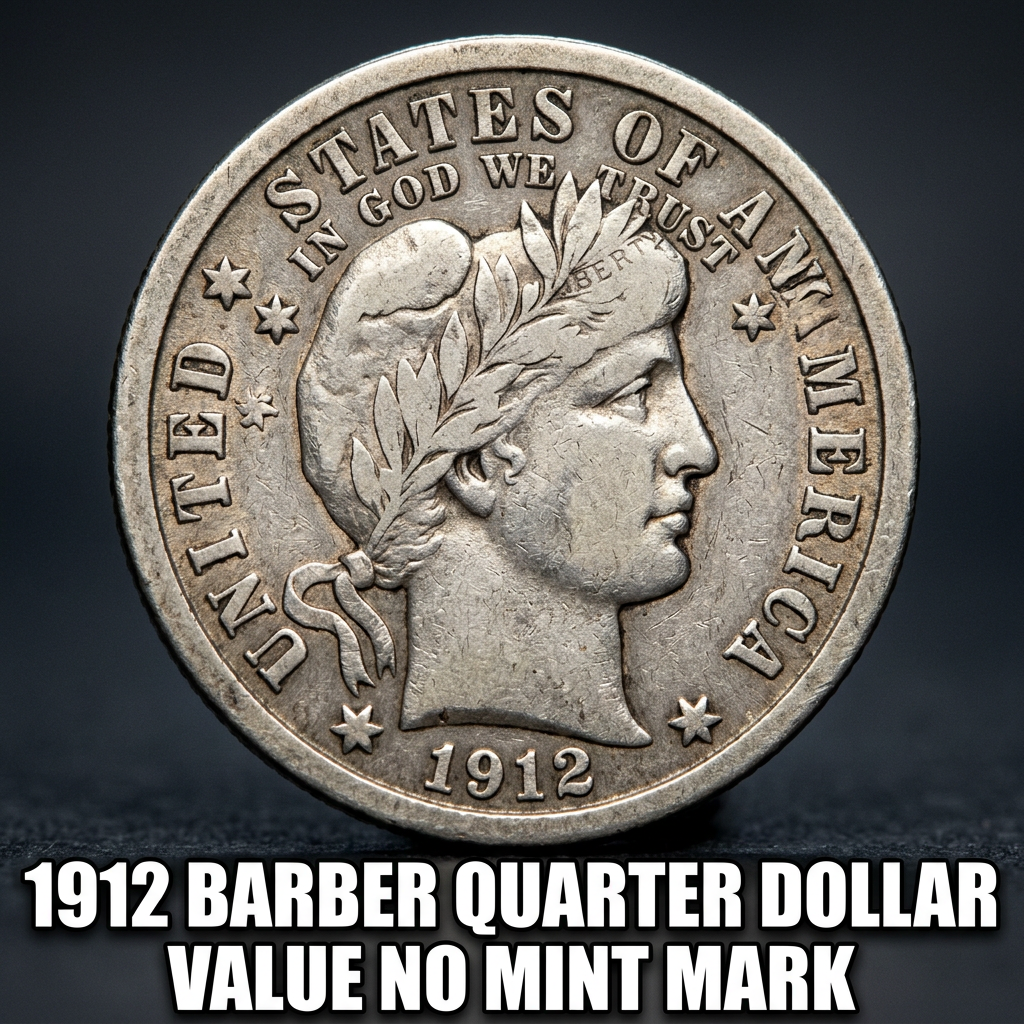
The 1912 Barber Quarter Dollar (no mint mark) is worth anywhere from $6 in heavily worn condition to over $300 or more in higher mint state grades. If you found one of these old silver coins tucked away in a drawer or collection, you’re holding a piece of American history that could be worth a nice chunk of change — and this guide will help you figure out exactly how much.
What Is the 1912 Barber Quarter and Why Does It Matter?
The 1912 Barber Quarter was minted at the Philadelphia Mint, which is why it carries no mint mark. It was designed by Charles E. Barber, the U.S. Mint’s Chief Engraver, and features Lady Liberty in a classic profile on the obverse, with a heraldic eagle on the reverse.
These coins were made of 90% silver, which already gives them some base metal value. But their collector value goes far beyond the silver content alone.
The Philadelphia Mint produced 4,400,000 Barber Quarters in 1912 — a moderate mintage that makes these coins available but not overly common in nice condition. If you’re not sure what you have, using a free coin identifier app can help you quickly confirm the coin’s details before you start pricing it out.
How Much Is the 1912 Barber Quarter Worth by Grade?
The condition of your coin — called its “grade” — is the single biggest factor in determining value. A coin that looks worn and dull is worth much less than one with sharp details and original luster.
Here’s a general breakdown of 1912 Barber Quarter values (no mint mark) by grade:
| Grade | Description | Estimated Value |
|---|---|---|
| Good (G-4) | Heavy wear, outline visible | $6 – $8 |
| Very Good (VG-8) | Some detail, worn flat areas | $10 – $15 |
| Fine (F-12) | Moderate wear, clear lettering | $20 – $30 |
| Very Fine (VF-20) | Light wear on high points | $40 – $60 |
| Extremely Fine (EF-40) | Minor wear, sharp details | $90 – $130 |
| About Uncirculated (AU-55) | Slight friction, near full luster | $160 – $220 |
| Mint State (MS-63+) | Uncirculated, full luster | $300 – $500+ |
As you can see, the difference between a worn coin and a mint-state example is dramatic. Even getting your coin into Fine condition means it’s worth 3–4 times more than a heavily circulated piece.
Silver Melt Value and What That Means for You
Even if your 1912 Barber Quarter is beat up and barely readable, it still has intrinsic silver value. Each coin contains approximately 0.1808 troy ounces of pure silver.
With silver prices fluctuating around $28–$30 per troy ounce in recent times, the base silver melt value of a 1912 Barber Quarter is roughly $5.00 to $5.50. That means even the most worn example is worth more than face value simply because of its silver content.
This is important to remember: never spend an old silver quarter at face value. Even if it doesn’t look like much, it’s worth at least several dollars in silver alone.
If you’re also checking out other coins from the same era, you might find this resource helpful — it covers the 1912 Barber Dime value and what to look for in that coin’s condition and grading, which follows a very similar value structure to the quarter.
Key Things That Affect the Value of Your 1912 Barber Quarter
Beyond grade, a few other factors can push the value of your coin higher or lower:
Luster and eye appeal — Coins with original, untouched surfaces and a natural shine are more desirable to collectors. Cleaned coins, even if they look shiny, are often worth less because cleaning damages the surface.
Strike quality — Some coins from this era were weakly struck, meaning fine details like the hair above Liberty’s ear or the eagle’s feathers are soft even on an uncirculated coin. A sharply struck example commands a premium.
Toning — Natural, attractive toning (color that develops on silver over decades) can actually increase a coin’s appeal and value. Harsh or artificial toning does the opposite.
To get a quick assessment without digging through reference books, CoinHix is a great tool that many collectors use to photograph and instantly estimate the value of coins like this one. It’s fast, beginner-friendly, and surprisingly accurate for everyday finds.
How to Check If Your 1912 Barber Quarter Is Worth Selling
If you think you have a nice example, here are the steps most experienced collectors recommend:
First, do not clean the coin — even with soap and water. Cleaning destroys collector value immediately, no matter how good your intentions are.
Second, look at the coin under good lighting and compare it to the grade descriptions above. Focus on the hair detail on Liberty’s portrait and the shield on the reverse eagle. The more detail you can see, the higher the grade.
Third, use CoinHix to scan and get a preliminary value estimate, then compare with recent sold listings on eBay or major auction sites like Heritage Auctions or Stack’s Bowers to see what similar coins are actually fetching.
If your coin grades VF or better, it’s genuinely worth getting a professional opinion or even submitting it to a grading service like PCGS or NGC. A certified coin in a slab often sells for 20–40% more than a raw coin of the same quality.
—
FAQ
Q: How do I know if my 1912 quarter is the no mint mark Philadelphia version?
A: Look at the reverse of the coin, just below the eagle. If there is no letter there, it’s a Philadelphia Mint coin — the Philly Mint didn’t use mint marks during this era. The other 1912 quarters were minted in Denver (D) and San Francisco (S), both of which carry their respective mint marks.
Q: Is the 1912 Barber Quarter rare?
A: The Philadelphia issue is not considered rare — with over 4 million minted, it’s one of the more common Barber Quarter dates. However, finding one in high grade (EF or better) is genuinely difficult, and those examples are quite valuable to serious collectors.
Q: Can I use an app to identify and value my 1912 Barber Quarter?
A: Absolutely. CoinHix is one of the most popular options for quick coin identification and value estimates. Just take a clear photo of both sides in good lighting, and the app will give you a grade estimate and current market value range — perfect if you’re new to coin collecting and just want a fast, reliable answer.