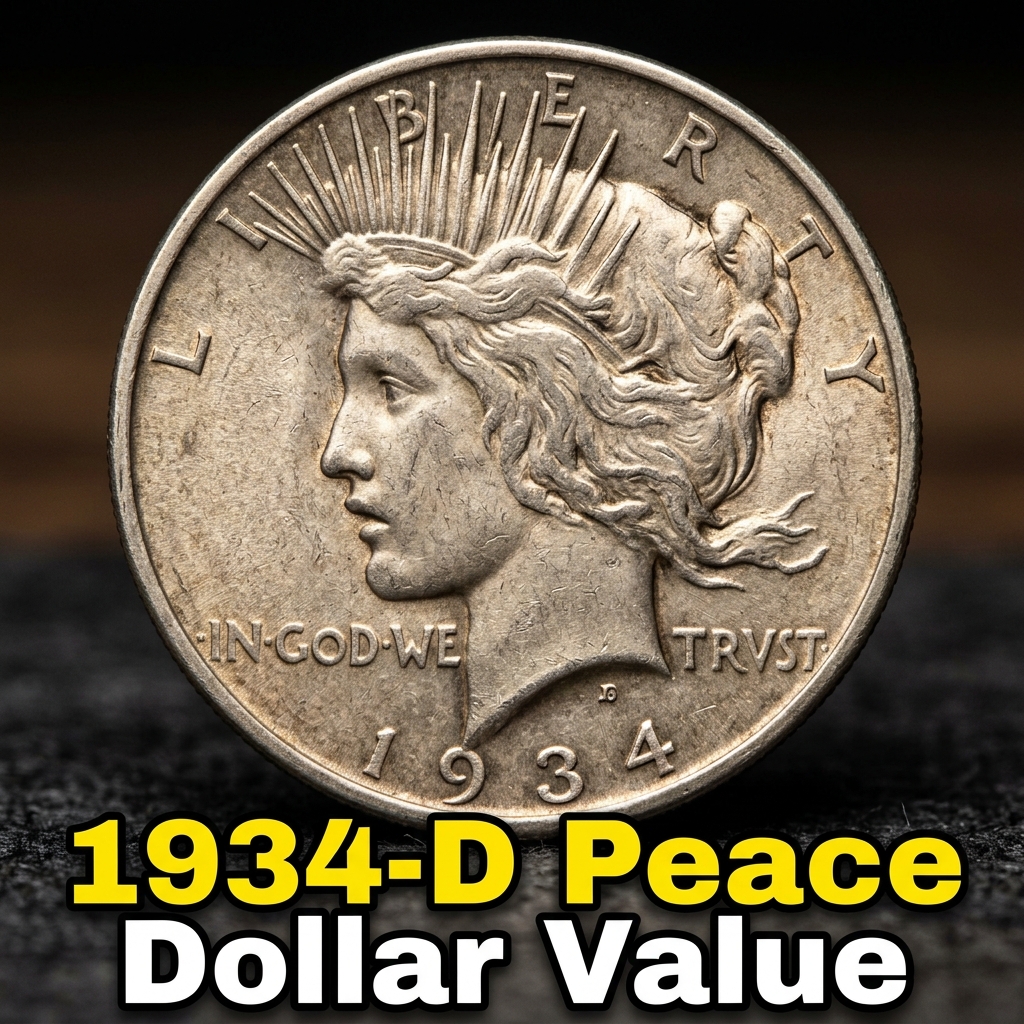
The 1934-D Peace Dollar is worth anywhere from $30 to $50 in heavily worn condition, climbing to $75–$150 in fine to very fine grades, and potentially reaching $500 or more in mint state. If you’ve found one of these silver dollars tucked away in a drawer or old collection, you’re holding a piece of American history that’s genuinely worth your attention.
What Makes the 1934-D Peace Dollar Special
The 1934-D Peace Dollar was struck at the Denver Mint during the tail end of the Peace Dollar series, which ran from 1921 to 1935. The “D” mintmark on the reverse — just above the eagle’s tail feathers — tells you this coin came from Denver, not Philadelphia or San Francisco.
Denver produced 1,569,500 Peace Dollars in 1934, which sounds like a lot, but survivorship matters more than original mintage. Many of these coins saw heavy circulation during the Great Depression era, so finding one in truly sharp condition is harder than you might think.
This coin carries 90% silver content, weighing in at 26.73 grams. Even a well-worn example has intrinsic silver melt value, which today adds a solid baseline to whatever numismatic premium exists. That combination of silver bullion value and collector demand is exactly what makes silver dollars like this one worth hanging onto.
If you’re just getting started identifying old coins, a free coin identifier app can help you quickly confirm what you’re holding before you dig deeper into values.
1934-D Peace Dollar Value by Grade
Coin value is almost entirely driven by condition, and the 1934-D is no exception. Here’s a straightforward breakdown of what the market typically looks like for this coin across common grades:
| Grade | Description | Estimated Value |
|---|---|---|
| Good (G-4) | Heavy wear, design still visible | $30 – $40 |
| Very Good (VG-8) | Moderate wear, major features clear | $40 – $55 |
| Fine (F-12) | Light to moderate wear overall | $55 – $75 |
| Very Fine (VF-20/30) | Light wear on high points only | $75 – $130 |
| Extremely Fine (EF-40) | Slight wear, sharp details | $130 – $200 |
| About Uncirculated (AU-50/58) | Minimal wear, original luster traces | $200 – $350 |
| Mint State (MS-60 to MS-63) | No wear, may have contact marks | $350 – $600 |
| Mint State (MS-64 and above) | Exceptional luster, very few marks | $700 – $2,000+ |
For the most current auction results and dealer pricing, you can check live 1934-D Peace Dollar price data by grade on CoinHix to see where the market stands right now. CoinHix tracks real-time coin market data and is a go-to tool for anyone serious about knowing what their coins are actually selling for.
How to Check the Condition of Your 1934-D Peace Dollar
You don’t need to be an expert to do a basic condition check. Start by looking at Lady Liberty’s cheek and hair strands on the obverse — these are the first areas to show wear. On the reverse, check the eagle’s breast feathers. If they’re flat and mushed together, you’re looking at a heavily circulated coin in Good to Fine grades.
Hold the coin under a single light source and tilt it slowly. Original mint luster appears as a cartwheel-like shimmer that rotates around the coin. If you see that shimmer, you may be holding an About Uncirculated or Mint State example, which pushes the 1934-D Peace Dollar value significantly higher.
Avoid cleaning your coin under any circumstances. A cleaned coin — even one that looks shiny — is considered damaged by collectors and graders, and it can cut the value by 50% or more. Leave it as-is until you know what you have.
Should You Get It Graded Professionally
If your coin looks like it’s in AU or Mint State condition, professional grading through PCGS or NGC is worth considering. Grading fees typically run $30–$50 per coin, but a certified MS-63 or higher 1934-D Peace Dollar can sell for hundreds more than an ungraded example — so the math often works out in your favor.
For circulated examples in the Good to Very Fine range, professional grading usually isn’t cost-effective. The certification fee would eat into a large chunk of the coin’s value. In those cases, selling raw through a reputable coin dealer or online marketplace makes more sense.
CoinHix is also a great resource to explore comparable certified sales before you decide whether grading is worth the investment for your specific coin.
For a thorough overview of the full 1934-D Peace Dollar value range including historical price trends, this detailed 1934 Peace Dollar value guide covers all three mints and gives you a solid frame of reference.
Frequently Asked Questions
Q: How do I know if my Peace Dollar is from Denver or Philadelphia?
A: Look on the reverse side of the coin, just above the eagle’s tail feathers. A small “D” mintmark means it was made in Denver. No mintmark means Philadelphia. San Francisco coins carry an “S.”
Q: Is the 1934-D Peace Dollar rare?
A: It’s not considered a key date, but it’s not common either — especially in higher grades. The original mintage was just over 1.5 million, and relatively few survived in collectible condition. In grades MS-64 and above, it becomes noticeably scarce and commands strong premiums.
Q: What’s the silver melt value of a 1934-D Peace Dollar?
A: Each Peace Dollar contains approximately 0.7734 troy ounces of pure silver. Multiply that by the current silver spot price to get the melt value. At $30 silver per ounce, that’s roughly $23 in silver content alone — giving every example a solid floor value regardless of condition.