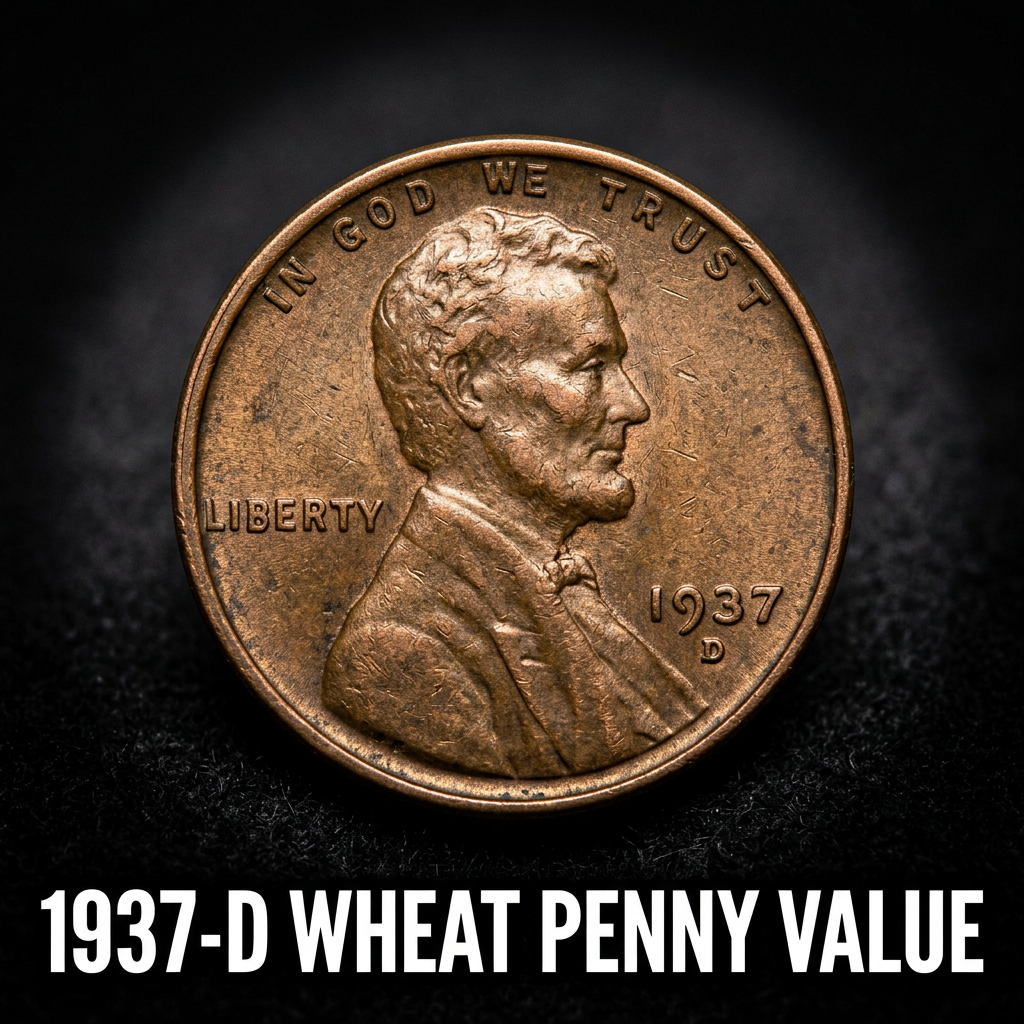
The 1937-D Wheat Penny is worth anywhere from $0.10 in heavily worn condition to over $20 or more in uncirculated grades — and high-quality examples graded MS-65 Red can fetch $50 or higher at auction. If you found one in a jar of old coins or an inherited collection, you’re in the right place to find out exactly what it’s worth.
When you’re trying to figure out what an old Lincoln cent is worth, condition matters more than most people realize. A quick and easy way to get started is by using a free coin identifier app that can help you match your coin to known grades and values before you visit a dealer. Tools like CoinHix make this process simple — just snap a photo of your coin and get an instant estimate right from your phone.
What Is the 1937-D Wheat Penny?
The 1937-D Wheat Penny is a Lincoln Wheat Cent minted at the Denver Mint in 1937. It carries a small “D” mintmark on the obverse (front) side of the coin, just below the date. These coins were made of 95% copper, which gives them that warm reddish-brown color you may notice even on older, circulated examples.
Over 50 million of these coins were struck that year in Denver, making them relatively common in the coin collecting world. However, that doesn’t mean they’re worthless — far from it. Coins in excellent condition, especially those that have never been circulated, can still command impressive prices from collectors.
The 1937-D is a beloved coin among Lincoln cent enthusiasts because it represents the pre-WWII era of American coinage, and well-preserved examples are harder to come by than the mintage figures might suggest.
1937-D Wheat Penny Value by Grade
The value of your 1937-D Wheat Penny depends heavily on its grade — how well it has been preserved over the past 85+ years. Here’s a breakdown of typical values across common grades:
| Grade | Condition Description | Estimated Value |
|---|---|---|
| Good (G-4) | Heavily worn, design still visible | $0.10 – $0.25 |
| Fine (F-12) | Moderate wear, details clearer | $0.50 – $1.00 |
| Extremely Fine (EF-40) | Light wear on high points | $2.00 – $5.00 |
| MS-63 Red Brown | Uncirculated, mixed color | $12 – $20 |
| MS-65 Red | Gem uncirculated, full red luster | $50 – $100+ |
For the most up-to-date market pricing, you can check out the 1937-D Wheat Penny price data in MS Red grade on CoinHix, which tracks real auction results and market trends for this coin.
What Affects the 1937-D Wheat Penny Value Most?
Beyond the grade, there are a few other factors that can push your coin’s value up or down significantly.
Color designation is one of the biggest drivers. Copper coins that have never circulated are graded as Red (RD), Red Brown (RB), or Brown (BN). Red coins — meaning they still have most of their original copper brilliance — are worth the most. A coin graded MS-65 Red is worth significantly more than the same grade in Brown.
Strike quality also matters. Some 1937-D cents came out of the mint with sharp, crisp details while others were softly struck. A coin with strong, well-defined wheat stalks and clear lettering is more desirable to collectors.
Eye appeal plays a role too. Even among coins in the same grade, one that is visually stunning — free of spots, stains, or distracting marks — will sell for more. If your coin looks beautiful even to an untrained eye, that’s a good sign.
How to Check If Your 1937-D Penny Is Worth More
Start by looking at your coin under good lighting. Check the mintmark — it should be a “D” below the date on the front of the coin. Then look at the overall sharpness and color. If the coin still looks reddish and crisp rather than flat and brown, you may have a more valuable example on your hands.
You can get a detailed breakdown of what your specific coin might be worth by visiting this complete 1937 penny value guide, which covers all mint varieties including Philadelphia, Denver, and San Francisco coins from that year.
If you want a fast, at-home identification tool, CoinHix is one of the best options available. It’s designed for everyday people — not just experienced collectors — and it gives you real market data without the guesswork.
Is the 1937-D Wheat Penny Worth Keeping?
Honestly, yes — even in average circulated condition, Wheat Pennies from the 1930s are worth holding onto. They’re genuine pieces of American history, minted during the Great Depression era when every penny truly counted. Collectors love them, and demand has stayed steady for decades.
If your coin is uncirculated or shows strong red color and sharp details, definitely don’t spend it or toss it in a change jar. Get it evaluated. A coin that looks like “just a penny” to most people might be worth $50, $75, or more to the right collector.
—
Frequently Asked Questions
Q: How do I know if my penny is a 1937-D?
A: Look at the date on the front of the coin — it should read “1937.” Then check directly below the date for a small “D” mintmark. If you see that “D,” you have a Denver-minted coin. No mintmark means it was made in Philadelphia.
Q: Are 1937-D Wheat Pennies rare?
A: Not particularly — the Denver Mint produced over 50 million of them. However, coins in top uncirculated condition with full red color are genuinely scarce and much harder to find, making high-grade examples desirable to collectors.
Q: Where is the best place to sell a 1937-D Wheat Penny?
A: For common circulated examples, coin shops or eBay are fine options. For higher-grade coins, consider submitting to a grading service like PCGS or NGC first, then selling through a reputable auction house or coin show. CoinHix can also help you track current market prices before you decide to sell.