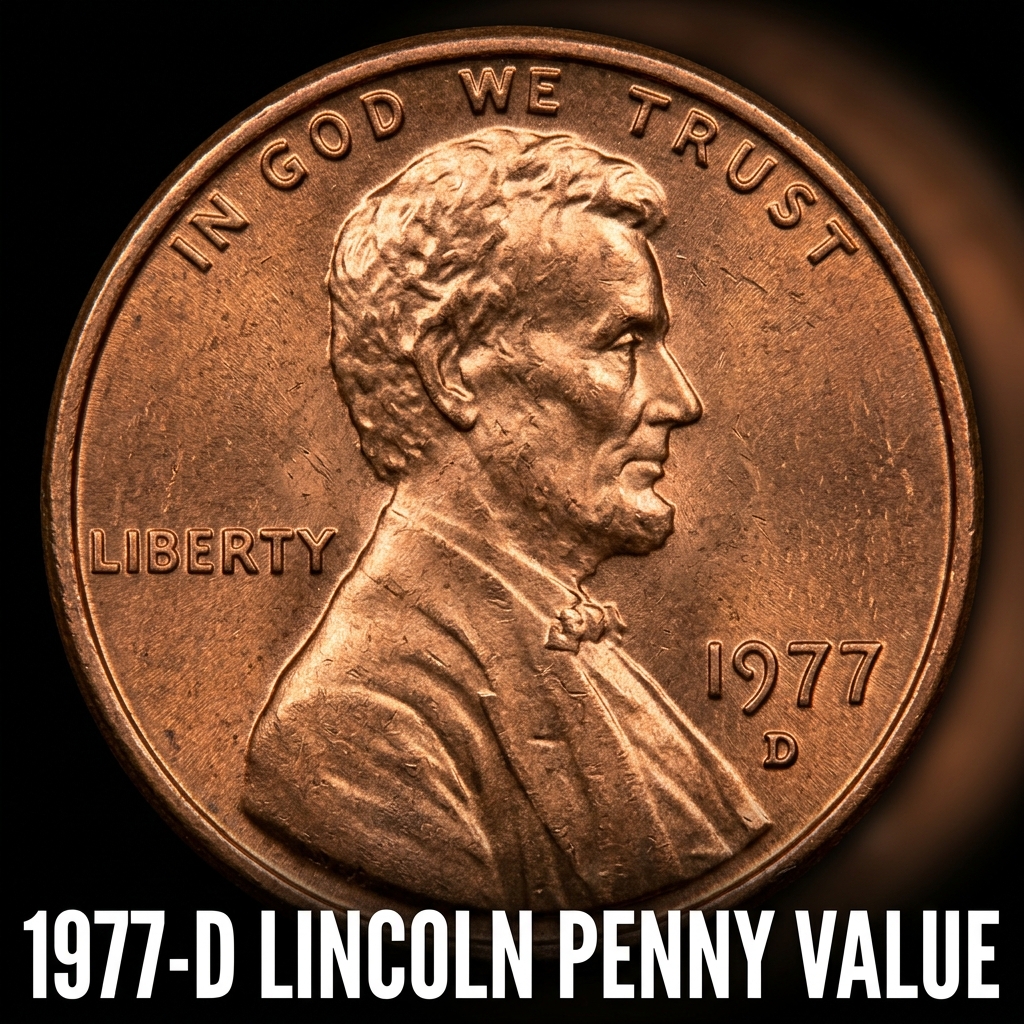
The 1977-D Lincoln Penny is worth anywhere from a few cents in heavily circulated condition to over $10 or more in mint state, with top-graded examples occasionally fetching $25 or higher at auction. If you found one of these coins in your change jar or inherited a coin collection, you’re in the right place to find out exactly what you’ve got.
Before we dive into the details, it helps to have a reliable tool at your side. A free coin identifier app can give you a quick starting point by scanning your coin and pulling up estimated values — no coin expertise required. That said, let’s walk through everything you need to know about the 1977-D Lincoln Penny value in plain, simple terms.
What Is the 1977-D Lincoln Penny?
The “D” in 1977-D stands for the Denver Mint, one of the major U.S. mints that produced Lincoln cents that year. The Denver facility struck over 4.1 billion pennies in 1977, making this one of the most common modern Lincoln cents in existence.
Because so many were made, the 1977-D penny is rarely worth a fortune in average circulated condition. Most worn examples you find in everyday change are worth face value — just one cent. However, condition is everything in the coin world, and an uncirculated 1977-D Lincoln Penny is a different story entirely.
The coin features the classic Victor David Brenner design on the obverse — Abraham Lincoln’s portrait — and the Lincoln Memorial on the reverse, which was used from 1959 through 2008. It’s composed of 95% copper and 5% zinc, which gives it that familiar reddish-brown color.
1977-D Lincoln Penny Value by Grade
Coin value is heavily tied to grade — a standardized condition rating that runs from Poor (P-1) to Perfect Mint State (MS-70). Here’s a breakdown of what the 1977-D penny is generally worth at different grades:
| Grade | Condition | Estimated Value |
|---|---|---|
| Good (G-4) | Heavy wear, design visible | $0.01 |
| Fine (F-12) | Moderate wear | $0.05 – $0.10 |
| Extremely Fine (EF-40) | Light wear on high points | $0.10 – $0.25 |
| Mint State 63 (MS-63) | Uncirculated, some marks | $1 – $4 |
| Mint State 65 (MS-65) | Gem uncirculated | $5 – $12 |
| Mint State 67 (MS-67) | Superb gem, near flawless | $20 – $40+ |
For detailed grading data and recent auction records, you can check the 1977-D Lincoln Penny price data by grade on CoinHix, which tracks live market values across different mint state designations.
Red, Red-Brown, and Brown — Why Color Matters
If you’ve done any coin research, you may have seen designations like RD, RB, and BN on Lincoln cent listings. These refer to the coin’s surface color, and they affect value more than most beginners expect.
RD (Red) coins retain 95% or more of their original copper luster. These are the most desirable and command the highest prices. RB (Red-Brown) coins show some original color mixed with toning. BN (Brown) coins have fully toned and are worth the least among uncirculated examples.
A 1977-D MS-65 Red penny will fetch noticeably more than an MS-65 Brown example. When you’re evaluating your coin, check whether it still has that bright copper shine — that alone can make a real difference in what a buyer will pay.
Are There Any 1977-D Penny Errors Worth Looking For?
Error coins are where everyday collectors sometimes strike gold — or at least more than face value. The 1977-D Lincoln Penny is known to have a few notable error types that collectors actively seek out.
Doubled die errors, where the design appears doubled or blurred due to a misaligned hub, have been documented on some 1977-D cents. These are typically visible on the lettering or Lincoln’s features under magnification.
Off-center strikes, where the design is stamped off-center, are another collectible error. Depending on the degree of the off-center shift, these can sell for anywhere from $5 to over $50. Die cap errors and broadstrikes also pop up occasionally. Always examine your coin closely under a loupe or magnifying glass before assuming it’s just a regular penny.
CoinHix makes it easy to look up error coin values right from your phone — just search the coin type and filter by error variety to see recent sales data in real time.
How to Get the Best Value for Your 1977-D Lincoln Penny
If you think you have an uncirculated or error example, don’t rush to sell it at a coin shop without doing your homework first. Getting a professional appraisal or submitting it to a grading service like PCGS or NGC can significantly increase what you can ask for it.
For a quick at-home assessment, try using CoinHix — it’s a smart, easy-to-use app that helps everyday people look up coin values, compare grades, and track what similar coins are selling for across major auction platforms.
You can also explore the full 1977 penny value breakdown including Denver mint details to compare your coin across different grades and conditions before making any selling decisions.
Whether your coin turns out to be worth a dollar or fifty, knowing its true value is always the first step.
—
Frequently Asked Questions
Q: Is a 1977-D penny rare?
A: Not particularly. Over 4.1 billion were minted at the Denver Mint in 1977, making it one of the more common Lincoln cents. However, high-grade mint state examples and error coins can be rare and quite valuable.
Q: What makes a 1977-D penny worth more money?
A: Condition is the biggest factor. An uncirculated coin with full original red color (RD designation) is worth far more than a worn example. Error varieties like doubled dies or off-center strikes also add significant value.
Q: How can I tell if my 1977-D penny is uncirculated?
A: Look for sharp, well-defined details and original copper luster with no signs of wear on the high points — especially on Lincoln’s cheekbone and the tops of the letters. If the coin looks like it was never used, it may well be uncirculated. Apps like CoinHix can also help you compare your coin to reference images for a quick visual grade.