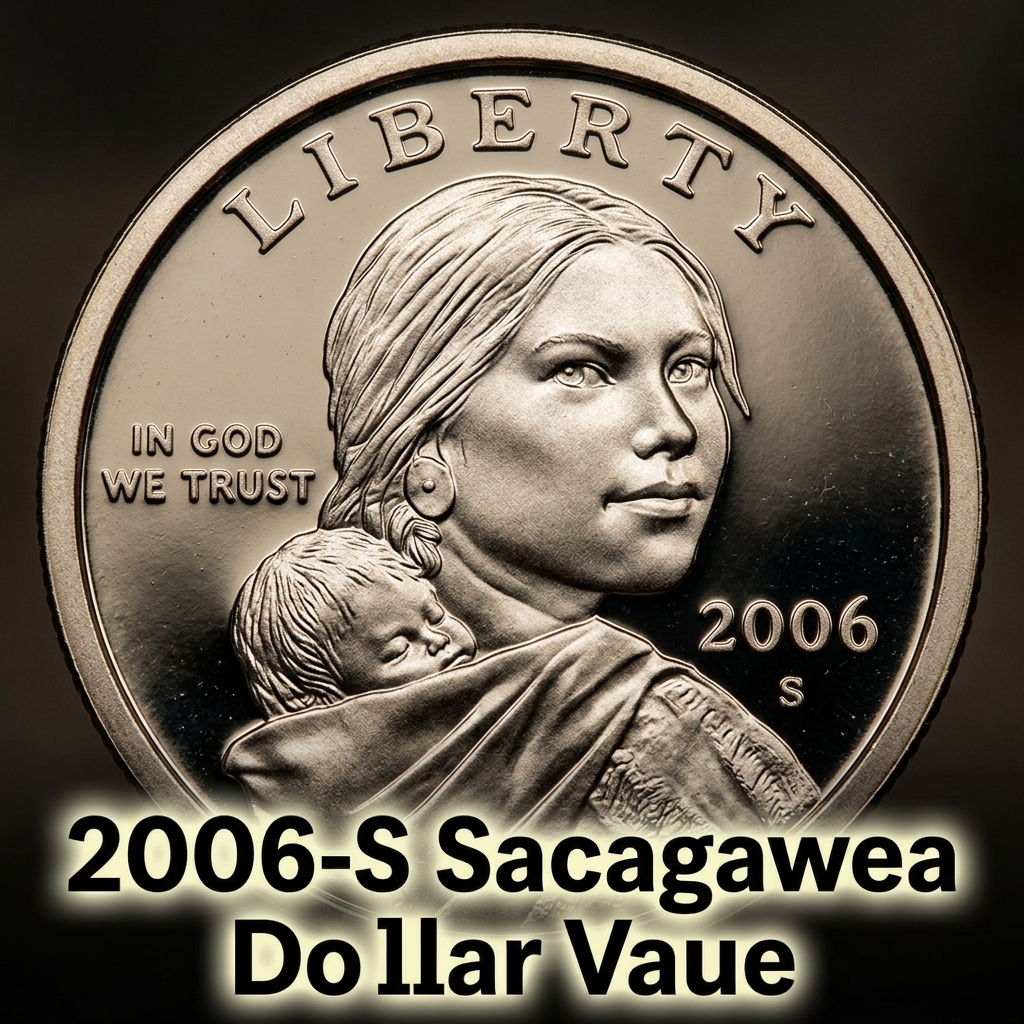
The 2006-S Sacagawea Dollar is worth anywhere from $3 in circulated condition to over $20 or more in pristine proof grades — and if you’ve got one sitting in an old coin jar, it might be more valuable than you think. This guide breaks down exactly what this coin is worth, what makes certain examples more desirable, and how to figure out what you’ve actually got.
If you’re not sure which version of this coin you have, a free coin identifier app can help you confirm the mint mark and grade before you make any decisions about buying or selling. Knowing the basics can save you from leaving money on the table.
What Is the 2006-S Sacagawea Dollar?
The 2006-S Sacagawea Dollar was struck at the San Francisco Mint and produced exclusively as a proof coin — meaning it was never made for everyday circulation. The “S” mint mark on the coin is your first big clue that this isn’t just any dollar coin.
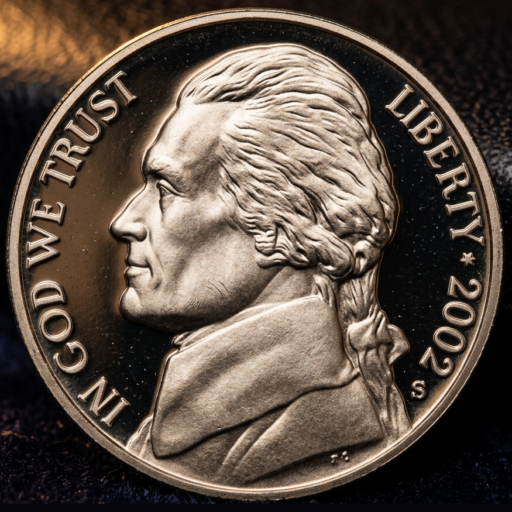
Proof coins are made with specially polished dies and planchets, giving them that mirror-like background with frosted raised designs. The San Francisco Mint has a long history of producing collector-quality proof sets, and the 2006-S Sacagawea Dollar is no exception.
These coins were typically sold as part of the U.S. Mint’s annual proof sets, so most examples have been carefully stored and handled with care. That’s good news if you found one, because condition matters enormously when it comes to value.
2006-S Sacagawea Dollar Value by Grade
The value of any coin depends heavily on its grade — a number between 1 and 70 that reflects its condition. Proof coins are graded on a PR (Proof) scale rather than the standard MS (Mint State) scale used for circulation coins.
Here’s a general breakdown of what the 2006-S Sacagawea Dollar is worth at different grades:
| Grade | Description | Estimated Value |
|---|---|---|
| PR 65 | Gem Proof | $5 – $8 |
| PR 67 | Superb Gem Proof | $8 – $12 |
| PR 69 | Near Perfect Proof | $12 – $20 |
| PR 70 | Perfect Proof | $25 – $50+ |
| PR 69 DCAM | Deep Cameo | $15 – $30 |
You can find detailed, up-to-date 2006 Sacagawea Dollar price data across multiple grades and auction results to see exactly what buyers are currently paying in the open market.
Deep Cameo vs. Regular Proof — Does It Matter?
Yes, it really does. Proof coins can come in standard proof or deep cameo (DCAM) finish. A deep cameo coin has a strong, high-contrast look — the raised design elements (like Sacagawea’s portrait) appear frosty white, while the background fields are jet black and mirror-like.
Deep cameo examples are generally worth more because they’re visually striking and more desirable to collectors. When you’re looking at a 2006-S proof, check whether it has a strong frosted contrast. A weak or washed-out cameo effect can reduce value.
CoinHix makes it easy to filter proof coin values by cameo designation, so you can quickly understand how much more a DCAM example is worth compared to a standard proof strike.
How Many Were Made and Why That Matters
Mintage numbers affect how common or rare a coin is, which directly impacts value. The 2006-S Sacagawea Dollar had a proof mintage of approximately 3.05 million coins — a relatively modest number compared to earlier years in the series.
While that might sound like a lot, most of these coins ended up in collector proof sets and haven’t been widely circulated. The supply reaching the open market is more limited than the total mintage suggests.
For an in-depth breakdown of what the 2006 Sacagawea Dollar is worth based on condition, mintage data, and real sale prices, it’s worth reviewing dedicated coin value resources before making any decisions.
If you want to check your coin quickly on the go, CoinHix is a handy app that pulls current market pricing and lets you compare recent auction records — great for everyday collectors who want real data without the jargon.
Tips for Selling or Keeping Your 2006-S Sacagawea Dollar
If you’re thinking about selling, condition is everything. A coin in original proof packaging from the U.S. Mint proof set holds its value better than one that’s been handled or removed from its case.
For higher-grade examples — anything in PR 69 or PR 70 — consider having the coin professionally graded by PCGS or NGC. The added cost of grading is often worth it when you’re dealing with a coin that could fetch $20 to $50 or more in a holder.
On the other hand, if your coin is in average proof condition (PR 65 to PR 67), it may sell for just a few dollars on eBay or at a coin show. That’s not bad for something that came in a proof set you might have paid $25 or $30 for years ago.
CoinHix can give you a real-time sense of current market values before you decide whether to sell, hold, or submit for grading.
Frequently Asked Questions
Q: Is the 2006-S Sacagawea Dollar rare?
A: It’s not considered rare in the traditional sense — around 3 million were produced — but it’s a collector’s coin that wasn’t made for general circulation. High-grade examples, especially in PR 70 or deep cameo, are harder to find and command premium prices.
Q: What’s the difference between the 2006-S and 2006-P Sacagawea Dollar?
A: The 2006-S was struck in San Francisco exclusively as a proof coin for collectors. The 2006-P was minted in Philadelphia for general circulation. The two are very different in appearance, quality, and value — proof coins are generally worth more to collectors.
Q: Should I clean my 2006-S Sacagawea Dollar before selling it?
A: Never clean a coin before selling it. Cleaning — even with a soft cloth — can leave hairline scratches that dramatically reduce a coin’s grade and value. Leave it exactly as you found it and let a professional assess its condition.