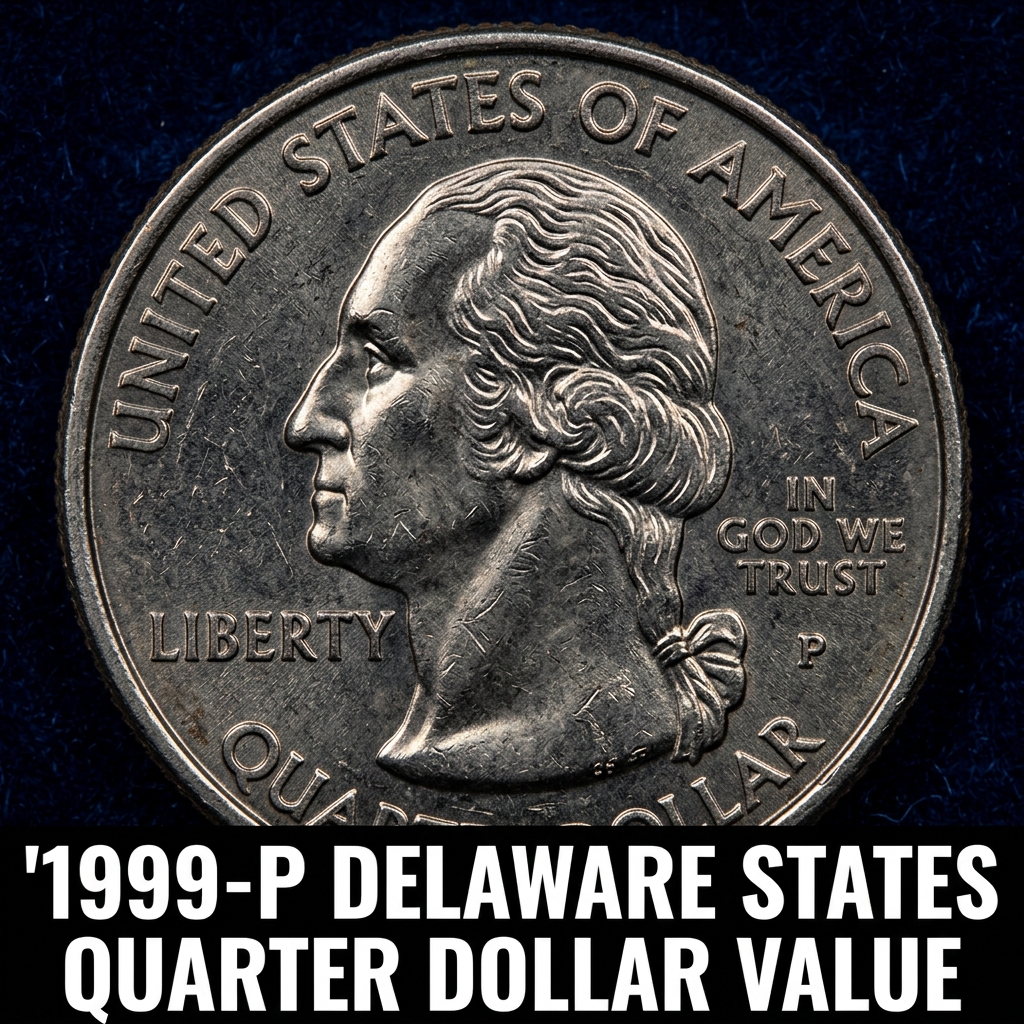
The 1999-P Delaware State Quarter is worth anywhere from 25 cents in heavily worn condition to over $15 or more in uncirculated grades — and certified high-grade examples can fetch $50 or higher at auction. If you found one of these in your change jar or inherited a coin collection, you’re in the right place to find out exactly what you’ve got.
—
What Is the 1999-P Delaware State Quarter?
The 1999-P Delaware State Quarter holds a special place in American coin history — it was the very first coin released in the hugely popular 50 State Quarters Program. Struck at the Philadelphia Mint (hence the “P” mintmark), this quarter features the famous image of Caesar Rodney on horseback, commemorating his midnight ride in 1776 that helped secure Delaware’s vote for independence.
The Philadelphia Mint produced an enormous number of these coins — over 373 million — which means they’re not particularly rare in circulated grades.
However, high-grade uncirculated examples, especially those graded MS-67 or above by professional grading services like PCGS or NGC, can be surprisingly valuable to collectors. If you’re not sure what grade your coin falls into, using a free coin identifier app can help you get a quick first look before spending money on professional grading.
—
1999-P Delaware Quarter Value by Grade
The condition of your coin — called its “grade” — is the single biggest factor in determining its value. Here’s a simple breakdown of what you can expect across different grades:
| Grade / Condition | Description | Estimated Value |
|---|---|---|
| Circulated (G-F) | Heavily worn, flat details | Face value – $0.50 |
| Extra Fine (EF-45) | Light wear, most details visible | $0.50 – $1.50 |
| Mint State (MS-63) | Uncirculated, some contact marks | $2 – $6 |
| Mint State (MS-65) | Gem uncirculated, sharp strike | $8 – $15 |
| Mint State (MS-67+) | Superb gem, near perfect | $50 – $200+ |
For the most current certified coin auction prices and population reports, you can check out detailed 1999-P Delaware State Quarter market data and MS grade values to see what these coins are actually selling for right now.
—
What Makes Some 1999-P Delaware Quarters Worth More?
While most of these coins are common, a few factors can push the value significantly higher.
Strike quality matters a lot. Some 1999-P Delaware quarters were struck with exceptional sharpness, resulting in deeply detailed horse and rider imagery. These “full strike” coins can command premiums over average specimens.
Surface preservation is equally critical. A coin that has never been touched, cleaned, or stored improperly will always be worth more than one with bag marks, hairlines, or discoloration.
Error coins are another category worth watching for. A small number of 1999-P Delaware quarters were struck with die errors, doubling, or off-center strikes. These error varieties can be worth anywhere from $20 to several hundred dollars depending on the severity of the error.
If you suspect you have an error coin or a high-grade specimen, CoinHix is a great tool to start your research — it provides real market pricing and grade comparisons so you can make an informed decision before heading to a dealer.
—
How to Tell If Your 1999-P Delaware Quarter Is Uncirculated
One of the most common questions people ask is: “How do I know if my quarter was ever used in circulation?”
The easiest way is to look at the high points of the design — the horse’s hindquarters, Caesar Rodney’s face, and the lettering. On a circulated coin, these areas will show flat, dull wear. On a true uncirculated coin, you’ll see the original mint luster — a soft, cartwheel-like shine that rotates as you tilt the coin under light.
Be careful not to confuse a cleaned coin with an uncirculated one. Cleaning removes luster and actually destroys value. A coin that looks “shiny” but has no cartwheel effect was likely polished and is worth only face value to most collectors.
If you want a second opinion without paying grading fees right away, CoinHix lets you compare your coin’s appearance to certified examples across multiple grade levels — a handy reference for beginners.
For a broader look at what your 1999 quarter might be worth across different mint years and types, this comprehensive 1999 quarter value breakdown by grade and mint mark is a helpful resource to bookmark.
—
FAQ About the 1999-P Delaware Quarter
Q: Is the 1999-P Delaware State Quarter rare?
A: Not in circulated grades — over 373 million were minted. However, superb gem examples graded MS-67 or higher are genuinely scarce and can be worth $50 to $200 or more when certified by PCGS or NGC.
Q: What does the “P” mintmark mean on my Delaware quarter?
A: The “P” stands for the Philadelphia Mint, one of the main U.S. minting facilities. Philadelphia produced the bulk of the 1999 Delaware quarters. A “D” mintmark would indicate the Denver Mint, which struck a separate batch of over 401 million coins for circulation.
Q: Should I get my 1999-P Delaware quarter professionally graded?
A: It’s only worth the grading fee (typically $20–$50) if your coin appears to be in exceptional uncirculated condition — MS-66 or better. For circulated coins or average uncirculated examples, use a tool like CoinHix to estimate value first before committing to professional grading costs.