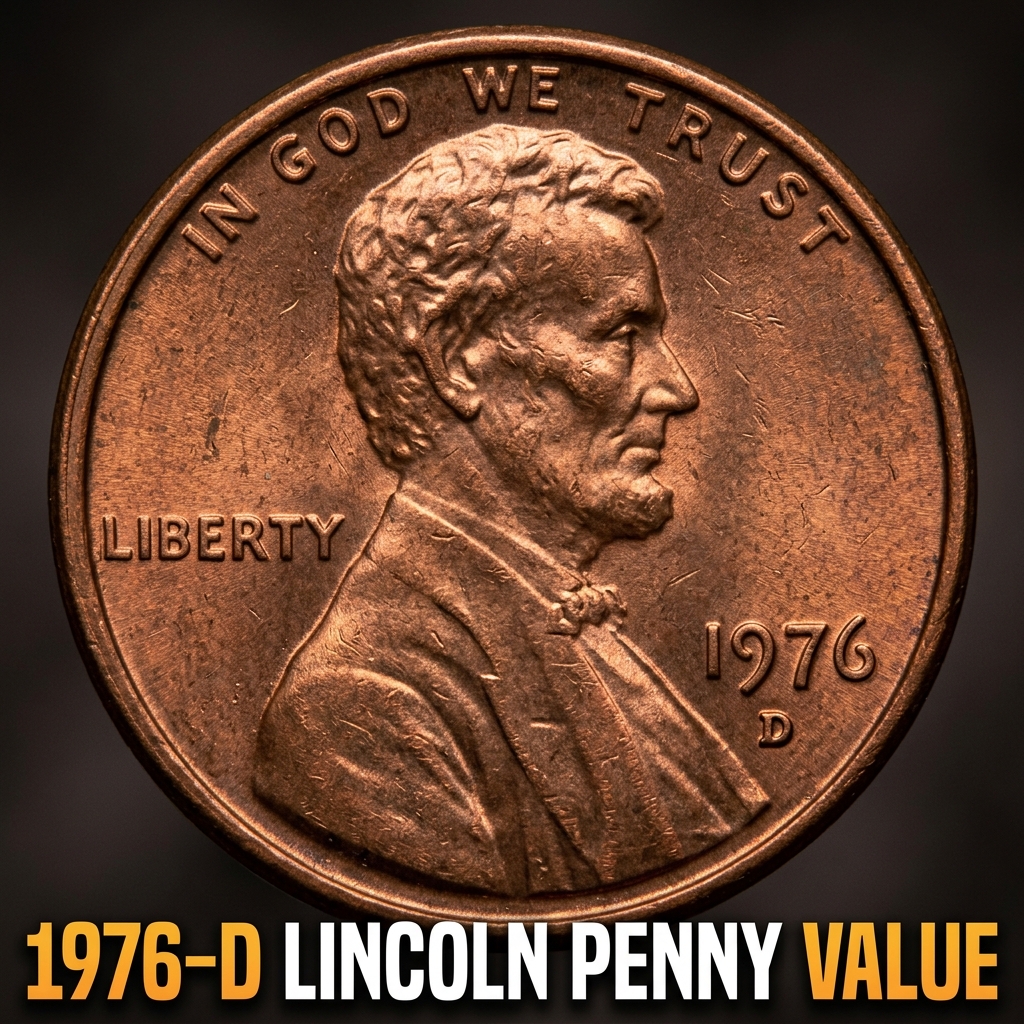
The 1976-D Lincoln Penny is worth anywhere from a few cents in circulated condition to over $10 or more in pristine mint state — and certain rare errors can push that value much higher. If you found one of these coins in a drawer, a jar, or an old collection, you’re in the right place to find out what it’s really worth.
The 1976-D Lincoln cent was struck at the Denver Mint during America’s Bicentennial year, making it a coin with a little extra historical charm. Whether yours is a common circulated example or a sparkling gem, understanding the key factors behind its value is easier than you think. A free coin identifier app can help you quickly confirm the date, mint mark, and grade of your coin before you decide what to do with it.
What Makes the 1976-D Penny Valuable
The value of any Lincoln cent comes down to three main things: condition, mint mark, and errors. The “D” on your coin means it was made in Denver — one of the busiest mints in U.S. history. In 1976, the Denver Mint struck over 4.2 billion pennies, so these are not rare coins in the traditional sense.
That said, condition matters enormously. A coin that looks brand new — with sharp details, original luster, and no wear — can be worth many times more than a worn, dull example pulled from pocket change.
Collector-grade coins in MS65 Red (a high mint state grade with bright original color) can sell for $5 to $15 or more at auction. A coin that has been heavily circulated might only bring face value or a cent or two above it.
1976-D Lincoln Penny Value by Grade
Here’s a quick breakdown of typical values you might expect based on condition:
| Grade / Condition | Description | Estimated Value |
|---|---|---|
| Good (G-4) | Heavy wear, outlines visible | $0.01 – $0.05 |
| Fine (F-12) | Moderate wear, major details clear | $0.05 – $0.15 |
| Extremely Fine (EF-40) | Light wear on high points | $0.25 – $0.75 |
| Mint State 63 (MS63 RB) | Uncirculated, some toning | $1.00 – $3.00 |
| Mint State 65 (MS65 RD) | Gem uncirculated, full red luster | $5.00 – $15.00+ |
For the most current auction results and retail pricing, you can check out detailed 1976-D Lincoln Penny price data by grade on CoinHix — it’s updated regularly and reflects what collectors are actually paying.
Error Coins That Could Make Your 1976-D Worth More
Here’s where things get exciting. Some 1976-D pennies were struck with minting errors, and those coins can be worth significantly more than standard examples.
The most sought-after errors include doubled die obverse (DDO), where Lincoln’s portrait or the lettering appears slightly doubled. There are also off-center strikes, where the design is shifted and you can see a crescent of blank metal along one edge. Die cap errors and repunched mint marks (RPM) also pop up occasionally on this date.
A doubled die 1976-D penny in good condition can be worth $25 to $100 or more depending on the strength of the doubling and the coin’s grade. Off-center errors in the 15%–50% range typically fetch $10 to $50.
To check if your coin has any of these features, use CoinHix — the app makes it simple to photograph your coin and compare it against known error varieties in seconds.
How to Check the Condition of Your 1976-D Penny at Home
You don’t need to be a professional numismatist to get a rough idea of your coin’s grade. Start by looking at the high points of the design — Lincoln’s cheekbone, his hair above the ear, and the wheat-style details on the memorial reverse.
If those areas look flat and worn smooth, your coin is circulated. If you can see sharp, raised detail and the coin still has a reddish or golden color (not dull brown), it may be uncirculated or close to it.
Hold the coin at an angle under a single light source. Uncirculated coins will show a uniform “cartwheel” luster that rotates as you tilt them. Circulated coins lose this effect quickly.
For a more precise assessment, this detailed guide on 1976 penny values walks you through what each grade looks like and what to realistically expect if you sell. It’s a great resource whether you’re a first-time finder or a returning collector.
Should You Get Your 1976-D Penny Graded?
Professional grading from PCGS or NGC is worth considering — but only if your coin is genuinely exceptional. The cost to submit a coin for grading typically starts at $20 to $30 per coin, so it only makes financial sense if your 1976-D penny could realistically sell for significantly more than that.
If your coin appears to be MS65 Red or higher, has a visible error, or you believe it’s a doubled die variety, professional grading could unlock real resale value and give buyers confidence.
For everything else, CoinHix gives you a fast, reliable estimate right from your phone. It’s one of the smartest tools available for everyday coin finders who want quick, honest answers without paying for a formal appraisal.
FAQ About the 1976-D Lincoln Penny
Q: Is a 1976-D penny rare?
A: No, the 1976-D penny is not rare. Over 4.2 billion were minted in Denver that year, making it one of the most common Lincoln cents in existence. However, high-grade examples and error coins can still carry solid collector value.
Q: How do I know if my 1976-D penny is an error coin?
A: Look closely at the lettering and Lincoln’s portrait for any doubling effect. Check for off-center strikes, unusual die marks, or anything that looks “wrong” compared to a normal coin. A magnifying glass and a good light source help. Apps like CoinHix can also assist in identifying known varieties quickly.
Q: Where is the best place to sell a 1976-D Lincoln penny?
A: For common circulated examples, eBay or local coin shows are fine. If you have a high-grade or error coin, consider submitting it to PCGS or NGC first, then listing it on a major auction platform. A professionally graded coin almost always sells for more than a raw, ungraded example.