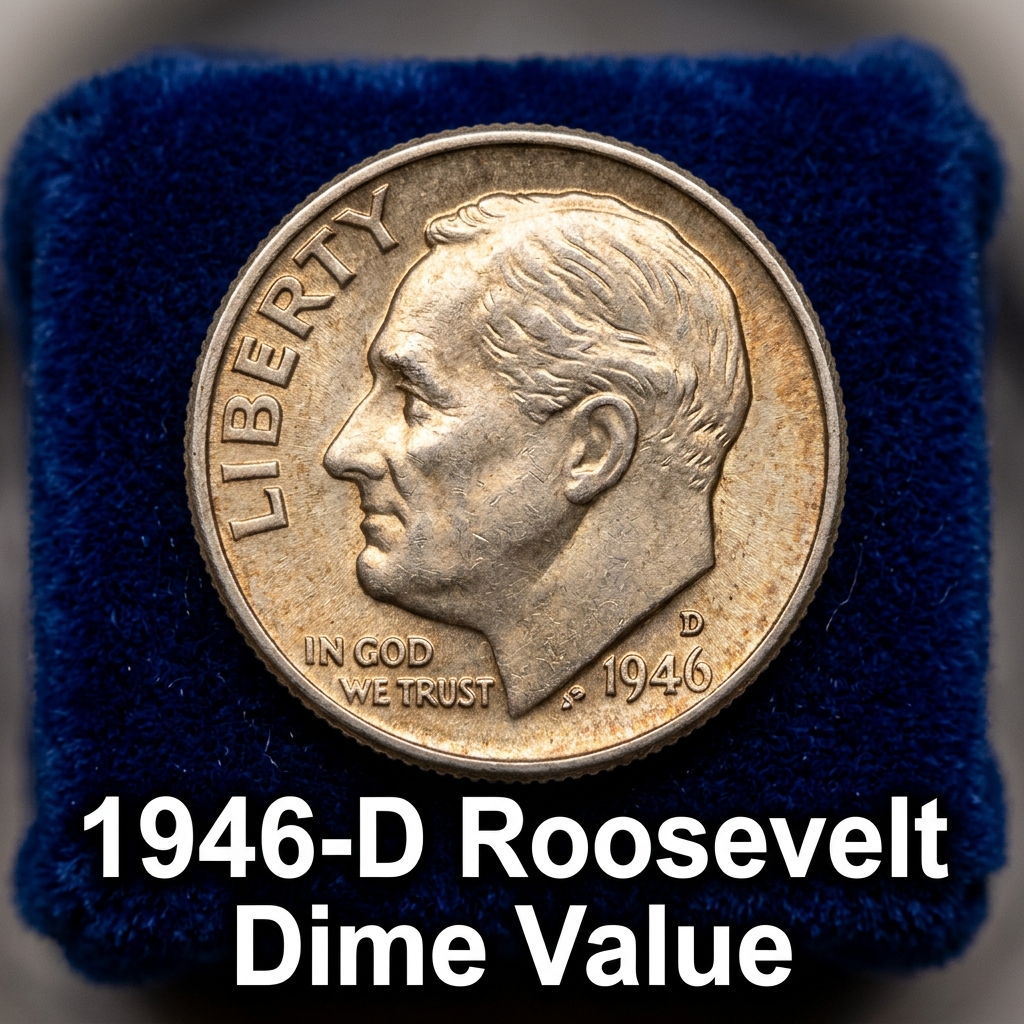
The 1946-D Roosevelt Dime is worth anywhere from around $2 in heavily worn condition to over $50 or more in uncirculated grades — and high-quality examples can push even higher. If you found one of these old silver dimes in a jar, a drawer, or an old collection, you’re in the right place. Let’s break down exactly what it’s worth and what makes some worth more than others.
What Is the 1946-D Roosevelt Dime?
The 1946-D Roosevelt Dime was minted at the Denver Mint — that’s what the “D” mint mark stands for. It was the very first year the Roosevelt Dime was produced, making it a historically significant coin for any collection. These dimes were struck in 90% silver, which means even a worn example carries real metal value.
The Denver Mint struck 61,043,500 of these coins in 1946, making them less scarce than some other dates in the series but still sought after by collectors in high grades. The mint mark “D” appears on the reverse (back) of the coin, just to the left of the torch at the bottom.
If you want a quick way to identify your coin and check its grade, a free coin identifier app can help you get a fast read on what you’re holding before you dive deeper into valuation.
1946-D Roosevelt Dime Value by Grade
The condition of your coin — known as its “grade” — has the biggest impact on value. A coin that looks shiny and nearly perfect is worth far more than one that’s scratched and worn flat from decades in circulation.
Here’s a general value chart for the 1946-D Roosevelt Dime:
| Grade | Description | Estimated Value |
|---|---|---|
| Good (G-4) | Heavily worn, major details visible | $2 – $3 |
| Fine (F-12) | Moderate wear, all lettering clear | $3 – $5 |
| Extremely Fine (EF-40) | Light wear on high points | $5 – $10 |
| MS-63 (Uncirculated) | No wear, some contact marks | $20 – $35 |
| MS-65 (Gem Uncirculated) | Strong luster, very few marks | $50 – $100+ |
| MS-67 Full Bands (FB) | Top grade with sharp torch bands | $500 – $1,500+ |
For current auction results and certified sale prices, you can check out the 1946-D Roosevelt Dime price data at CoinHix, which tracks real market values updated regularly.
What Makes Some 1946-D Dimes Worth So Much More?
One of the biggest value boosters for Roosevelt Dimes is something called “Full Bands” — abbreviated FB or FT (Full Torch). This refers to the horizontal bands on the torch on the reverse of the coin being fully separated and sharply struck.
Most circulated and even many uncirculated examples don’t show complete, distinct bands because the dies wore down during production. A coin that does show full bands in MS-65 or higher is significantly rarer and can be worth ten to twenty times more than the same grade without Full Bands.
The strike quality on Denver Mint coins from 1946 was generally solid, but fully struck gems are still not easy to find. If your coin looks particularly sharp and the torch detail pops, it could be worth having it professionally graded.
CoinHix is a great tool to quickly look up comparable certified coin sales and understand what the market is currently paying for specific grades of this coin.
Silver Melt Value — Your Coin Has a Floor
Even if your 1946-D dime is heavily worn and not worth much as a collector coin, it still contains real silver. Each Roosevelt Dime from 1946 contains approximately 0.07234 troy ounces of pure silver.
With silver prices fluctuating but generally hovering around $25–$30 per ounce in recent years, that puts the melt value of a single coin at roughly $1.80 to $2.20. That’s essentially the floor — most circulated examples will trade for at least this amount, and many will trade for more simply because of collector demand.
This is great news if you’ve got a roll or a bag of old silver dimes. Even worn pieces have real precious metal value. You can get a full breakdown of the 1946 Roosevelt Dime value including silver content estimates on Coin Value App, which is helpful for understanding what your collection is worth as a whole.
How to Tell If Your 1946-D Dime Is Worth Getting Graded
Not every old dime needs to go to a professional grading service. But if your coin looks nearly perfect — brilliant luster, no visible scratches, and a sharp strike — it may be worth the cost of professional certification.
Here’s a quick checklist:
– Does the coin look like it was never circulated?
– Is the luster still bright and reflective?
– Are the torch bands fully separated on the reverse?
– Are there no major contact marks under a magnifying glass?
If you answered yes to most of these, your coin could be worth significantly more in a certified holder. Services like PCGS and NGC are the industry standards.
You can also use CoinHix to compare your coin’s appearance to certified examples at various grade levels before deciding whether to submit it for grading.
Frequently Asked Questions
Q: How do I know if my dime is a 1946-D and not another mint?
A: Look at the reverse of the coin near the bottom of the torch. If you see a small “D,” it was made in Denver. No mint mark means it was made in Philadelphia. An “S” means San Francisco.
Q: Is the 1946-D Roosevelt Dime rare?
A: It’s not considered rare overall since over 61 million were produced, but high-grade examples — especially those with Full Bands — are genuinely scarce and can command strong prices from collectors.
Q: Where is the best place to sell my 1946-D Roosevelt Dime?
A: Options include eBay for circulated examples, coin dealers for quick cash, and Heritage Auctions or Stack’s Bowers for high-grade or certified coins. Always check current market values using tools like CoinHix before selling so you know what your coin is actually worth.