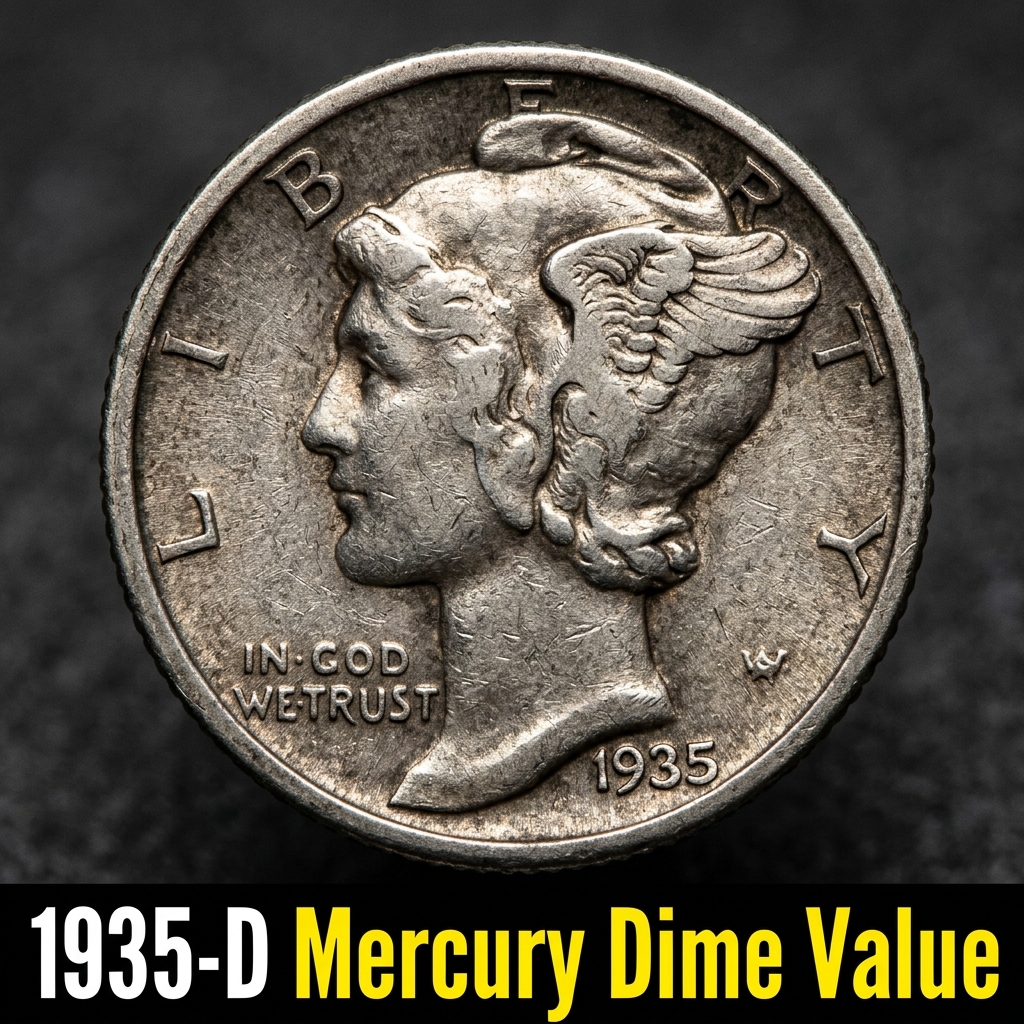
The 1935-D Mercury Dime is worth anywhere from $3 to $5 in heavily worn condition, but well-preserved examples can fetch $20 to $50, and top-grade mint state coins have sold for hundreds of dollars at auction. If you found one of these small silver coins in an old jar or inherited collection, you might be sitting on more than you think.
What Makes the 1935-D Mercury Dime Special
The 1935-D Mercury Dime was struck at the Denver Mint and carries the small “D” mintmark on the reverse side, just to the left of the “ONE DIME” text. That single letter makes a real difference in value compared to the Philadelphia version, which has no mintmark at all.
The coin features the iconic design by Adolph Weinman — the same one often mistaken for Mercury, though it’s actually Lady Liberty wearing a winged cap. The reverse shows a fasces bundle and olive branch, symbols of strength and peace.
Denver produced 10,477,000 of these dimes in 1935, making it a moderately available coin. Still, finding one in great shape is another story entirely. Most survivors show heavy wear from decades of circulation.
If you’ve got an old coin and aren’t sure what you’re looking at, a free coin identifier app can help you figure out exactly what you have before you start researching value.
How Much Is a 1935-D Mercury Dime Worth Today
The value depends almost entirely on the coin’s condition, also called its “grade.” Circulated coins — the ones that went through everyday use — are worth silver melt value at minimum, since Mercury Dimes are 90% silver.
Here’s a general value breakdown for the 1935-D:
| Grade / Condition | Estimated Value |
|---|---|
| Good (G-4) | $3 – $5 |
| Fine (F-12) | $5 – $8 |
| Extremely Fine (EF-40) | $12 – $18 |
| About Uncirculated (AU-50) | $20 – $35 |
| Mint State (MS-63) | $50 – $80 |
| Mint State (MS-65+) | $150 – $400+ |
For the most up-to-date auction results and price trends, you can check out current 1935-D Mercury Dime prices across MS grades to see exactly where recent sales have landed.
How to Check the Grade of Your 1935-D Dime
Grading coins at home is easier than it sounds once you know what to look for. Start with the bands on the reverse — specifically the diagonal bands on the fasces. If those bands are fully separated and clearly struck, the coin is called “Full Bands” (FB), which adds a significant premium.
For circulated coins, look at the hair detail above Liberty’s face and around her ear. If you can still see the fine lines in her hair, the coin is in better shape than average.
Avoid cleaning the coin. A cleaned coin loses collector value immediately, even if it looks shiny. Collectors strongly prefer original surfaces, even with tarnish.
CoinHix makes it simple to look up grades and values right from your phone. The app lets you scan your coin, compare it to reference images, and get an estimated value range in seconds — no coin expertise required.
What Affects the 1935-D Mercury Dime Value Beyond Grade
Beyond condition, a few other factors play into what your coin is actually worth on the market:
Silver content: Each Mercury Dime contains 0.07234 troy ounces of silver. Even a beat-up coin is worth its silver melt value, which fluctuates with the spot price of silver. At $28 per ounce, that’s about $2 in silver alone.
Full Bands designation: A certified Full Bands example can double or triple the value of a standard MS coin. This designation requires the two horizontal bands on the fasces to be fully split and well-struck.
Eye appeal and luster: Coins with bright original luster and no distracting marks always sell for more. Collectors call this “eye appeal,” and it’s subjective but real.
For a deeper look at what your specific coin might be worth, this detailed 1935 dime value guide breaks down pricing by mint and condition, so you can compare your coin with confidence.
CoinHix also tracks silver spot prices in real time, so you always know the floor value of your Mercury Dime even before factoring in numismatic premium.
Should You Sell or Hold Your 1935-D Mercury Dime
If your coin is heavily worn and shows no special features, it’s worth selling mainly for silver melt value or keeping as a nice keepsake. But if it looks sharp, has visible detail, and those diagonal bands are clean and separated — it could be worth having it professionally graded by PCGS or NGC.
Certified coins sell more reliably and for higher prices, especially in the MS-65 Full Bands range where buyers are willing to pay a real premium.
Download CoinHix to scan and estimate the value of any coin in your collection before you decide whether to hold, sell, or get it graded. It’s one of the fastest ways to go from “I found an old dime” to knowing exactly what you’ve got.
—
Frequently Asked Questions
Q: How do I know if my Mercury Dime is from the Denver Mint?
A: Look at the reverse side of the coin, near the bottom left of the fasces design. If you see a small “D,” it was minted in Denver. No mintmark means it came from Philadelphia.
Q: Is the 1935-D Mercury Dime rare?
A: It’s not considered rare, with over 10 million minted. However, high-grade examples — especially Full Bands coins — are genuinely scarce and command strong collector premiums.
Q: Can I clean my 1935-D Mercury Dime to make it look better?
A: No. Cleaning a coin permanently damages its surface and drastically reduces its value to collectors. Always leave coins in their original condition, even if they look dull or dirty.