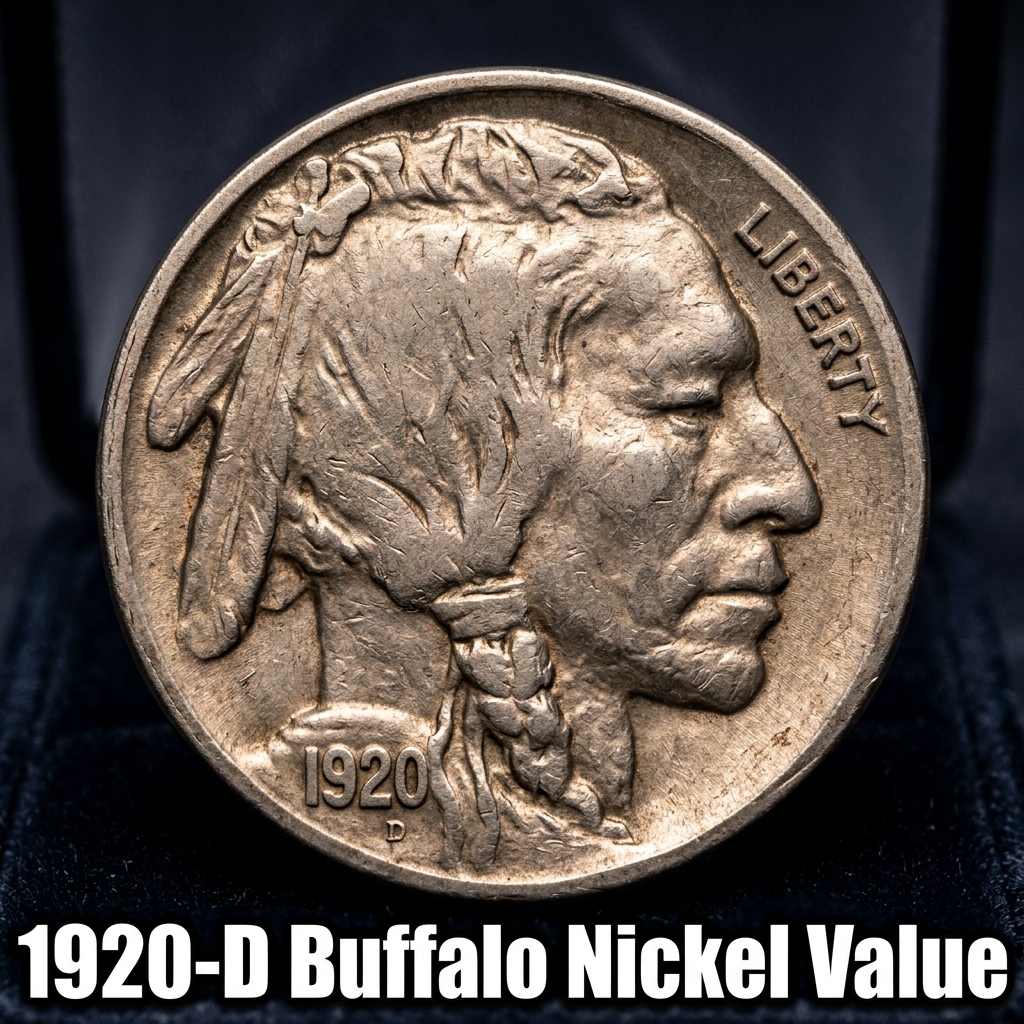
The 1920-D Buffalo Nickel is worth anywhere from $15 in heavily worn condition to well over $1,500 in high mint state grades — and truly exceptional examples have sold for thousands at major auctions. If you found one of these coins in an old collection or inherited jar of change, you might be sitting on a pleasant surprise. This guide breaks down exactly what affects the value and what to look for.
—
What Makes the 1920-D Buffalo Nickel Special
The 1920-D Buffalo Nickel was minted at the Denver Mint, indicated by the small “D” mintmark found on the reverse side just below the words “FIVE CENTS.” Denver produced just over 9 million of these coins in 1920, which sounds like a lot — but after a century of circulation, relatively few survive in collectible condition.
The Buffalo Nickel series, also known as the Indian Head Nickel, ran from 1913 to 1938. Designed by James Earle Fraser, the coin features a Native American portrait on the obverse and an American bison on the reverse. It’s one of the most beloved classic coin designs in American history, and collectors actively seek out the Denver issues because they tend to be harder to find in top grades than their Philadelphia counterparts.
If you’ve never used a free coin identifier app to check an old coin, it can be a quick and easy way to get a starting estimate before diving deeper into research.
—
How to Check the Grade and Condition of Your 1920-D Nickel
Coin value is almost entirely driven by condition, and that’s especially true for Buffalo Nickels. Because these coins circulated heavily, most surviving examples show significant wear — flat horn on the buffalo, faded cheekbones on the Native American portrait, and a worn date.
Here’s a general breakdown of what to look for:
– Good (G-4): The outline of the design is visible, but all fine details are flat. The date and mintmark are readable.
– Very Fine (VF-20 to VF-35): Moderate wear with some detail remaining on the buffalo’s horn and the portrait’s hair.
– Extremely Fine (EF-40 to EF-45): Light wear on the high points only. Most detail remains sharp.
– Mint State (MS-60 and above): No wear at all. The coin looks like it never circulated.
Even a small jump in grade can mean a significant jump in value. A coin grading MS-63 might be worth $400, while the same coin in MS-65 could reach $1,200 or more. CoinHix makes it easy to see how grades translate into real market prices without needing to guess.
—
1920-D Buffalo Nickel Value by Grade
Here’s a quick reference table for approximate retail values:
| Grade | Estimated Value |
|---|---|
| Good (G-4) | $15 – $25 |
| Fine (F-12) | $30 – $50 |
| Very Fine (VF-20) | $55 – $90 |
| Extremely Fine (EF-40) | $110 – $175 |
| About Uncirculated (AU-55) | $200 – $350 |
| Mint State (MS-63) | $400 – $650 |
| Mint State (MS-65) | $1,200 – $1,800+ |
For live auction results and dealer pricing on the 1920-D, you can check current 1920 Buffalo Nickel mint state price data to see how real-world sales stack up against these estimates.
—
Where to Find the Mintmark and Date (They Can Be Tricky)
One thing that trips up a lot of newcomers is that Buffalo Nickels are notorious for having weak or partially missing dates. The date was struck in a raised area that wore down quickly with even light circulation. If your coin’s date is hard to read, it may still have some value — but less than a clearly dated example.
The mintmark “D” sits on the reverse, below “FIVE CENTS” and just to the right of center. It’s small but should be visible with a magnifying glass on circulated examples in Fine grade or better.
If you’re unsure about your coin’s details, CoinHix has a visual grading guide that walks you through each feature step by step. It’s a great tool whether you’re a first-timer or someone who’s been collecting for years.
For a more detailed breakdown of all grades and varieties, this complete 1920 Buffalo Nickel value guide covers everything from circulated worn examples to rare gem mint state survivors.
—
Should You Get Your 1920-D Buffalo Nickel Professionally Graded?
If your coin looks like it’s in About Uncirculated or better condition, professional grading through PCGS or NGC is worth considering. Grading fees typically run $20–$40 per coin for standard service, and a certified grade can significantly boost resale value — especially if the coin comes back MS-64 or higher.
Coins worth under $100 in raw condition generally don’t benefit enough from third-party grading to justify the cost and time. But if you have a sharp, lustrous example with no visible wear, it might be worth the investment.
Before spending money on grading, use CoinHix to get a realistic ballpark estimate. The app lets you compare your coin’s details against graded examples so you can make a smarter decision about next steps.
—
FAQ
Q: How do I know if my nickel is a 1920-D and not a 1920-S or plain 1920?
A: Look at the reverse side of the coin, directly below the words “FIVE CENTS.” A “D” mintmark means Denver, “S” means San Francisco, and no mintmark means it was struck in Philadelphia. All three are collectible, but the Denver issue tends to be slightly scarcer in higher grades.
Q: My 1920-D Buffalo Nickel has a very faint date. Is it still worth anything?
A: Yes, but significantly less than a coin with a clear, bold date. A readable date is important to most collectors. Some dealers buy dateless Buffalo Nickels for melt value or as novelty pieces, typically in the $1–$5 range. If the date is partially visible and can be authenticated as a 1920-D, it still has some collector appeal.
Q: Is the 1920-D Buffalo Nickel rare?
A: It’s not considered rare in circulated grades, but it does become genuinely scarce in Mint State condition, especially MS-65 and above. Finding a well-struck, original-luster example that never saw circulation is quite difficult after more than a hundred years, which is what drives strong prices at the top of the grading scale.