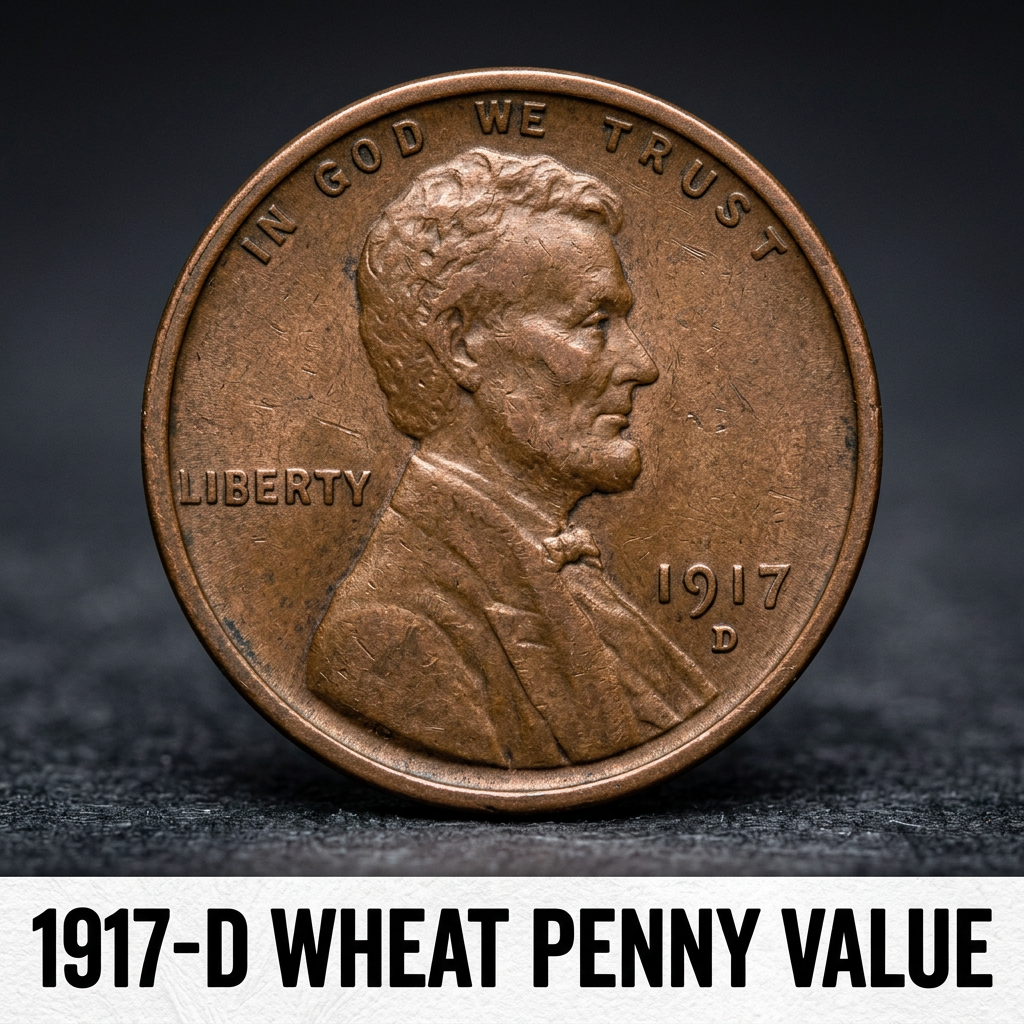
The 1917-D Wheat Penny is worth anywhere from $0.50 in heavily worn condition to well over $100 in higher mint state grades — and in top-tier certified condition, it can fetch several hundred dollars or more. If you just found one of these old Lincoln cents in a jar, a drawer, or an inherited coin collection, you’re in the right place. Let’s break down exactly what this coin is worth and what to look for.
What Is the 1917-D Wheat Penny?
The 1917-D Wheat Penny was struck at the Denver Mint in 1917, during the early years of the Lincoln Wheat Cent series. The small “D” mintmark appears on the obverse, just below the date on the right side. That “D” is your first clue that you might have something a bit more interesting than a common Philadelphia coin.
Denver produced around 55.1 million of these pennies that year — a healthy mintage, but not so large that every surviving coin is in decent shape. After more than 100 years of circulation, most examples are worn smooth. The ones that survived in good condition are the ones collectors really get excited about.
You can use a free coin identifier app to quickly check whether the coin in your hand matches the 1917-D and get a rough sense of its grade before diving deeper.
1917-D Wheat Penny Value by Grade
Coin value depends almost entirely on condition, or “grade.” The grading scale runs from Poor (P-1) at the bottom to Mint State (MS-70) at the top. Here’s a general breakdown of what the 1917-D Wheat Penny is worth across common grades:
| Grade | Description | Estimated Value |
|---|---|---|
| Good (G-4) | Heavy wear, outline visible | $0.50 – $1.50 |
| Fine (F-12) | Moderate wear, details clear | $2 – $5 |
| Extremely Fine (EF-40) | Light wear on high points | $12 – $25 |
| About Uncirculated (AU-55) | Slight wear, mostly original luster | $35 – $60 |
| Mint State (MS-63) | Uncirculated, minor blemishes | $80 – $150 |
| Mint State (MS-65+) | Gem uncirculated, full luster | $300 – $600+ |
For the most current auction prices and certified sale records, you can check out live 1917-D Wheat Penny price data in MS Red grades to see what these coins are actually selling for right now.
What Makes Some 1917-D Pennies Worth More
Color is a big deal with copper cents. Grading services like PCGS and NGC assign color designations alongside the numerical grade: Red (RD), Red-Brown (RB), and Brown (BN).
A 1917-D Wheat Penny graded MS-65 Red is worth significantly more than the same coin graded MS-65 Brown. Red coins have retained their original mint luster and warm copper color — a remarkable feat for a coin over a century old. Most circulated examples have turned brown or spotted over time, which is completely normal but does affect value.
Strike quality also matters. Some Denver Mint coins from this era show weak strikes, especially on Lincoln’s cheekbone and the wheat stalks on the reverse. A well-struck coin with sharp detail commands a premium, especially at higher grades.
How to Tell If Your 1917-D Penny Is the Real Deal
Start by looking at the date and mintmark under magnification. The “D” should appear just below and to the right of the “1917.” It should look crisp and natural — not added or altered.
Check the coin’s overall wear pattern. Lincoln’s cheek, jaw, and the tops of the wheat stalks wear first. If those areas are flat but the rest looks sharp, the coin has seen circulation. That’s fine — most 1917-D Wheat Pennies were used as everyday money.
Be cautious of coins that have been cleaned. A bright, shiny 1917-D penny that looks too good might have been polished, which actually reduces its value in the collector market. Natural toning and patina are generally preferred.
If you want a fast, convenient way to identify and value your old coins at home, CoinHix is a popular app used by collectors and beginners alike. It helps you match your coin to known varieties and gives you an instant value estimate without needing to visit a coin shop.
Should You Get It Graded or Sell It As-Is
For coins in circulated condition — Good through About Uncirculated — professional grading usually isn’t worth the cost. The grading fees alone can exceed the coin’s value in those grades.
However, if your 1917-D Wheat Penny looks uncirculated and shows original red or red-brown color, it might be worth submitting to PCGS or NGC. A certified gem example in MS-65 Red can be worth $400 or more, and having that third-party verification makes it much easier to sell at full market value.
Not sure where to start? CoinHix can help you estimate the grade before you decide whether professional certification makes financial sense. You can also visit this detailed breakdown of 1917 penny values across all mint marks to compare how the Denver coin stacks up against Philadelphia and San Francisco examples from the same year.
FAQ
Q: How do I know if my penny is a 1917-D and not a 1917 Philadelphia coin?
A: Look directly below the date on the obverse (front) of the coin. If you see a small “D” mintmark, it was made at the Denver Mint. If there’s no mintmark at all, it’s a Philadelphia coin. Philadelphia cents from 1917 are more common and generally worth slightly less in comparable grades.
Q: Is a worn 1917-D Wheat Penny worth anything?
A: Yes, even a heavily worn example is worth more than face value. A Good-grade coin typically sells for around $0.50 to $1.50, and a Fine example can bring $2 to $5. It may not make you rich, but it’s definitely worth keeping out of the trash. Use CoinHix to get a quick valuation if you’re unsure.
Q: What is the most valuable 1917-D Wheat Penny ever sold?
A: The top-graded examples in MS-66 Red have sold at major coin auctions for over $1,000. The highest certified examples are extremely rare because most 1917-D cents were heavily circulated. If you believe you have an exceptional uncirculated coin, consider getting it examined by a professional grader.