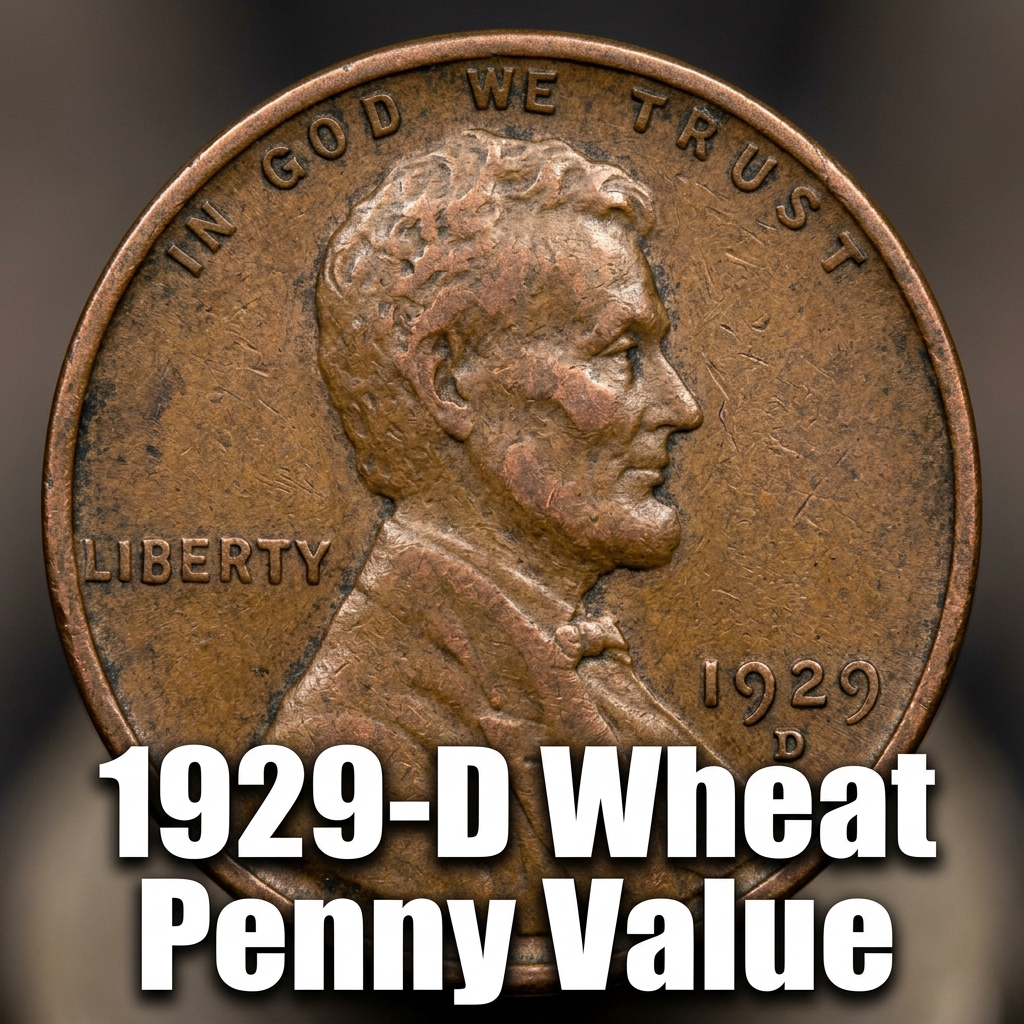
The 1929-D Wheat Penny is worth anywhere from $0.50 in heavily worn condition to over $100 or more in high-grade mint state — and if you’ve got one sitting in a jar or old coin collection, it’s definitely worth a closer look. These classic Lincoln cents from the Denver Mint have a loyal following among collectors, and even circulated examples carry real value. Read on to find out exactly what your coin might be worth.
What Makes the 1929-D Wheat Penny Special
The 1929-D Wheat Penny was struck at the Denver Mint in 1929, carrying the small “D” mintmark just below the date on the obverse side. That year, the Denver Mint produced around 41,730,000 of these pennies — a decent mintage, but far fewer than what the Philadelphia Mint churned out. That lower production number, combined with age and attrition, means finding one in good condition today is no small feat.
Lincoln Wheat Pennies in general are beloved by American coin collectors. They were minted from 1909 to 1958, featuring Abraham Lincoln on the front and two stalks of wheat on the reverse. The 1929-D sits right in the middle of that classic era, making it a historically interesting piece.
If you want to quickly identify your coin and check its grade, using a free coin identifier app is one of the easiest ways to get started at home without any special equipment.
1929-D Wheat Penny Value by Grade
The value of a 1929-D Wheat Penny changes quite a bit depending on its condition. Coin collectors use a grading scale from 1 (barely identifiable) to 70 (perfect) to describe a coin’s state of preservation. The better the grade, the higher the price — and with old wheat pennies, the jump from circulated to uncirculated can be dramatic.
Here’s a general look at how much the 1929-D Wheat Penny is worth across different grades:
| Grade | Condition Description | Estimated Value |
|---|---|---|
| G-4 (Good) | Heavy wear, design visible | $0.50 – $1.00 |
| VG-8 (Very Good) | Moderate wear, details clearer | $1.50 – $3.00 |
| F-12 (Fine) | Light to moderate wear | $3.00 – $6.00 |
| VF-20 (Very Fine) | Light wear on high points | $6.00 – $12.00 |
| EF-40 (Extremely Fine) | Slight wear, sharp details | $15.00 – $25.00 |
| MS-63 (Uncirculated) | No wear, some marks | $40.00 – $75.00 |
| MS-65 (Gem Uncirculated) | Exceptional luster, minimal marks | $100.00 – $175.00+ |
For the most up-to-date market data, you can check the 1929-D Wheat Penny auction prices and MS Red grade values on CoinHix to see what collectors are actually paying right now.
How to Tell What Grade Your 1929-D Penny Is
Grading coins at home takes a little practice, but you don’t have to be an expert to get a general idea of your coin’s condition. Start by looking at Lincoln’s cheek and jaw — those are the high points where wear shows up first. If those areas look flat or smooth, you’re probably looking at a Good to Fine grade.
Next, check the wheat stalks on the reverse. If the lines within the stalks are crisp and separated, that’s a sign of better preservation — think Very Fine or better.
Color also matters a lot for uncirculated examples. Red coins (designated RD) are the most valuable because they’ve kept their original copper luster. Brown (BN) coins have toned over time and are worth less. Red-Brown (RB) falls in the middle.
CoinHix makes this process a lot easier. The app lets you photograph your coin and compare it to professionally graded examples side by side, so you can zero in on an accurate grade without guessing.
Errors and Varieties That Can Increase the Value
Most 1929-D Wheat Pennies are straightforward, but there are a handful of error coins and varieties that can push the value significantly higher. Die errors, doubled dies, off-center strikes, and repunched mintmarks (RPM) are the most common types to look for.
An off-center strike on a 1929-D penny — where the design is noticeably shifted — can be worth anywhere from $25 to several hundred dollars depending on how dramatic the error is. Repunched mintmarks, where the “D” was stamped more than once slightly out of alignment, are another variety that dedicated collectors actively seek.
Examining your coin under a magnifying glass with good lighting is the best first step. Pay special attention to the mintmark and the date. CoinHix has a variety database that can help you compare your coin’s details against known RPM and DDO varieties for the 1929-D series.
For a full breakdown of what 1929 Lincoln Wheat Pennies are worth across all three mint marks, including error coin premiums, that resource covers it in solid detail.
Is the 1929-D Wheat Penny Worth Selling or Keeping
If your coin is heavily worn — grades below VF — it’s worth a few dollars at most, and some dealers may only offer melt or face value. That said, these coins are always fun to hold onto as a piece of American history, especially if you inherited them or found them in change.
On the other hand, if you believe your coin is in Extremely Fine or Uncirculated condition, it could be worth getting a professional grading opinion from PCGS or NGC. A certified MS-65 or higher example in Red designation can command well over $100 at auction and will be much easier to sell at full market value.
The bottom line: don’t toss that old penny in a coin jar and forget about it. Take a few minutes to look it over, use a coin value tool or CoinHix to get a realistic estimate, and decide from there whether it’s worth submitting for grading or selling as-is.
—
Frequently Asked Questions
Q: How do I know if my penny is a 1929-D and not a 1929-P or 1929-S?
A: Look just below the date on the front of the coin. If you see a small “D,” it was minted in Denver. No mintmark means Philadelphia, and an “S” means San Francisco. The 1929-S is the rarest and most valuable of the three.
Q: Is a 1929-D Wheat Penny made of silver?
A: No. The 1929-D Wheat Penny is made of 95% copper and 5% tin and zinc — no silver at all. Its value comes from age, rarity in high grades, and collector demand, not precious metal content.
Q: Where is the best place to sell a 1929-D Wheat Penny?
A: For lower-grade coins, eBay or local coin shops are your best bet. For higher-grade or error coins, consider getting it certified by PCGS or NGC first, then selling through a major coin auction house like Heritage Auctions or Stack’s Bowers to reach the most serious buyers.