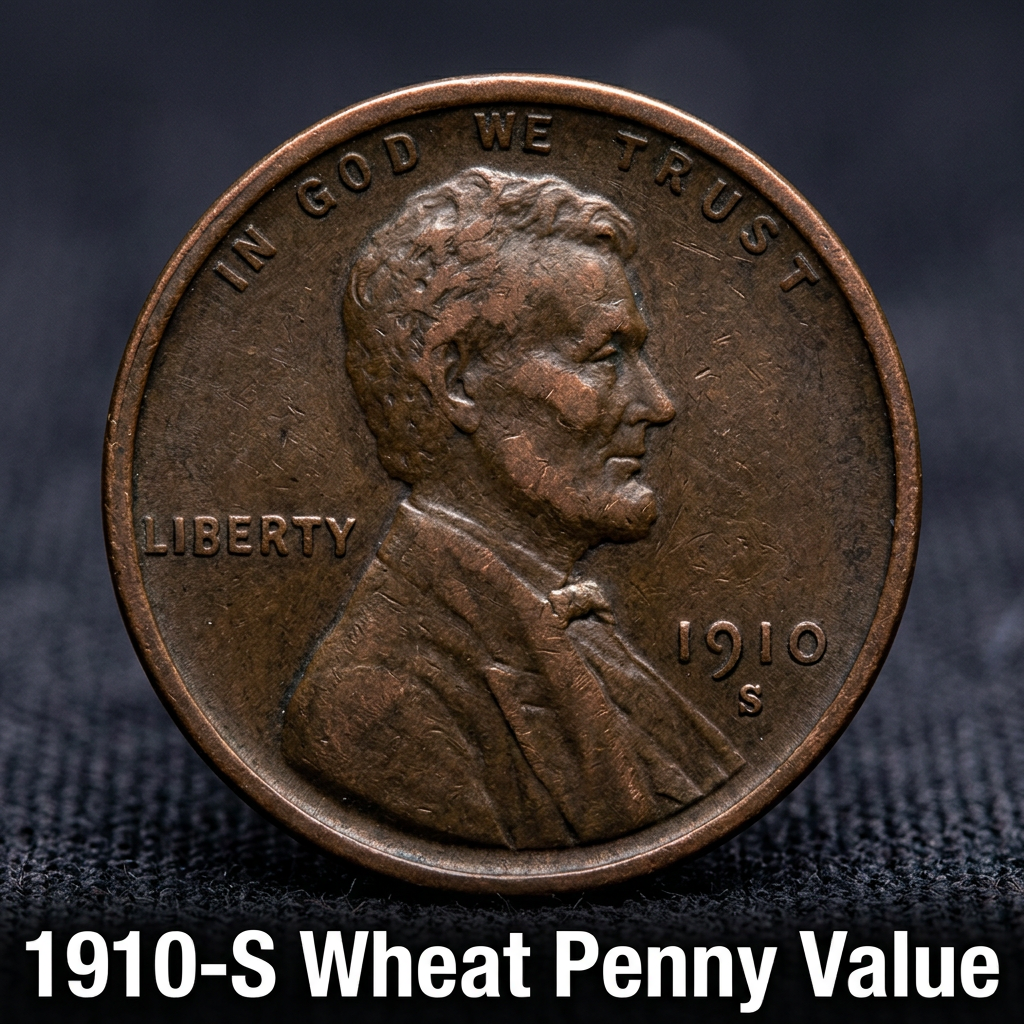
The 1910-S Lincoln Wheat Penny is worth anywhere from $10 in heavily worn condition to well over $500 in mint state — and high-grade examples can push into the thousands. If you found one of these in an old coin jar or inherited collection, you’re holding something genuinely special.
What Makes the 1910-S Wheat Penny So Valuable
The “S” mint mark on this penny tells you it was struck at the San Francisco Mint, not Philadelphia. That distinction matters a lot to collectors.
While the Philadelphia mint produced over 146 million Lincoln cents in 1910, the San Francisco facility made only about 6 million — a much smaller number that directly affects how rare and sought-after these coins are today.
Fewer coins made means fewer survivors. After more than a century of circulation, pocket wear, and the natural loss of old coins, finding a well-preserved 1910-S in any condition is something worth paying attention to.
If you’re not sure whether your coin has an “S” mint mark, grab a magnifying glass and look just below the date on the front of the coin. A small “S” there confirms you’ve got the San Francisco issue. No letter means it’s from Philadelphia — still collectible, but not as valuable.
You can also use a free coin identifier app to scan your coin with your phone camera and get an instant read on what you’re holding.
1910-S Wheat Penny Value by Grade
Coin values depend heavily on condition, which numismatists (coin experts) describe using a grading scale from 1 to 70. Here’s a general breakdown of what a 1910-S Lincoln cent is worth at different grades:
| Grade | Condition | Estimated Value |
|---|---|---|
| G-4 (Good) | Heavy wear, date visible | $10 – $15 |
| VG-8 (Very Good) | Moderate wear, main features clear | $20 – $30 |
| F-12 (Fine) | Light to moderate wear | $40 – $60 |
| EF-40 (Extremely Fine) | Light wear on high points only | $120 – $175 |
| MS-63 (Mint State) | Uncirculated, minor blemishes | $400 – $600 |
| MS-65 (Gem Uncirculated) | Sharp strike, excellent luster | $1,000 – $2,500+ |
For the most current auction results and dealer prices, check out this up-to-date 1910-S Wheat Penny price data by grade — it pulls from real market activity so you’re not guessing.
How to Tell What Condition Your 1910-S Penny Is In
You don’t need to be an expert to get a rough sense of your coin’s grade. Start by looking at Lincoln’s portrait under good lighting.
If the cheekbone, beard, and ear details are sharp and you can see individual hair strands, your coin is likely in Fine or better condition. If those details are smoothed away and the surface looks flat and dull, it’s probably in Good or Very Good range.
Uncirculated coins have a completely different look — they often show a reddish-orange or golden luster across the surface, because they were never passed from hand to hand. Any original mint red color remaining on a 1910-S significantly increases its value.
Be careful not to clean your coin. Cleaning destroys the natural surface and actually lowers value dramatically, even on coins that look “dirty.” A crusty, original 1910-S is worth far more than a scrubbed one.
CoinHix makes it easy to track the value of your coin over time using real collector market data. Whether you’re a first-time finder or a seasoned collector, it’s a tool worth having on your phone.
Where the 1910-S Wheat Penny Fits in Lincoln Cent History
The Lincoln cent series launched in 1909 — just one year before your coin was made. It was the first U.S. coin to feature a real historical figure on the obverse, replacing the old Indian Head design.
The 1910-S sits in the early years of the series, which are collectively some of the most popular and collected coins in American numismatics. Early Lincoln cents from San Francisco are especially prized because mintages were consistently lower than Philadelphia.
For a full breakdown of what the 1910 Lincoln Wheat Penny is worth across all mint marks and grades, that resource covers both the Philadelphia and San Francisco issues side by side.
Collectors building complete Lincoln Wheat Penny sets always need the 1910-S, which keeps demand — and prices — steady year after year.
How to Get the Best Price If You Decide to Sell
If you’re thinking about selling your 1910-S Wheat Penny, don’t rush. A little research goes a long way.
Start by comparing prices on recent auction results from PCGS, NGC, or major coin auction sites. If your coin appears to be uncirculated or near-mint, consider getting it professionally graded — a certified MS-63 or higher 1910-S can fetch several hundred dollars more than a raw (ungraded) example.
Local coin dealers offer convenience, but their offers typically reflect wholesale prices. Online coin auction platforms often get you closer to retail value, especially if your coin is in great shape.
CoinHix can help you understand what your coin is realistically worth before you walk into any dealer’s shop, giving you the knowledge to negotiate confidently.
—
FAQ
Q: How do I know if my penny is a 1910-S or just a regular 1910?
A: Look directly below the date on the front of the coin. A small “S” mint mark means it was made in San Francisco. If there’s no letter, it’s from the Philadelphia Mint — still worth collecting, but less valuable than the S-mint version.
Q: Is a cleaned 1910-S Wheat Penny worth less?
A: Yes, significantly less. Cleaning removes the natural patina and microscopic surface detail that collectors value. Even a coin that looks shinier after cleaning will be downgraded by professional graders and sell for a fraction of what an original-surface coin brings.
Q: What’s the most a 1910-S Wheat Penny has ever sold for?
A: Gem-quality examples graded MS-66 or MS-67 with full red luster have sold at auction for $5,000 to over $10,000. These are exceptionally rare survivors, but they show just how high the ceiling can go for the right coin in the right condition.