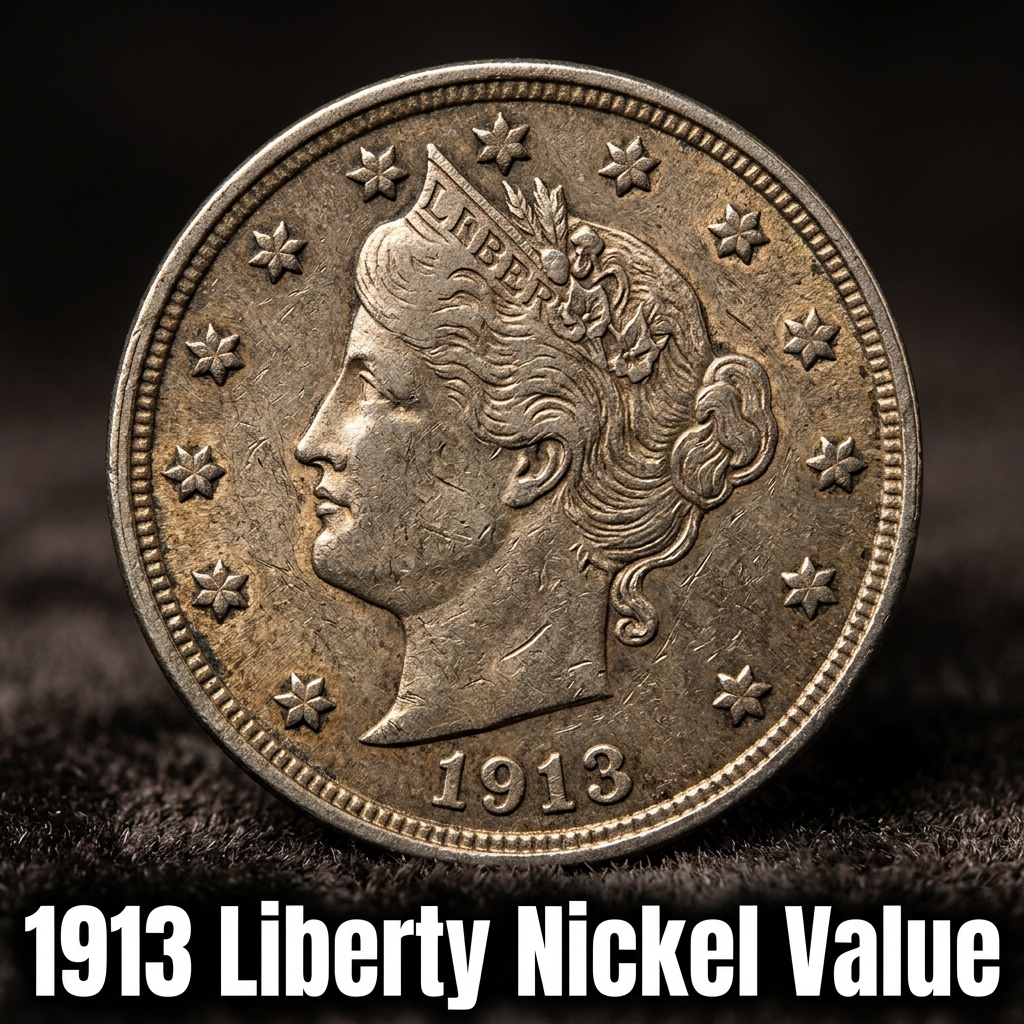
The 1913 Liberty Nickel is one of the most legendary coins in American numismatic history, worth anywhere from a few hundred dollars in heavily worn condition to an astounding $3 million or more for the finest known examples. If you’ve stumbled across one of these coins, you may be sitting on something truly extraordinary.
What Makes the 1913 Liberty Nickel So Special?
The 1913 Liberty Nickel is not your average old coin — it’s one of the rarest and most mysterious coins ever struck at the U.S. Mint. Only five examples are known to exist, and none of them were officially authorized. They were secretly produced toward the end of 1912, just before the Buffalo Nickel replaced the Liberty Head design.
Because of this shadowy origin story, these coins carry an almost legendary status among collectors. Each of the five known specimens has been tracked, documented, and sold at major auction houses for jaw-dropping sums.
If you think you may have found one, the first step is to use a free coin identifier app to get a quick preliminary look before reaching out to a professional numismatist. Just don’t get your hopes up too fast — there are many counterfeits and altered dates in circulation, and authenticating a genuine 1913 Liberty Nickel requires expert certification.
How Much Is a 1913 Liberty Nickel Worth Today?
Because only five coins exist, “value” works a little differently here than with more common coins. These aren’t priced on a standard grade-by-grade scale the way most coins are. Instead, each specimen is treated as a unique artifact, and values are driven by provenance, condition, and auction demand.
Here’s a look at the five known specimens and their approximate values based on recent sales:
| Specimen Name | PCGS Grade | Last Known Sale | Sale Price |
|---|---|---|---|
| Olsen Specimen | PR64 | 2010 | $3,737,500 |
| Walton Specimen | PR64 | 2013 | $3,172,500 |
| Eliasberg Specimen | PR66 | 2005 | $4,150,000 |
| Norweb Specimen | PR55 | 1996 | $1,485,000 |
| McDermott Specimen | PR58 | 2007 | $2,530,000 |
For a deeper look at detailed pricing data and auction records for 1913 Liberty Nickel coins, numismatic databases are your best resource to track current market trends.
Could You Actually Have One? What to Look For
Realistically, the odds of finding a genuine 1913 Liberty Nickel in your pocket change or old coin jar are essentially zero. All five are accounted for by collectors and institutions. However, there are a few important things to check if you believe you have one.
First, look at the date. The 1913 Liberty Nickel closely resembles the 1912 Liberty Head Nickel, which was a standard-issue coin. Some unscrupulous sellers alter the last digit of a 1912 nickel to make it look like a 1913. Under magnification, an altered date will show tool marks or irregularities around the numeral.
Second, check the design. The obverse shows Lady Liberty with a coronet and stars around the rim. The reverse features “V” (Roman numeral five) surrounded by a wreath. This is distinct from the Buffalo Nickel that replaced it in 1913.
If you genuinely believe you’ve found something unusual, the smartest move is to download CoinHix for an instant visual check, and then send your coin to PCGS or NGC for professional authentication.
What About Regular Liberty Head Nickels From 1912 and Earlier?
If you have a Liberty Head Nickel that’s dated 1883 through 1912, you may still have a coin worth keeping. These are common enough to find but old enough to carry real collector value. Check out this breakdown of 1913 nickel value and related Liberty Head Nickel pricing to understand where your coin fits.
Here’s a quick value guide for Liberty Head Nickels in general:
| Grade | Good (G-4) | Fine (F-12) | MS-63 |
|---|---|---|---|
| Common Date (e.g., 1906) | $2–$4 | $8–$15 | $100–$200 |
| 1883 No Cents | $15–$30 | $35–$60 | $250–$500 |
| 1912-S (Key Date) | $100–$150 | $300–$500 | $3,000+ |
Using CoinHix to scan your coin can give you a fast starting point before you dive into deeper research or visit a local coin dealer.
Tips for Selling or Getting Your Coin Appraised
Whether you have a common Liberty Head Nickel or something rarer, the process for getting a fair value is similar. Start by identifying the coin accurately — date, mint mark, and condition all matter. Then check recent auction records to understand the current market.
Avoid cleaning your coin. A cleaned coin loses significant collector value even if it looks shinier to you. Professional graders can easily spot cleaning, and it almost always reduces what a buyer is willing to pay.
For a quick and reliable identification step, CoinHix is a great tool that lets you photograph your coin and get an instant read on what you might have. From there, reaching out to a certified dealer or submitting to a third-party grading service like PCGS or NGC is the safest path forward.
FAQ
Q: How can I tell if my 1913 Liberty Nickel is real?
A: All five genuine 1913 Liberty Nickels are accounted for and held by known collectors or institutions. If you believe you have one, you must submit it to PCGS or NGC for authentication. Be very cautious — most “1913” Liberty Nickels in circulation are altered 1912 coins.
Q: Why is the 1913 Liberty Nickel so valuable?
A: Its value comes from extreme rarity (only five known examples), mysterious unauthorized origins, and a rich history of high-profile ownership and sales. It’s considered one of the most desirable coins in all of American numismatics, comparable to the 1804 Silver Dollar and 1894-S Barber Dime.
Q: What’s the best way to find out what my old nickel is worth?
A: Start by identifying the date and mint mark, then use a tool like CoinHix to get a quick initial estimate. For a more accurate valuation, consult a reputable coin dealer or have the coin professionally graded. Condition plays a huge role in final value.