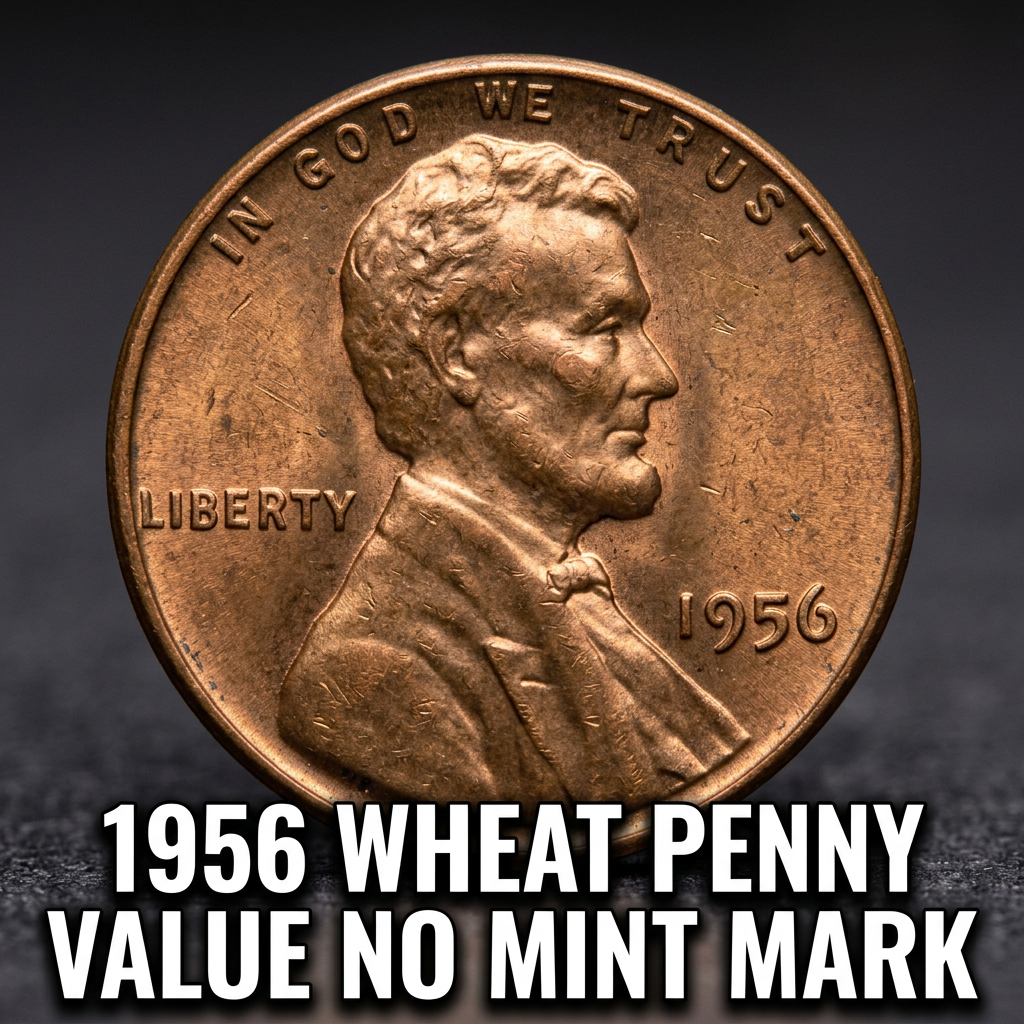
The 1956 Wheat Penny (no mint mark) is worth anywhere from about 10 cents in heavily worn condition to over $10 in uncirculated grades — and in top-tier mint state, some examples have sold for much more. If you found one of these coins in a jar or old wallet, you’re in the right place to find out exactly what it’s worth.
—
What Is the 1956 Wheat Penny No Mint Mark?
The 1956 Lincoln Wheat Penny with no mint mark was struck at the Philadelphia Mint. Philadelphia was the main U.S. Mint facility at the time, and coins produced there didn’t receive a mint mark — so the absence of a letter under the date is completely normal and expected.
Over 420 million of these pennies were produced in 1956, making them relatively common compared to earlier Wheat Pennies. That said, “common” doesn’t always mean worthless. The condition of your coin plays a huge role in its value.
If you’re not sure how to identify your coin or determine its grade, try using a free coin identifier app to get a quick read on what you’ve got before you head to a dealer.
—
1956 Wheat Penny Value Chart by Grade
Here’s a breakdown of typical market values for the 1956 Lincoln Wheat Penny (Philadelphia, no mint mark):
| Grade | Description | Estimated Value |
|---|---|---|
| Good (G-4) | Heavy wear, outline visible | $0.10 – $0.25 |
| Fine (F-12) | Moderate wear, details clear | $0.25 – $0.50 |
| Extremely Fine (EF-40) | Light wear on high points | $0.75 – $1.50 |
| Uncirculated (MS-63) | No wear, some bag marks | $3 – $6 |
| Gem Uncirculated (MS-65) | Sharp strike, strong luster | $8 – $15 |
| MS-67 Red (Top Grade) | Near perfect, full red luster | $50 – $200+ |
For the most up-to-date market prices on this coin, you can check out current 1956 Wheat Penny auction prices and MS-RD grades on CoinHix. The data is regularly updated, so it’s a great resource before buying or selling.
—
Why Coin Color Matters for the 1956 Penny
You might notice terms like “Red,” “Red-Brown,” and “Brown” when looking up 1956 Wheat Penny values. These color designations are used by grading services like PCGS and NGC to describe the remaining original copper luster.
A coin graded MS-65 Red (RD) will be worth significantly more than one graded MS-65 Brown (BN) — sometimes two to three times as much. Original red luster is rare to find after 70+ years, and collectors pay a real premium for it.
If your 1956 penny looks bright, shiny orange-red with no wear, you might have something special. It’s worth getting it professionally graded or at least examined before you spend it.
CoinHix makes it easy to compare color-designated grades side by side so you understand what your coin might realistically sell for at auction.
—
What Makes a 1956 Wheat Penny More Valuable
Most 1956 Philadelphia pennies are common, but a few factors can push the value well above average:
Full strike quality — Some coins from this era came off the press with softer detail due to worn dies. A sharply struck example with clear wheat stalks and crisp lettering will always command more interest from buyers.
No cleaning or damage — A coin that has been cleaned, polished, or stored in PVC flips may look bright but is actually worth less to collectors. Natural, untouched surfaces are always preferred.
Error coins — Occasionally, a 1956 Wheat Penny will show a doubled die, off-center strike, or other mint error. These can be worth anywhere from $25 to several hundred dollars depending on the type and visibility of the error. Examine your coin under good lighting or a loupe.
You can find detailed 1956 penny value information including error varieties and grading tips to help you figure out if your coin is worth more than face value.
—
How to Get the Best Price for Your 1956 Wheat Penny
If you believe your coin is in uncirculated or near-uncirculated condition, consider submitting it to a professional grading service. A certified grade adds credibility and often increases resale value, especially at online auctions.
For quick, casual identification at home, CoinHix is a great starting point. It lets you browse real sale prices, filter by grade and color, and understand what buyers are actually paying — not just what sellers hope to get.
Even if your coin turns out to be common, it’s still a piece of American history made over 60 years ago. That’s always worth something.
—
FAQ
Q: How do I know if my 1956 Wheat Penny is worth more than a few cents?
A: Check the coin’s condition first. If it shows little to no wear and still has a reddish color, it could be worth several dollars or more in the uncirculated range. Look for any unusual errors like doubling or off-center strikes, which can multiply the value.
Q: Is a 1956 penny with no mint mark rare?
A: No, the no mint mark 1956 penny is not rare — Philadelphia struck over 420 million of them. However, examples in high grades, especially with full red luster (MS-65 RD or above), are much harder to find and worth real money to collectors.
Q: What’s the difference between a 1956 Wheat Penny and a 1956-D Wheat Penny?
A: The “D” stands for the Denver Mint. The 1956-D penny was also produced in large numbers and has similar values to the Philadelphia (no mint mark) version. Neither is particularly rare, but high-grade examples of both are collected and valued accordingly.