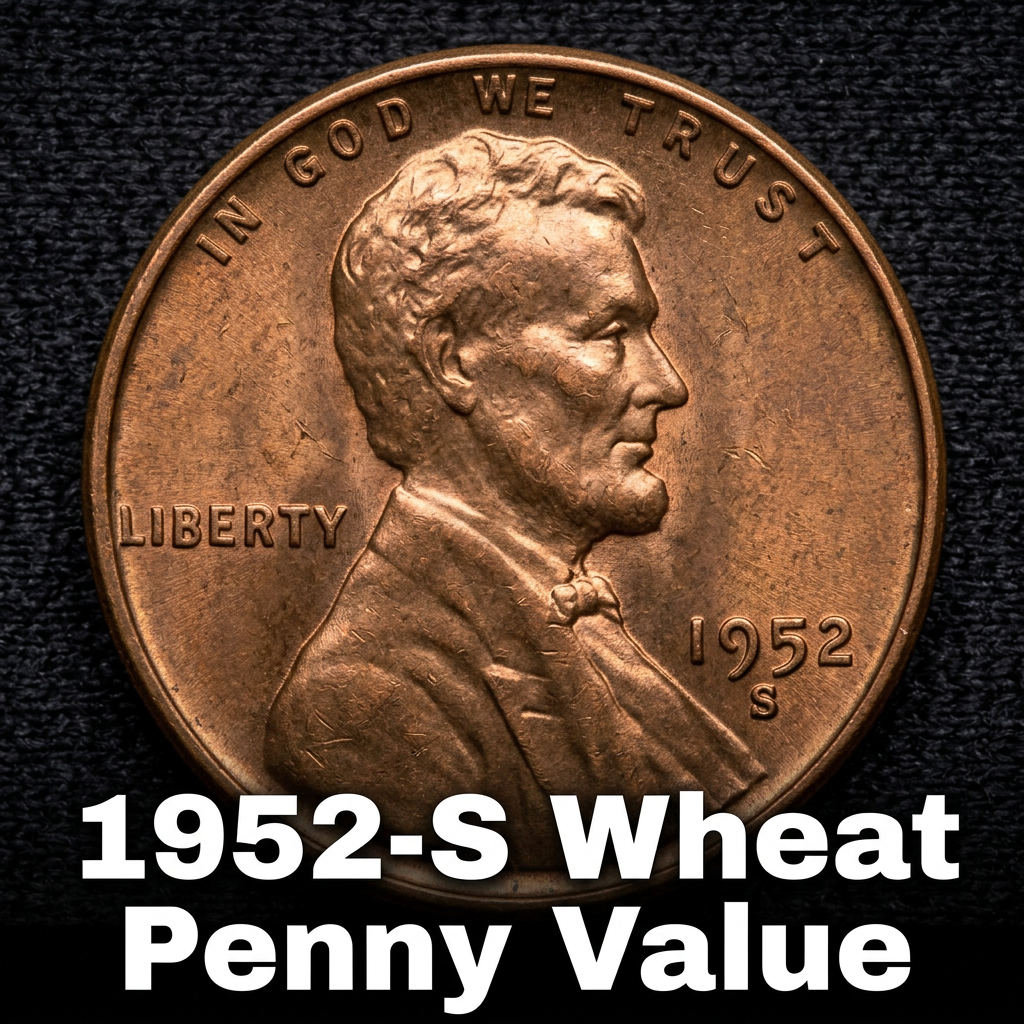
The 1952-S Wheat Penny is worth anywhere from $0.10 in heavily worn condition to over $100 or more in pristine mint state grades. If you found one of these old Lincoln cents in a coin jar or inherited collection, you might be sitting on more than just a penny — and this guide will help you figure out exactly what you’ve got.
What Makes the 1952-S Wheat Penny Special
The 1952-S Wheat Penny was struck at the San Francisco Mint, which is indicated by the small “S” mintmark you’ll find on the obverse (front) of the coin, just below the date. San Francisco produced 137,800,004 of these coins in 1952, making it a relatively common coin by wheat penny standards — but condition is everything when it comes to value.
These coins feature the classic Lincoln Wheat design, with Abraham Lincoln’s portrait on the front and two stalks of wheat framing the words “ONE CENT” on the reverse. This design ran from 1909 to 1958, making any wheat penny at least 65 years old today.
If you’re not sure whether your coin has an “S” mintmark or no mintmark at all, a free coin identifier app can help you zoom in on the details and identify your coin quickly without any guesswork. Tools like CoinHix are especially popular among beginners because they make the identification process simple and fast.
1952-S Wheat Penny Value by Grade
The value of a 1952-S Wheat Penny depends almost entirely on its condition, which coin collectors call “grade.” A coin that has been circulated heavily — passed through millions of hands over decades — will show significant wear and is worth much less than one that was saved right away and never used.
Here’s a general breakdown of what you can expect:
| Grade / Condition | Description | Estimated Value |
|---|---|---|
| Good (G-4) | Heavy wear, design visible | $0.10 – $0.25 |
| Fine (F-12) | Moderate wear, clear details | $0.25 – $0.50 |
| Extremely Fine (EF-40) | Light wear on high points | $1 – $3 |
| Uncirculated (MS-60 to MS-63) | No wear, some marks or spots | $5 – $20 |
| Gem Uncirculated (MS-65 Red) | Full original red luster | $40 – $100+ |
For the most up-to-date auction prices and graded coin sales data, you can check out the 1952-S Wheat Penny MS Red price history on CoinHix, which tracks real market transactions so you always know what buyers are actually paying.
How to Tell If Your Coin Is Uncirculated
Many people assume that because a coin is old, it must be valuable. But what really drives the price on a 1952-S Wheat Penny is whether it still has its original mint luster — that shiny, reddish-orange glow that copper gets straight from the press.
If your coin looks dull, brown, or has obvious scratches and worn-down lettering, it was circulated and falls into the lower value range. On the other hand, if it still has a bright, almost mirror-like surface with no visible wear on Lincoln’s cheek or the wheat stalks, you might have an uncirculated example worth grading professionally.
One easy way to check is by tilting the coin under a light source. Genuine mint luster will appear to “cartwheel” across the surface as you rotate it. If you’re still unsure, CoinHix offers a simple visual grading guide right inside the app to help you compare your coin to known examples.
Errors and Varieties That Can Increase the Value
Like many coins from the early 1950s, some 1952-S Wheat Pennies were struck with minor errors that can make them worth significantly more to collectors. The most commonly sought-after errors include doubled die obverse (DDO), where the lettering or date appears slightly doubled, and repunched mintmarks (RPM), where the “S” mintmark was stamped more than once at a slightly different angle.
These varieties are not easy to spot with the naked eye — you’ll want a magnifying glass or loupe of at least 5x to 10x magnification. A doubled “LIBERTY” or a doubling around Lincoln’s eye are telltale signs of a DDO.
Error coins in any grade typically carry a strong premium. Even a worn 1952-S DDO can fetch $25 to $75, while a mint-state example could sell for several hundred dollars. For a deeper look at what your specific coin might be worth based on current collector demand, the 1952 Penny value breakdown at CoinValueApp is a solid resource that covers all three mint facilities and known varieties.
Should You Get Your 1952-S Wheat Penny Graded?
If your coin appears to be in uncirculated or near-uncirculated condition, professional grading through PCGS or NGC is worth considering. Grading fees typically start around $20 to $30 per coin, so it only makes financial sense if your coin is likely to grade MS-63 or higher — otherwise the cost may outweigh the added value.
For coins in circulated condition, professional grading usually isn’t necessary. You can sell them directly to dealers, through eBay, or at coin shows for modest amounts. CoinHix also includes a dealer locator and marketplace section, making it easy to connect with buyers in your area if you’re looking to sell quickly.
Frequently Asked Questions
Q: How do I know if my penny is a 1952-S or a different mint?
A: Look just below the date on the front of the coin. If you see a small “S,” it was minted in San Francisco. No mintmark means it came from Philadelphia, and a “D” means Denver. A magnifying glass makes this much easier to confirm.
Q: Is a 1952-S Wheat Penny rare?
A: Not particularly — over 137 million were produced, so they’re fairly common in circulated grades. However, finding one in gem uncirculated condition with full red luster is much harder, and those examples can be genuinely scarce and valuable.
Q: Where is the best place to sell a 1952-S Wheat Penny?
A: For common circulated examples, eBay or local coin dealers are your best bet. For higher-grade or error coins, consider having them professionally graded first, then selling through a reputable auction platform to reach serious collectors willing to pay top dollar.