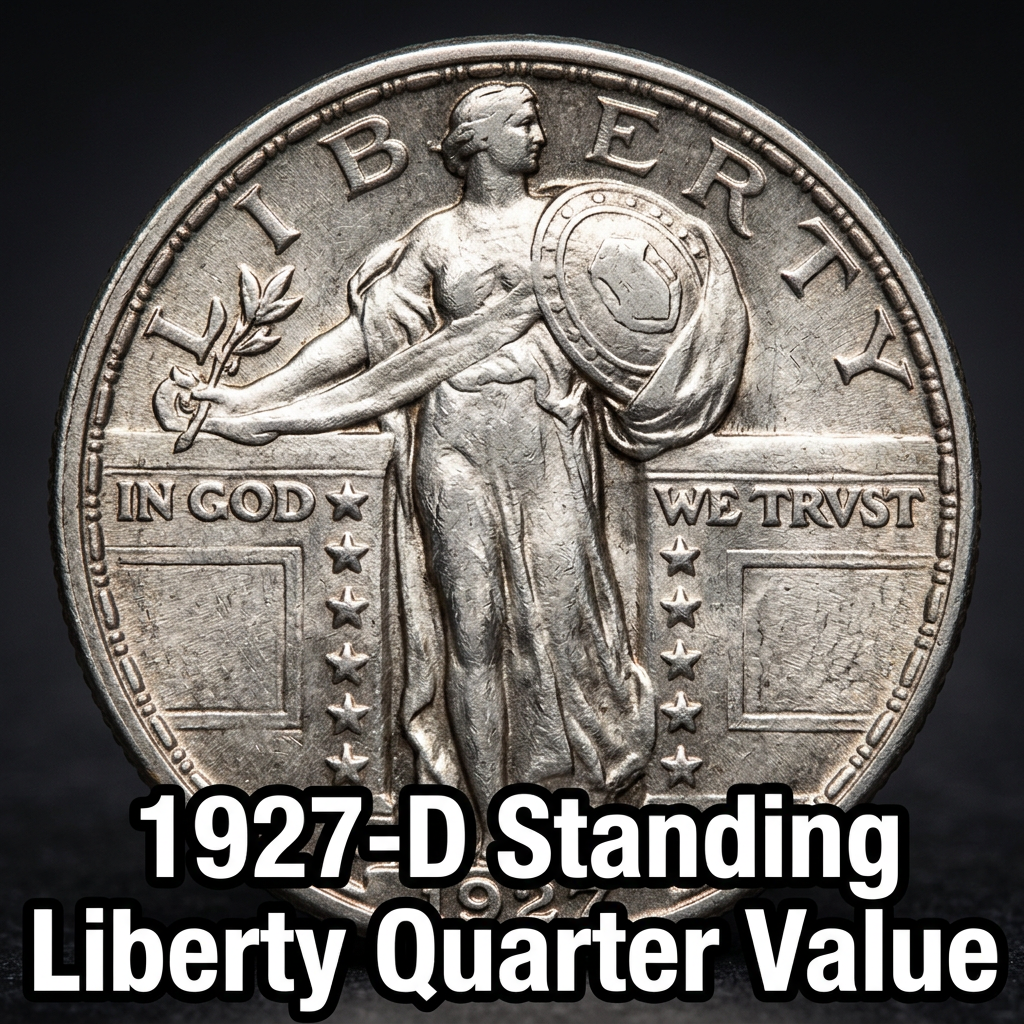
The 1927-D Standing Liberty Quarter is worth anywhere from $20 in heavily worn condition to well over $5,000 in higher mint state grades — and for certain sharp strike examples, collectors have paid far more than that. If you found one of these coins in an old collection or jar of change, you may be sitting on something genuinely valuable.
The 1927-D is one of the more elusive issues in the Standing Liberty Quarter series. With a mintage of just 976,400 pieces struck at the Denver Mint, it’s significantly scarcer than most other dates in the series. Before you do anything else, it’s worth using a free coin identifier app to confirm what you have — especially if the “D” mintmark is worn and hard to read.
What Makes the 1927-D Quarter Special
The Standing Liberty Quarter was designed by Hermon Atkins MacNeil and minted from 1916 to 1930. Lady Liberty is shown striding through an opening in a wall, carrying a shield and an olive branch — a design many collectors consider one of the most beautiful in American coinage history.
The Denver Mint struck fewer than one million 1927-D quarters, making it one of the key dates in the entire series. By comparison, the Philadelphia Mint produced over 11 million quarters that same year. That huge difference in production numbers is a big reason the 1927-D commands a serious premium in today’s market.
What also makes this coin stand out is its tendency to come weakly struck, particularly on the head of Liberty and the eagle’s breast feathers. A well-struck 1927-D is genuinely rare and can be worth multiples of a poorly struck example in the same numerical grade.
1927-D Standing Liberty Quarter Value by Grade
The condition of your coin matters enormously. Coin grading runs from Poor (P-1) at the bottom to Mint State (MS-70) at the top. Most circulated 1927-D quarters you’ll encounter fall somewhere in the Good to Very Fine range.
Here’s a general value table to give you a starting point:
| Grade | Description | Estimated Value |
|---|---|---|
| G-4 (Good) | Heavy wear, date visible | $20 – $35 |
| VG-8 (Very Good) | Moderate wear, design clear | $40 – $75 |
| F-12 (Fine) | Light to moderate wear | $90 – $150 |
| VF-30 (Very Fine) | Light wear on high points | $200 – $350 |
| EF-40 (Extremely Fine) | Slight wear, sharp details | $450 – $700 |
| MS-63 (Mint State) | Uncirculated, minor marks | $2,500 – $5,000+ |
| MS-65 (Gem Mint State) | Uncirculated, sharp strike | $10,000+ |
For the most up-to-date auction results and dealer prices, you can check out current 1927-D Standing Liberty Quarter price data across mint state grades to see what the market is actually doing right now.
How to Tell If Your Coin Is the Real Deal
First, look for the “D” mintmark on the obverse of the coin, just below the date. The date itself appears on a raised pedestal on Standing Liberty Quarters — a design feature that unfortunately made it one of the first areas to wear away in circulation.
If the date is clear and the “D” mintmark is visible, that’s a great sign. A fully readable date and mintmark on a 1927-D already puts you in decent territory value-wise.
CoinHix is a great tool to help you look up real-time values once you’ve identified your coin. The CoinHix app lets you compare recent sales and see what similar examples have actually sold for at auction — not just book values that may be years out of date.
Next, examine the head of Liberty. On this date, a fully struck head (called “Full Head” or FH) is quite rare. If Liberty’s hairline, facial features, and the rivets on her shield are all sharp and well-defined, your coin could be worth significantly more than a typical example in the same grade.
Where to Get Your 1927-D Quarter Appraised or Sold
If you think you have a nicer example — maybe uncirculated or showing strong strike details — it’s worth getting a professional opinion. PCGS and NGC are the two major third-party grading services, and having your coin certified can dramatically increase both buyer confidence and sale price.
For quick reference and a solid starting point on what your coin might be worth, the 1927 Standing Liberty Quarter value breakdown at CoinValueApp covers grades, varieties, and key things to look for when assessing your coin.
You can also use CoinHix to scan recent auction records and get a realistic idea of what buyers are willing to pay in today’s market. It’s one of the easiest ways to move from “I think this might be worth something” to an actual number you can stand behind.
If you’re ready to sell, local coin shops, online auction platforms like eBay, and dedicated coin auction houses like Heritage Auctions or Stack’s Bowers are all solid options. Just make sure you’ve done your homework first — knowing your coin’s grade and what comparable examples have sold for puts you in a much stronger negotiating position.
FAQ
Q: How do I know if my 1927-D quarter has a Full Head designation?
A: Look at the obverse of the coin under good lighting and magnification. A Full Head 1927-D will show a complete hairline above Liberty’s brow, clearly defined facial features, and all three rivets on her shield cap visible. On most worn or weakly struck examples, this detail is absent. Full Head examples carry a significant premium — sometimes two to three times the value of a normal example in the same grade.
Q: Is a 1927-D Standing Liberty Quarter rare?
A: Yes, relatively speaking. With fewer than one million struck, it’s one of the lower-mintage issues in the Standing Liberty series. It’s not the rarest date in the series — that distinction goes to the 1916 and the 1918/7-S overdate — but the 1927-D is still considered a semi-key date that serious collectors actively seek out.
Q: Should I clean my 1927-D quarter before selling it?
A: Absolutely not. Cleaning a coin removes its natural patina and can drastically reduce its value — sometimes by 50% or more. Coin collectors and dealers can easily spot a cleaned coin, and a cleaned 1927-D will be worth far less than an original-surface example in the same grade, even if the cleaned coin looks shinier on the surface.