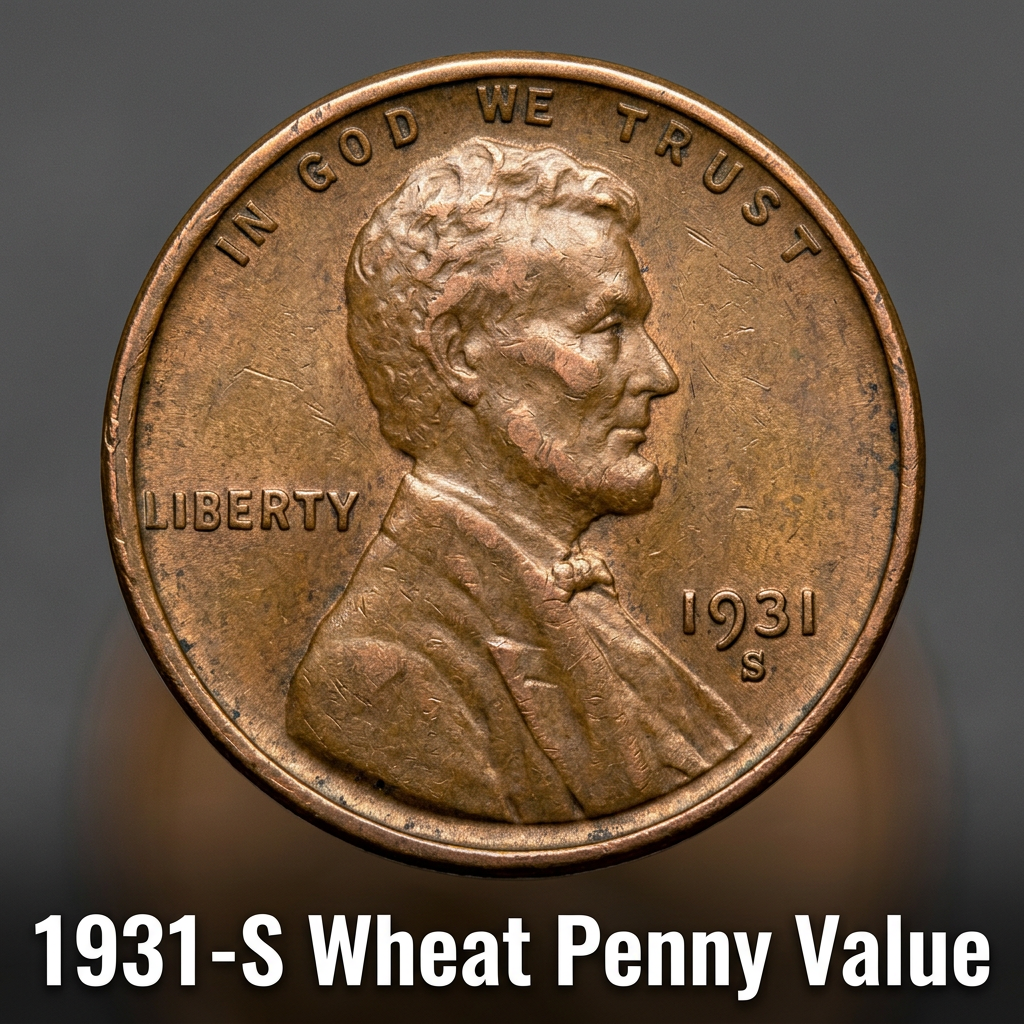
The 1931-S Wheat Penny is worth anywhere from $50 in heavily worn condition to over $1,000 or more in mint state — making it one of the most valuable Lincoln cents you can stumble across in an old collection or inherited coin jar. If you’ve got one sitting on your desk right now, you’re in the right place.
Why the 1931-S Wheat Penny Is Special
Not all Lincoln Wheat Pennies are created equal, and the 1931-S is a perfect example of why mint mark and mintage numbers matter so much to collectors.
The “S” in 1931-S tells you this coin was struck at the San Francisco Mint. During the Great Depression, coin production dropped dramatically across the country, and the San Francisco Mint only produced 866,000 of these pennies in 1931. That’s an extremely low number compared to most Wheat Penny years, which often saw tens of millions of coins struck.
Low mintage almost always equals higher value. When fewer coins are made, fewer survive decades of circulation, and that scarcity drives demand among collectors. The 1931-S is considered a key date in the Lincoln Wheat Penny series, which means it’s actively sought after — and that means real money in your pocket if you’ve found one.
If you’re not sure whether your coin has an “S” mint mark, look on the obverse (the front face) of the coin, just below the date. A tiny “S” should appear there. No letter means it was made in Philadelphia; a “D” means Denver.
1931-S Wheat Penny Value by Grade
The condition of your coin — what collectors call its “grade” — has an enormous impact on what it’s worth. A coin that looks shiny and detailed is worth far more than one that’s been rubbed smooth from years of pocket use.
Here’s a general breakdown of 1931-S Wheat Penny values based on grade:
| Grade / Condition | Estimated Value |
|---|---|
| Good (G-4) | $50 – $70 |
| Very Good (VG-8) | $75 – $100 |
| Fine (F-12) | $100 – $130 |
| Very Fine (VF-20) | $130 – $175 |
| Extremely Fine (EF-40) | $175 – $250 |
| About Uncirculated (AU-55) | $275 – $400 |
| Mint State (MS-63 and above) | $700 – $1,500+ |
For the most up-to-date market data, you can check current 1931-S Wheat Penny prices across mint state grades to see exactly where the market stands right now. Prices can shift based on auction results and collector demand, so live data always beats a static chart.
How to Tell What Condition Your 1931-S Penny Is In
You don’t need to be a professional numismatist to get a basic sense of your coin’s grade. Start by examining it under good lighting — natural light or a magnifying lamp works well.
If the details on Lincoln’s portrait are sharp and clear, with visible hair lines, cheekbones, and ear detail, you’re likely looking at a Fine or better coin. If the coin looks flat and worn smooth, especially on Lincoln’s cheek and the wheat stalks on the reverse, it falls into the lower grades like Good or Very Good.
One of the easiest ways to get a quick read on your coin is to use a free coin identifier app on your phone. These tools use image recognition to help you identify coins and get instant value estimates — no experience needed.
For a deeper dive into what your specific 1931-S penny might be worth based on its condition, this detailed 1931 penny value breakdown walks through grading factors and price ranges in plain language.
Should You Get Your 1931-S Wheat Penny Graded?
If your coin looks like it’s in About Uncirculated or better condition, professional grading is absolutely worth considering. A coin graded and slabbed by a trusted service like PCGS or NGC can sell for significantly more than a raw, ungraded coin of the same quality.
Collectors are willing to pay a premium for certified coins because they trust the grade and know they’re not buying a problem coin — one that’s been cleaned, altered, or artificially toned.
For coins in lower circulated grades, the cost of grading ($20–$50 or more per coin) may not be worth it since the coin’s value is lower. But in those higher ranges, certification can add hundreds of dollars to a sale price.
CoinHix makes it easy to track your coin’s value before and after grading. The CoinHix app gives you real-time pricing data so you can make smarter decisions about whether grading makes financial sense for your specific coin.
Tips for Selling Your 1931-S Wheat Penny
Once you know what you have, selling in the right place matters. eBay is one of the most active marketplaces for Wheat Pennies, but make sure to search “sold listings” — not just active ones — to see what coins actually sold for recently.
Coin shows, local coin dealers, and dedicated coin auction houses like Heritage Auctions or Stack’s Bowers are also solid options, especially for higher-grade examples where getting the right eyes on the coin can make a big difference in price.
Before listing anywhere, use CoinHix to get a current value estimate so you’re walking into negotiations with real data — not just guesswork.
—
Frequently Asked Questions
Q: How do I know if my penny is a 1931-S and not a 1931-D or 1931 Philadelphia?
A: Look just below the date on the front of the coin. A small “S” means San Francisco, a “D” means Denver, and no letter at all means Philadelphia. The 1931-S is by far the most valuable of the three.
Q: My 1931-S penny has been cleaned. Does that hurt the value?
A: Yes, unfortunately cleaning a coin significantly reduces its collector value. A cleaned coin loses its natural surface and luster, which collectors call “originality.” A cleaned 1931-S might sell for 30–50% less than an uncleaned example in the same grade. Never clean your old coins.
Q: Is a 1931-S Wheat Penny worth getting appraised in person?
A: If your coin appears to be in Very Fine condition or better, yes — an in-person appraisal from a reputable dealer or certified numismatist is a smart move. For coins in lower grades, a quick check using an app like CoinHix or an online price guide can give you a reliable estimate without the extra step.