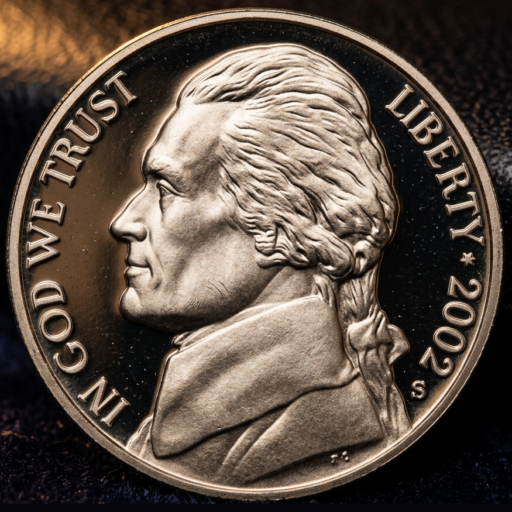
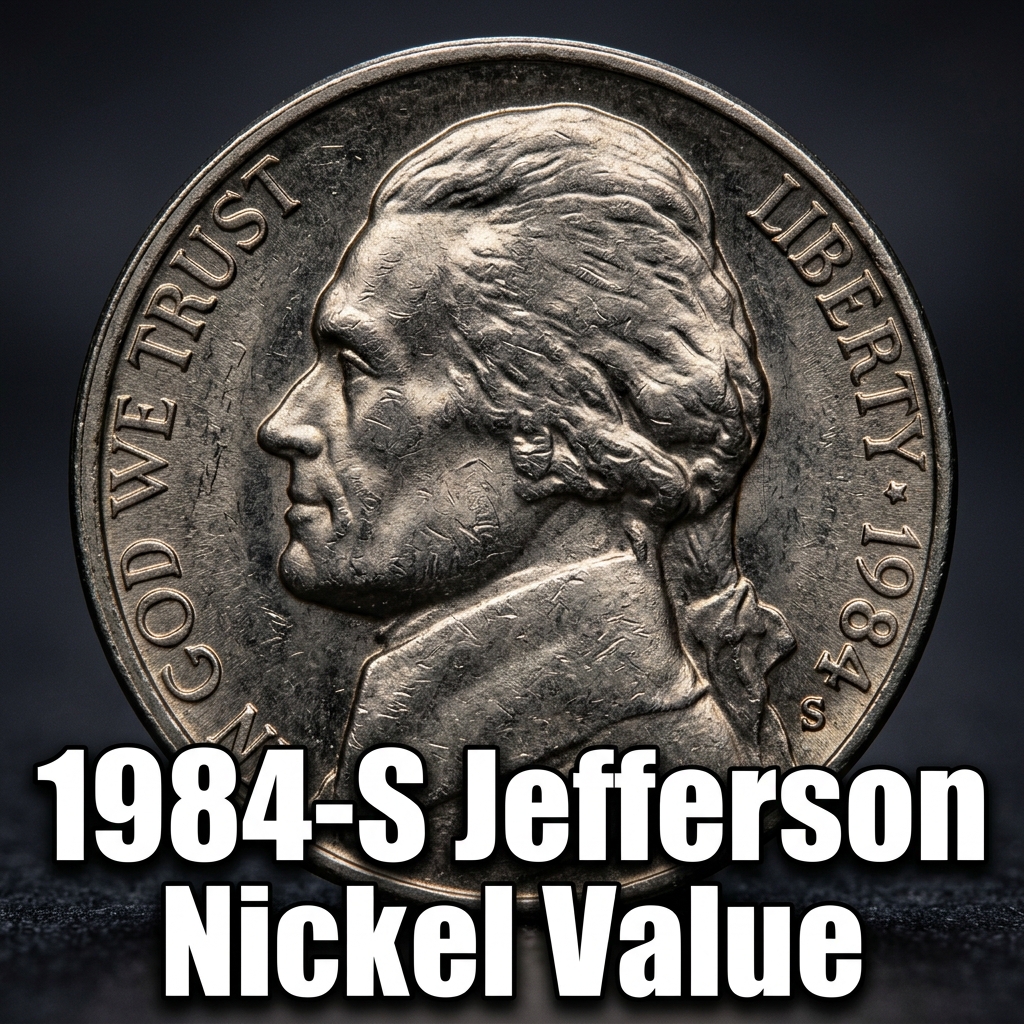
The 1984-S Jefferson Nickel is worth anywhere from $1 to $5 for most circulated examples, but proof versions — which is what the “S” mint mark actually refers to — can fetch $3 to $10 or more depending on their condition and eye appeal. If you found one of these in your change jar or an old coin collection, you’re in the right place to find out exactly what it means.
What Makes the 1984-S Jefferson Nickel Special
The “S” mint mark on a 1984 Jefferson Nickel tells you something important right away — this coin wasn’t made for everyday spending. The San Francisco Mint produced these exclusively as proof coins in 1984, meaning they were struck with polished dies on specially prepared planchets to create that sharp, mirror-like finish collectors love.
Unlike the 1984-P (Philadelphia) or 1984-D (Denver) nickels that rolled through vending machines and cash registers across the country, the 1984-S was sold directly to collectors in annual proof sets. This changes everything about how we value it.
If your coin has a deeply reflective background and razor-sharp details on Monticello and Jefferson’s portrait, you almost certainly have a proof. That’s a good thing.
How Much Is the 1984-S Jefferson Nickel Worth Today
Here’s where most people get surprised. The 1984-S proof nickel isn’t a rare coin in the absolute sense — the U.S. Mint produced over 3.06 million of them — but proof coins in top condition do carry a real premium above face value.
For most examples that have been well-preserved in their original plastic holders, you’re looking at values in the $3 to $7 range. Coins graded PR-65 or PR-66 by major grading services like PCGS or NGC land in that sweet spot. Push the grade up to PR-69 Deep Cameo (the highest commonly seen), and values can jump to $20 or more.
You can check out current Jefferson Nickel price data and recent auction results to see how the market is moving right now — prices on proof coins can shift with collector demand.
| Grade | Description | Estimated Value |
|---|---|---|
| PR-60 to PR-63 | Proof with minor blemishes | $1 – $3 |
| PR-64 to PR-65 | Sharp proof, few marks | $3 – $6 |
| PR-66 to PR-67 | Gem proof, excellent eye appeal | $6 – $12 |
| PR-68 Deep Cameo | Near-perfect contrast | $15 – $25 |
| PR-69 Deep Cameo | Virtually flawless | $25 – $50+ |
Understanding Proof Grades and Cameo Designations
If you’ve never heard the term “cameo” before, don’t worry — it just describes the frosted appearance on the raised design elements (like Jefferson’s face) contrasted against the mirrored fields (the flat background). Deep Cameo means that contrast is especially strong and dramatic, which collectors pay a premium for.
Most 1984-S proof nickels that were stored carefully in their original proof set packaging will naturally show some cameo effect. The key question is how strong that contrast is and whether the surfaces have any hairlines or spots from handling or storage.
For a deeper look at the full value breakdown of the 1984 nickel across all mint marks and grades, it’s worth comparing your coin to certified examples before deciding whether to sell or hold.
How to Identify and Value Your 1984-S Nickel at Home
Not sure where to start? First, flip the coin over and look near the base of Monticello for the mint mark. A small “S” confirms you have the San Francisco proof issue.
Next, look at the coin under a good light. Tilt it back and forth. If the background gleams like a mirror and the portrait looks frosty white by comparison, you’ve got yourself a true proof coin. If the surfaces look dull and uniform, it may have been removed from its original packaging and exposed to wear — which reduces value.
A great tool to help you is a free coin identifier app that can analyze your coin using your phone’s camera and give you an instant value estimate. Apps like CoinHix make this process genuinely easy for beginners — no numismatic background required.
CoinHix is especially useful because it not only identifies the coin but also compares it against recent sales data so you’re not guessing at what someone might actually pay.
Should You Sell or Keep Your 1984-S Jefferson Nickel
Honestly, for most people, this coin is a fun find but not a life-changing one. A raw (ungraded) example in a proof set might bring $3 to $8 from a local coin dealer or on eBay. If you have a full 1984 proof set with the original box and certificate, that’s worth a bit more as a complete package — typically $8 to $15.
Where it gets more interesting is if you have a high-grade example and consider having it professionally graded. A PR-69 Deep Cameo coin certified by PCGS or NGC can sell for $30 to $50 to the right collector.
Before you do anything, run your coin through CoinHix to get a baseline value reading. It takes about 30 seconds and could save you from underpricing something worth keeping.
—
FAQ
Q: Is the 1984-S Jefferson Nickel rare?
A: No, it’s not rare in the traditional sense. Over 3 million were minted as proof coins. However, high-grade examples with strong Deep Cameo contrast are harder to find and command premium prices from collectors.
Q: Can I find a 1984-S nickel in circulation?
A: It’s very unlikely. The 1984-S was made exclusively for proof sets sold to collectors, not for general circulation. If someone claims to have found one in their change, they almost certainly have a 1984-P or 1984-D instead.
Q: Does the 1984-S nickel contain any silver?
A: No. The 1984-S Jefferson Nickel is composed of the standard 75% copper and 25% nickel composition. Silver proof nickels were made in the 1940s as wartime issues, but not in 1984. Your coin’s value comes from its proof quality, not its metal content.