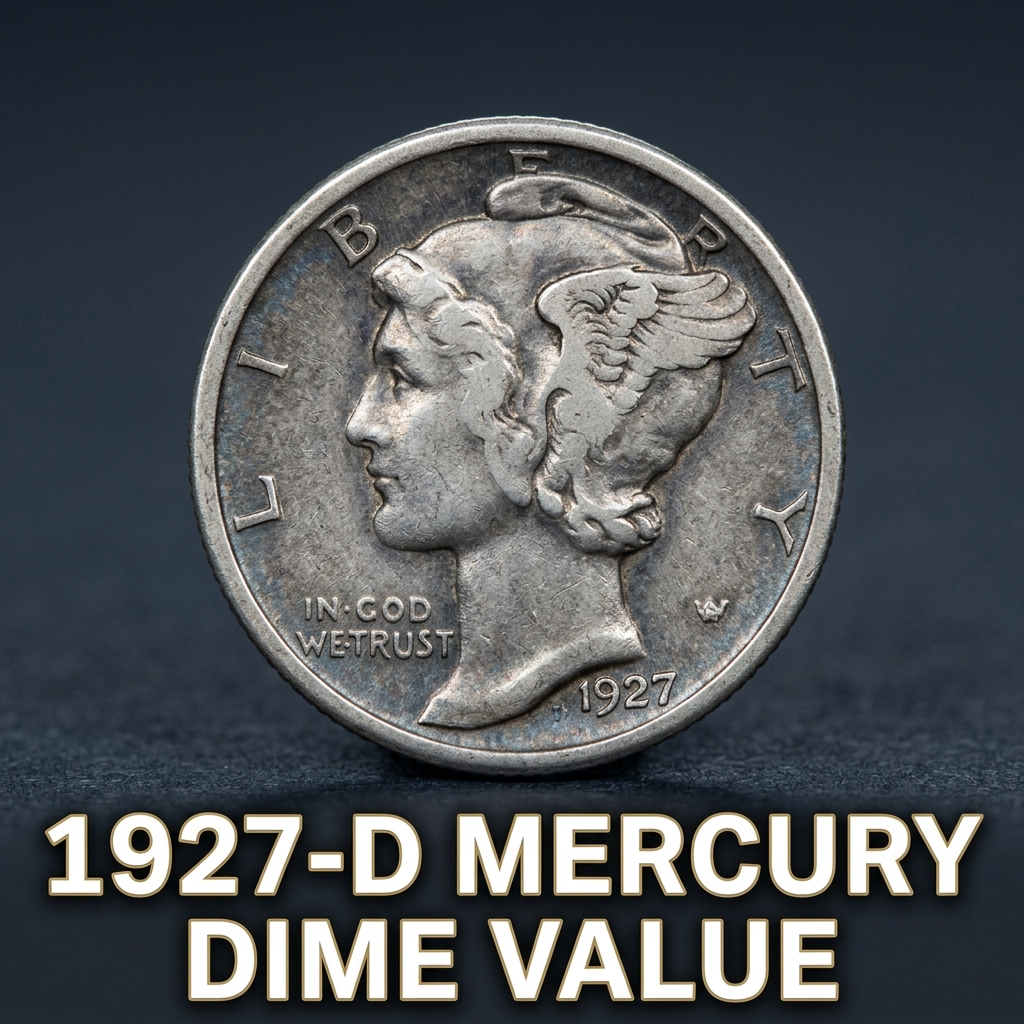
The 1927-D Mercury Dime is worth anywhere from $4 in heavily worn condition to well over $1,000 or more in high mint state grades — making it one of the more exciting finds from the Denver Mint’s early 20th-century output. If you’ve come across one of these small silver coins and you’re wondering whether it’s worth anything, the good news is: it just might be.
What Is the 1927-D Mercury Dime?
The Mercury Dime was minted from 1916 to 1945, and despite the nickname, the figure on the obverse isn’t actually Mercury — it’s Lady Liberty wearing a winged cap. The design was created by sculptor Adolph Weinman and is widely considered one of the most beautiful dime designs in American history.
The “D” mint mark on a 1927 dime tells you it was struck at the Denver Mint. That year, Denver produced around 27,170,000 of these dimes, which is a fairly healthy mintage. However, most of those coins passed through hands and pockets for decades, leaving the majority in circulated, worn condition.
If you’ve found one of these coins and you’re not sure where to start, using a free coin identifier app is one of the easiest ways to get a quick read on what you might have. Just snap a photo and let the technology do the work.
How Much Is the 1927-D Mercury Dime Worth?
The value of a 1927-D Mercury Dime depends almost entirely on its condition — what coin collectors call its “grade.” A coin that’s been circulated heavily will show worn details and flattened features, while an uncirculated coin will have sharp, crisp lines and original mint luster.
Here’s a general value chart to give you a quick idea of where your coin might fall:
| Grade / Condition | Estimated Value |
|---|---|
| Good (G-4) | $4 – $6 |
| Fine (F-12) | $7 – $12 |
| Extremely Fine (EF-40) | $20 – $35 |
| About Uncirculated (AU-50) | $45 – $80 |
| Mint State (MS-63) | $150 – $400 |
| Mint State (MS-65) | $600 – $1,200+ |
For a deeper look at graded auction results and current market pricing, you can check out this detailed breakdown of 1927-D Mercury Dime prices across mint state grades — it’s especially useful if you’re trying to figure out what a higher-grade example might actually sell for today.
The Full Bands Detail That Can Multiply Value
One thing that separates average Mercury Dimes from truly valuable ones is a grading designation called “Full Bands” — sometimes written as FB. This refers to the bands wrapped around the fasces (the bundle of rods on the reverse side of the coin). When those horizontal bands are fully struck and sharply defined, the coin earns a Full Bands designation from professional grading services like PCGS or NGC.
A 1927-D Mercury Dime with Full Bands in MS-65 can command significantly higher prices than a standard MS-65 example — sometimes two to three times as much. This is because Full Bands coins are genuinely rare, even in the original mintage. Most strikes from this era show weakness in that area.
If you’re not sure how to examine your coin for this detail, CoinHix is a great tool that can help you compare your coin’s features against professionally graded examples.
Silver Melt Value and Why That Matters
Even a heavily worn 1927-D Mercury Dime isn’t worthless. Mercury Dimes are composed of 90% silver, and each coin contains approximately 0.07234 troy ounces of silver. That means at current silver prices (roughly $30–$32 per troy ounce), even a well-worn example has a base melt value of around $2.25 to $2.40.
That melt value acts as a floor — no reputable dealer will pay you less than the silver content is worth. So even your most beat-up Mercury Dime has real, tangible value because of its metal content alone.
To get a full picture of what your specific 1927-D dime is worth based on its grade and current market trends, this comprehensive 1927 Mercury Dime value guide breaks down pricing by condition and includes current market data that’s worth reviewing before you sell or trade.
How to Get Your 1927-D Mercury Dime Appraised
If you think your coin might be in mint state or better condition, it’s worth getting a professional opinion before selling. Organizations like PCGS (Professional Coin Grading Service) and NGC (Numismatic Guaranty Company) offer authentication and grading services that can officially certify your coin’s grade and increase its resale value.
For a quick first assessment, CoinHix lets you scan and identify your coin instantly, giving you a starting point before you invest in formal grading. It’s a smart first step that many everyday collectors are now using. You can also bring your coin to a local coin shop or coin show — most dealers will give you a free verbal appraisal.
Don’t clean the coin. This is one of the most common mistakes people make. Cleaning removes the natural patina and can dramatically reduce a coin’s collector value, even if it makes the coin look shinier to the naked eye.
—
FAQ
Q: How do I know if my Mercury Dime is a 1927-D specifically?
A: Look on the reverse side of the coin, just to the left of the “E” in “ONE” near the bottom. If you see a small “D” there, it was minted in Denver. No mint mark means it’s a Philadelphia issue, and an “S” means San Francisco.
Q: Is a 1927-D Mercury Dime rare?
A: It’s not considered a key date, but it’s not common in high grades either. With over 27 million minted, circulated examples are fairly easy to find. However, pristine uncirculated examples — especially with Full Bands — are genuinely scarce and highly sought after by collectors.
Q: Where’s the best place to sell a 1927-D Mercury Dime?
A: For circulated coins, local coin dealers or eBay are solid options. For high-grade or Full Bands examples, consider submitting to PCGS or NGC first, then listing on a major auction site. CoinHix can also help you understand fair market value before you commit to a sale, so you don’t leave money on the table.