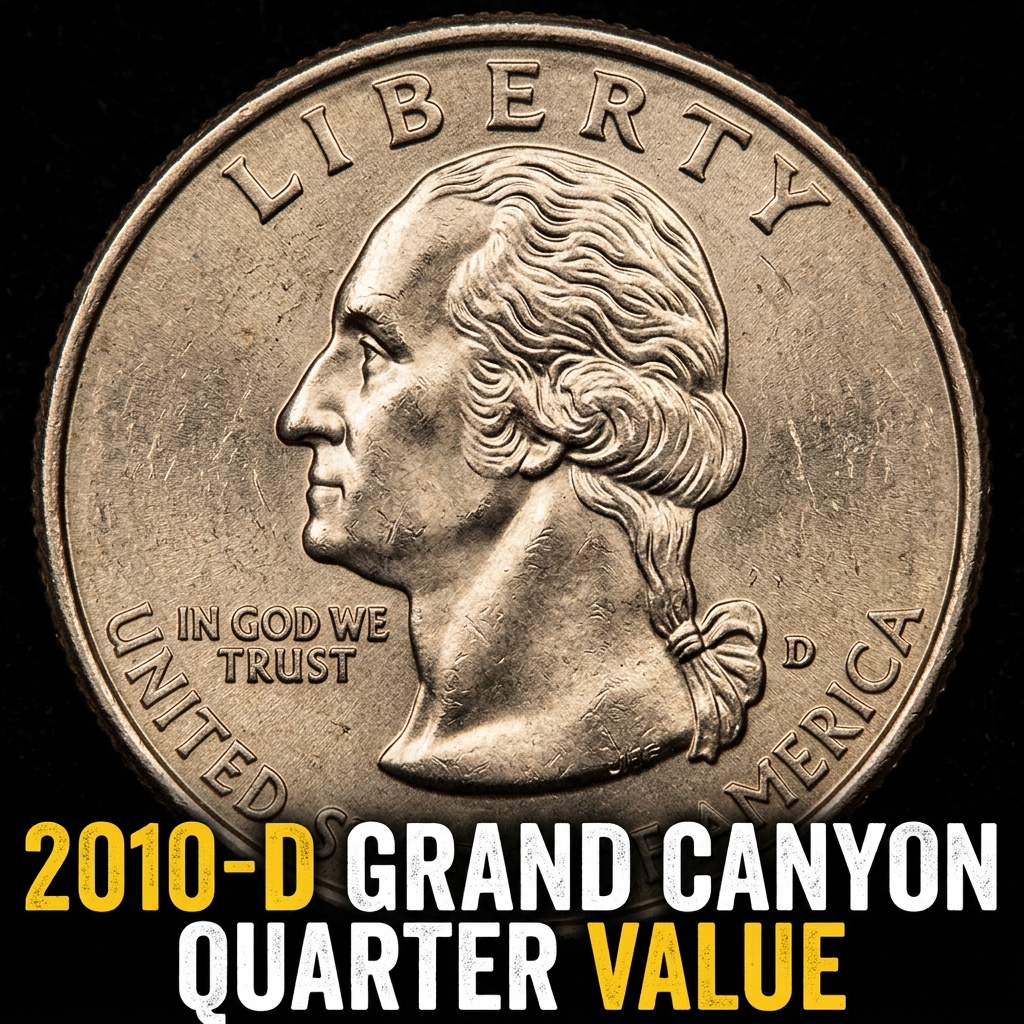
The 2010-D Grand Canyon Quarter is worth between $0.25 and $35 or more depending on its condition, with top mint-state examples sometimes fetching even higher prices at auction. If you just dug one out of your change jar, you’re in the right place — let’s break down exactly what you’ve got.
Before we dive in, it helps to have a reliable tool in your corner. A free coin identifier app can instantly tell you the grade and estimated value of any coin in your collection — no expertise required. Whether you’re a first-time finder or a seasoned collector, having that kind of resource on your phone makes a real difference.
What Is the 2010-D Grand Canyon Quarter?
The 2010-D Grand Canyon Quarter is part of the America the Beautiful Quarters Program, a U.S. Mint series that launched in 2010 and featured national parks and historic sites across all 50 states. The Grand Canyon, located in Arizona, was one of the first five designs released in the program. The “D” mint mark means this coin was struck at the Denver Mint.
More than 347 million of these quarters were produced at the Denver Mint alone, making them relatively common in circulation. Because of that high mintage, most circulated examples you find in everyday change are worth just face value — 25 cents. But that doesn’t mean yours is worthless. Condition is everything in the coin world.
If your coin shows no wear, strong luster, and sharp details on the Grand Canyon’s layered rock formations, it could be worth significantly more than a quarter.
How Condition Affects the 2010-D Grand Canyon Quarter Value
Coin grading is the most important factor in determining what your 2010-D Grand Canyon Quarter is actually worth. Coins are graded on a scale from 1 (Poor) to 70 (Perfect Mint State). Here’s a general breakdown of values by condition:
| Grade | Description | Estimated Value |
|---|---|---|
| Circulated (G–VF) | Worn, some detail lost | $0.25 – $0.50 |
| Extremely Fine (EF-45) | Light wear, most details intact | $0.50 – $1.00 |
| Mint State 63 (MS-63) | Uncirculated, minor surface marks | $2 – $5 |
| Mint State 65 (MS-65) | Gem uncirculated, strong luster | $5 – $15 |
| Mint State 67 (MS-67) | Near perfect, exceptional eye appeal | $20 – $35+ |
For deeper pricing data across multiple grades and mint marks, you can check out detailed 2010 quarter value estimates by grade and mint location to compare your coin against recent market trends.
Are Any 2010-D Grand Canyon Quarters Worth Big Money?
Most 2010-D Grand Canyon Quarters you come across will be everyday pocket change. However, high-grade examples certified by PCGS or NGC — the two leading coin grading services — can attract serious collector interest. An MS-67 example can sell for $25–$40, and a rare MS-68 could push into three figures if one turns up at auction.
Error coins are another story entirely. Coins struck with die defects, doubling, off-center strikes, or missing clad layers can sometimes be worth hundreds of dollars. Always look closely at your coin under good lighting and a magnifying glass. Even small anomalies can mean real money.
If you want a quick way to check whether your coin might have a known error variety, CoinHix is a great tool to have handy. The CoinHix app lets you scan your quarter and compare it against a database of known varieties and values in seconds.
2010-D Grand Canyon Quarter vs. Other Mint Marks
In 2010, the Grand Canyon Quarter was produced at three facilities: Philadelphia (P), Denver (D), and San Francisco (S). The San Francisco Mint struck proof versions — those mirror-like, specially made coins sold directly to collectors — which are typically the most valuable of the three.
For comparison, you can explore certified mint-state price data for 2010 America the Beautiful Quarters across different grades to see how values shift depending on the strike type and condition.
The Denver business strike coins are the most common you’ll find in circulation. That said, a beautifully preserved D-mint example in MS-67 or higher is genuinely scarce and worth pursuing if you find one.
How to Find Out What Your Quarter Is Really Worth
The simplest way to get a fast, accurate answer is to use CoinHix on your phone. Just take a photo of your 2010-D Grand Canyon Quarter and the app will pull up current market values, grading guides, and comparable recent sales — all in one place.
For coins you believe might be high-grade or error coins, consider submitting them to PCGS or NGC for official certification. A slabbed, graded coin is far easier to sell and typically commands higher prices from buyers who trust the third-party authentication.
—
Frequently Asked Questions
Q: Is the 2010-D Grand Canyon Quarter rare?
A: Not in circulated condition — over 347 million were minted in Denver. However, high-grade examples (MS-67 and above) are genuinely scarce and can be worth $20–$35 or more to collectors.
Q: How do I know if my 2010-D Grand Canyon Quarter is uncirculated?
A: An uncirculated coin will have no signs of wear on the high points of the design. Look for original mint luster — a cartwheel-like shine when you tilt the coin under light. Any dullness or flat spots on the cheekbones or rock formations indicate circulation wear.
Q: Where’s the best place to sell a 2010-D Grand Canyon Quarter?
A: For common circulated examples, face value is typically all you’ll get. For uncirculated or error coins, try eBay, a local coin dealer, or a coin show. Getting your coin graded by PCGS or NGC first can help you fetch top dollar from serious buyers.