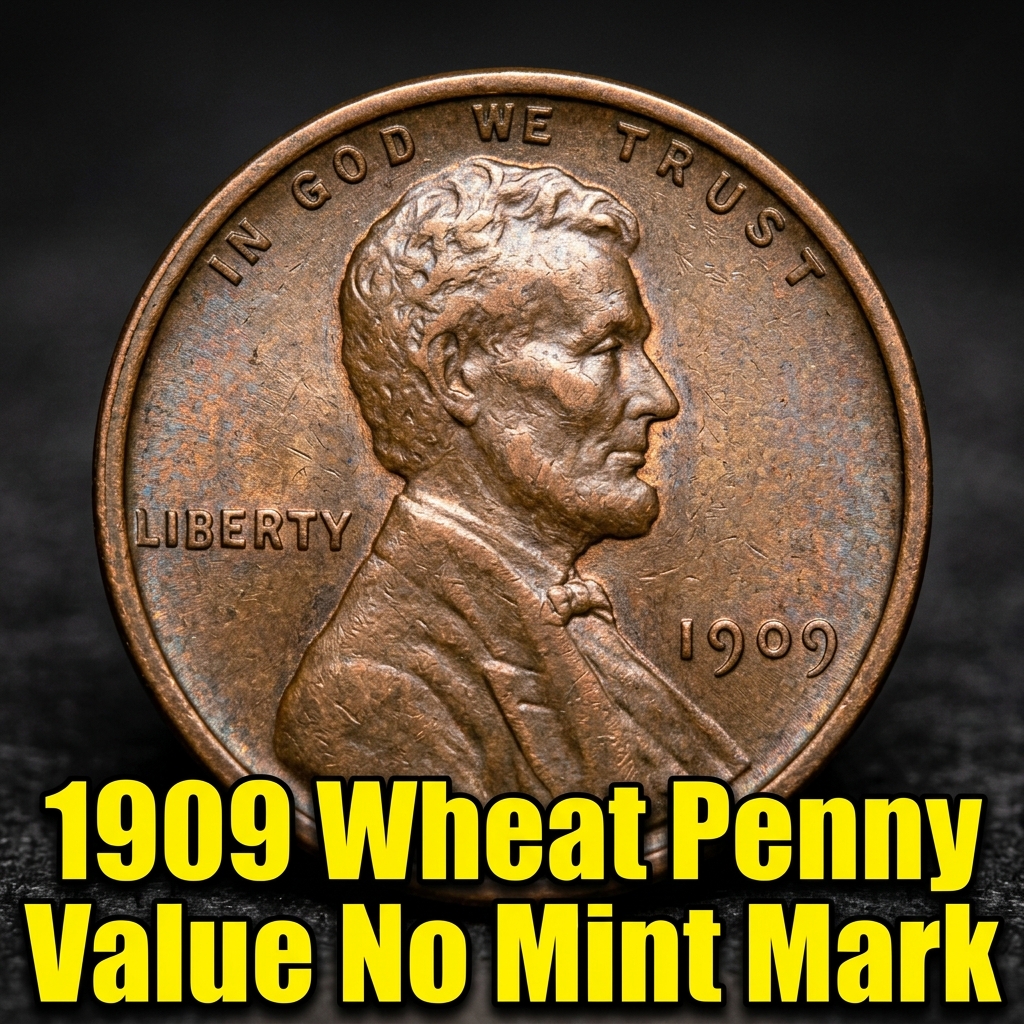
The 1909 Wheat Penny with no mint mark is worth anywhere from $4 in heavily worn condition to over $100 or more in high-grade uncirculated condition. If you’ve been holding onto one of these old pennies, you might be sitting on more than just a cent — this is one of the most historically significant Lincoln cents ever made.
Why the 1909 Wheat Penny No Mint Mark Matters
The year 1909 was a landmark moment in American coinage. It marked the debut of the Lincoln cent, replacing the long-running Indian Head penny series. The Philadelphia Mint struck millions of these coins that year — no mint mark required, since Philadelphia was the main facility and didn’t stamp its coins at the time.
Because there’s no mint mark, beginners sometimes confuse this coin with the ultra-rare 1909-S VDB penny. Don’t worry — we’ll break down exactly what you have and what it’s worth.
The no-mint-mark version was produced in large quantities, making it far more common than its San Francisco counterpart. But “common” doesn’t mean worthless. In fact, well-preserved examples can still fetch impressive prices at auction.
If you’re not sure what you’re holding, try using a free coin identifier app to quickly scan your coin and get an instant identification. It saves a lot of guesswork.
How Much Is the 1909 Wheat Penny Worth Today
The value of a 1909 Wheat Penny (Philadelphia, no mint mark) depends almost entirely on its condition — what coin collectors call “grade.” A coin that’s been passed through countless hands will show obvious wear, while one that was saved early could still look nearly brand new.
Here’s a general value breakdown based on condition:
| Grade / Condition | Estimated Value |
|---|---|
| Good (G-4) | $4 – $6 |
| Fine (F-12) | $8 – $12 |
| Extremely Fine (EF-40) | $18 – $30 |
| About Uncirculated (AU-55) | $35 – $55 |
| Mint State Red (MS-63 RD) | $75 – $150+ |
| Mint State Red (MS-65 RD) | $200 – $400+ |
For the most up-to-date pricing, you can check out 1909 Wheat Penny MS Red price data tracked across recent sales to see exactly what collectors are paying right now.
The VDB Initials and Why They Matter on Your Coin
When examining your 1909 no-mint-mark penny, the first thing to check is whether it has the letters “VDB” at the bottom of the reverse side. Those initials belong to Victor David Brenner, the coin’s designer. The Mint quickly removed them after a public outcry, making the VDB version rarer.
If your coin has “VDB” on the back and no mint mark on the front, that’s the 1909 VDB (Philadelphia) version — still a collectible coin worth $10–$20 in lower grades and $50–$100 or more in mint state.
If there are no initials at all, you have the more common post-VDB issue. It’s still worth collecting, just not as rare. Either way, use CoinHix to quickly look up the variety once you’ve identified the details — it makes sorting through these variations much easier.
What Affects the Value of Your 1909 Lincoln Cent
Beyond grade and the VDB question, a few other factors influence what your coin is worth:
Color designation plays a huge role in uncirculated coins. Grading services classify copper coins as Red (RD), Red-Brown (RB), or Brown (BN). Red coins, which have retained their original mint luster, are worth significantly more than brown ones.
Strike quality and eye appeal also matter. A sharply struck coin with clean fields and no major marks will always bring more money than one that looks flat or spotty — even at the same technical grade.
Holder and certification from PCGS or NGC can dramatically increase buyer confidence and push prices higher. A raw, ungraded coin might sell for $30, while a PCGS-certified MS-64 RD example of the same date could go for $100 or more.
You can also explore detailed coin value information for 1909 cents including both Indian Head and Wheat Penny issues — helpful if you’re not 100% sure which coin you’re actually holding.
How to Check Your Coin at Home
You don’t need to rush to a coin dealer to get started. A simple magnifying glass or loupe (10x is ideal) will let you examine the coin’s surface, check for wear on Lincoln’s cheekbone and hair details, and spot any VDB initials.
Take photos in natural light or under a desk lamp — avoid flash, which can wash out details. Then use CoinHix to compare your coin against graded examples in their database. It’s a fast, reliable way to get a ballpark value without leaving your house.
Once you have a sense of what you have, you can decide whether to get it professionally graded, sell it, or simply keep it as part of a growing collection. Many people start their coin collecting journey with exactly this kind of find.
—
FAQ
Q: How do I know if my 1909 penny is from Philadelphia or San Francisco?
A: Look at the obverse (front) of the coin, just below the date. If there’s a small “S” there, it came from the San Francisco Mint. If there’s nothing, it’s Philadelphia — which is the no-mint-mark version covered in this guide.
Q: Is a 1909 Wheat Penny with no mint mark rare?
A: Not particularly. Over 72 million were struck at Philadelphia, making it one of the more available early Lincoln cents. That said, coins in high grades (MS-65 Red or better) are genuinely scarce and worth hundreds of dollars.
Q: Should I clean my 1909 Wheat Penny to make it look better?
A: No — please don’t. Cleaning a coin almost always destroys its numismatic value. Collectors and grading services can spot cleaned coins immediately, and a cleaned coin in otherwise high grade will be worth a fraction of what an original-surface example brings. Leave it as-is and let a professional evaluate it.