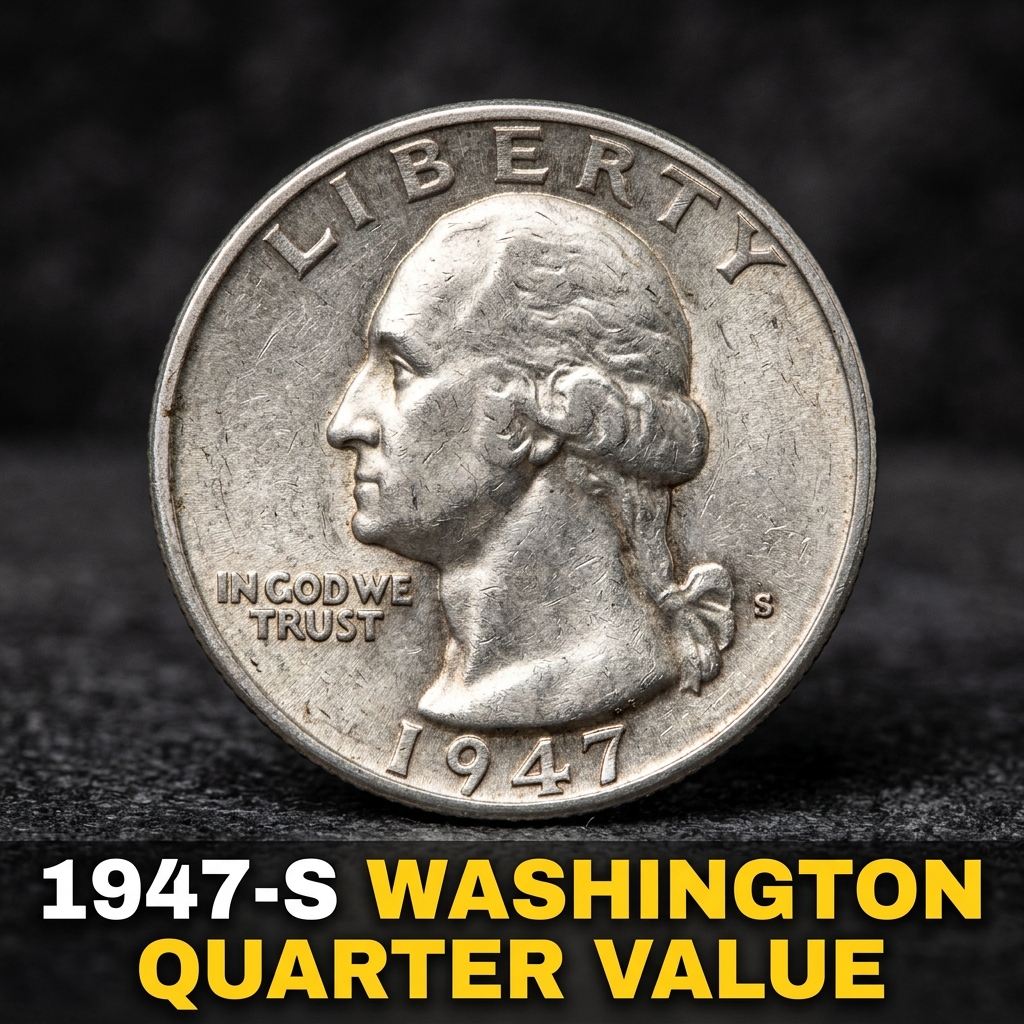
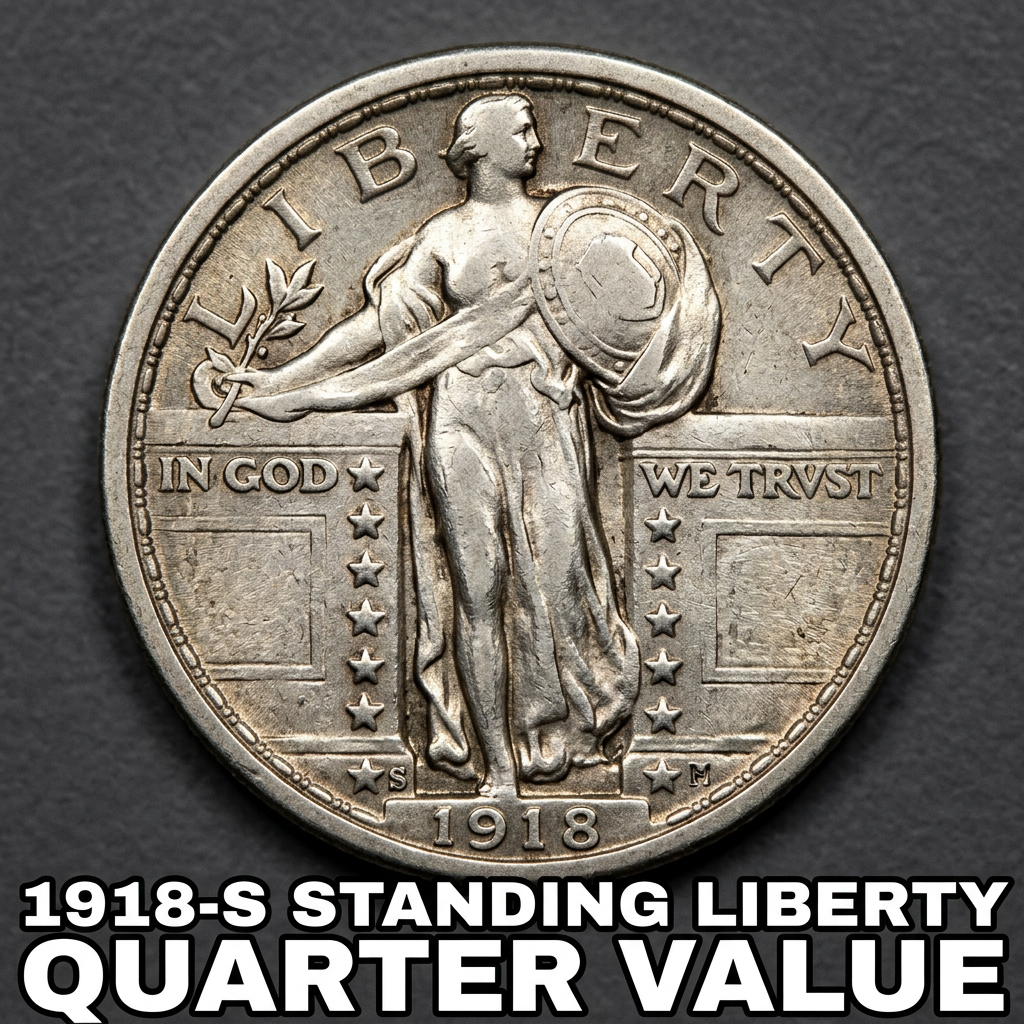
The 1918-S Standing Liberty Quarter is worth anywhere from $20 in heavily worn condition to over $5,000 or more in top mint state grades. If you’ve got one of these old silver quarters sitting in a jar or inherited coin collection, you might be holding onto something genuinely valuable — and this guide will walk you through exactly what it’s worth and why.
What Makes the 1918-S Standing Liberty Quarter Special
The 1918-S Standing Liberty Quarter was minted at the San Francisco Mint during World War I, and it carries a lot of history in that small silver disc. The “S” mintmark tells you it was struck in San Francisco — a detail that actually matters quite a bit to collectors.
Standing Liberty Quarters were designed by sculptor Hermon Atkins MacNeil and featured a bold image of Lady Liberty on the obverse. The design was controversial when it first debuted in 1916 because Liberty was depicted with an exposed breast — something that was later covered up in 1917. By 1918, the design had settled into what collectors call the “Type 2” version, with a more modest depiction of Liberty wearing a coat of mail.
The 1918-S is a mid-range date in the Standing Liberty series. It’s not the rarest coin out there, but it’s old enough and silver enough to make it worth real money in almost any condition. If you’re using a free coin identifier app to figure out what you’ve got, this is one coin where the results might genuinely surprise you.
1918-S Standing Liberty Quarter Value by Grade
The condition of your coin — what coin collectors call the “grade” — makes a massive difference in value. A coin that looks beat up and scratched is worth a fraction of one that looks like it just left the mint. Here’s a general value breakdown:
| Grade | Description | Estimated Value |
|---|---|---|
| Good (G-4) | Heavy wear, design still visible | $20 – $35 |
| Fine (F-12) | Moderate wear, major features clear | $50 – $80 |
| Extremely Fine (EF-40) | Light wear on high points | $150 – $250 |
| About Uncirculated (AU-55) | Slight wear, mostly original luster | $300 – $500 |
| Mint State (MS-63) | No wear, minor blemishes | $800 – $1,500 |
| Gem Mint State (MS-65+) | Exceptional quality, sharp details | $3,000 – $6,000+ |
One important thing to note: Standing Liberty Quarters are notorious for weak strikes, especially on Liberty’s head and the date. Coins where the date has worn completely flat are sometimes worth less even if the rest of the coin looks decent. For the most up-to-date 1918-S Standing Liberty Quarter price data across all mint state grades, it’s worth checking a dedicated coin price database.
Silver Value and Why That’s Your Floor
Here’s something a lot of people don’t realize: Standing Liberty Quarters are made of 90% silver. Each coin contains about 0.1808 troy ounces of pure silver.
That means even a beat-up 1918-S quarter has what’s called “melt value” — the raw value of the silver metal inside it. With silver prices fluctuating around $25–$30 per troy ounce in recent years, the silver alone is worth roughly $4.50 to $5.40. But since this is a collectible coin with real numismatic value, you’ll almost always get more than melt value from a coin dealer or at auction.
Think of the silver content as your floor. No matter how worn your coin is, it’s not going to be worth zero. And in good or fine condition, you’re already looking at several times the melt value.
How to Check Your 1918-S Quarter’s Value the Easy Way
Not everyone has access to a coin dealer or auction house. The good news is that there are some genuinely useful tools available right on your phone.
CoinHix is one of the most reliable apps for looking up U.S. coin values quickly. You can search by year, mint mark, and grade to get a realistic sense of what your 1918-S Standing Liberty Quarter is worth on today’s market. CoinHix pulls data from real sales and auction records, so the numbers actually reflect what collectors are paying — not just theoretical catalog values.
For a broader look at what your 1918 quarter is worth based on condition and mint mark, there are also detailed online guides that break things down in plain English, which is exactly what most people need when they’re new to coin collecting.
If you want to go deeper, consider getting your coin professionally graded by PCGS or NGC — the two main third-party grading services. A professionally graded coin in a sealed holder is easier to sell and often fetches a higher price.
Is the 1918-S Standing Liberty Quarter Worth Getting Appraised
If your coin looks to be in Fine condition or better — meaning the design is clear and not completely worn down — then yes, it’s probably worth the effort to get a second opinion from a coin dealer or use a grading service.
The 1918-S had a mintage of 11,072,000 coins, which is a reasonably large number. That means it’s not a rare date, but it’s still 100+ years old and made of silver, which gives it solid collector appeal.
The coins that command the really big prices are those in MS-65 or higher grades — and those are rare simply because most coins from 1918 spent decades in circulation. Finding a truly gem-quality 1918-S is not easy, which is exactly why those coins sell for thousands.
CoinHix makes it easy to track recent sale prices and compare your coin to similar examples, so you can go into any dealer conversation with realistic expectations.
—
FAQ
Q: How do I tell if my quarter is a 1918-S or another mint?
A: Look on the obverse (front) of the coin, just to the right of the date. You’ll see a small letter — “S” for San Francisco, “D” for Denver, or no letter for Philadelphia. The mintmark is small but visible under decent lighting with a magnifying glass.
Q: My 1918-S quarter has a weak or missing date — is it still worth anything?
A: Yes, but less than a coin with a full clear date. Weak dates are very common on Standing Liberty Quarters because of how the dies were made. Some dealers will buy them at a slight discount. The silver content still gives it a base value regardless.
Q: Where can I sell my 1918-S Standing Liberty Quarter?
A: You have several options: local coin dealers, online marketplaces like eBay or Heritage Auctions, or coin shows. For the best price on a higher-grade coin, consider getting it professionally graded first. For quick value lookups before you sell, apps like CoinHix give you a solid starting point so you know what to expect.