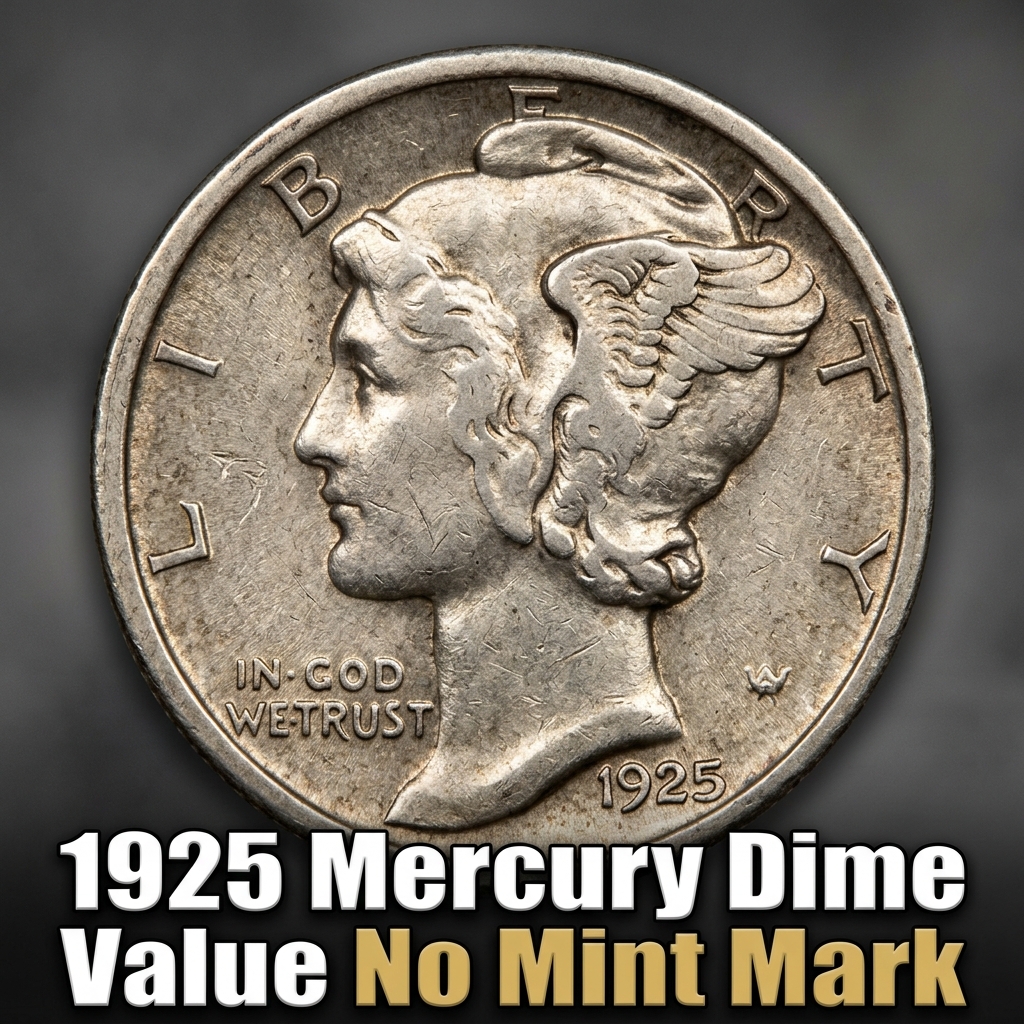
The 1925 Mercury Dime (no mint mark) is worth anywhere from $3 to $5 in heavily worn condition, up to $50 or more in lightly circulated grades, and potentially hundreds of dollars in mint state. If you’ve recently found one of these beautiful old dimes, you’re holding a piece of American history — and it may be worth more than you think.
What Is a 1925 Mercury Dime and Where Was It Made?
The 1925 Mercury Dime with no mint mark was struck at the Philadelphia Mint, which was the main U.S. coining facility at the time. Unlike coins from Denver (D) or San Francisco (S), Philadelphia coins from this era carried no mint mark at all — so a blank space where the mint mark would be actually tells you where it came from.
This coin was designed by Adolph A. Weinman and features the goddess Liberty wearing a winged cap, which many people mistook for the Roman god Mercury — giving the coin its popular nickname. The reverse shows a fasces (a bundle of rods) alongside an olive branch.
Philadelphia struck over 25 million of these dimes in 1925, making them fairly common in circulated grades. But condition is everything when it comes to value, and even a “common” coin can surprise you if it’s been well preserved.
If you’re not sure what you have, try using a free coin identifier app to get a quick read on your coin before heading to a dealer.
1925 Mercury Dime Value by Grade
Coin grading runs from Poor (P-1) all the way to Perfect Mint State (MS-70). The grade of your 1925 no mint mark Mercury Dime will dramatically affect its value. Here’s a simple breakdown of what collectors are currently paying:
| Grade | Condition Description | Estimated Value |
|---|---|---|
| G-4 (Good) | Heavy wear, design visible | $3 – $5 |
| VG-8 (Very Good) | Moderate wear, details clear | $5 – $8 |
| F-12 (Fine) | Light to moderate wear | $8 – $15 |
| VF-20 (Very Fine) | Light wear on high points | $15 – $25 |
| EF-40 (Extremely Fine) | Slight wear, sharp detail | $25 – $50 |
| MS-63 (Mint State) | Uncirculated, minor marks | $75 – $150 |
| MS-65 (Gem Mint State) | Gem quality, full luster | $200 – $400+ |
You can check current 1925 Mercury Dime mint state price data to see how the market is moving in real time. Prices can shift based on auction results and collector demand, so it’s always smart to check updated sources.
What Makes a 1925 Mercury Dime More Valuable
Beyond basic grade, there are a few factors that can push the value of your 1925 no mint mark Mercury Dime higher than the average.
Full Split Bands (FSB) is one of the most important details to look for on Mercury Dimes. The reverse of the coin shows a fasces wrapped with bands. When those bands are sharply struck and show a clear separation down the middle — called Full Split Bands — the coin commands a significant premium. An MS-65 FSB coin can sell for two to three times more than the same grade without that designation.
Luster and eye appeal also matter a lot. A coin with brilliant, original mint luster and no cleaning will always outperform one that has been polished or wiped. Even experienced collectors can tell the difference at a glance.
Strike quality varies even among Philadelphia coins from this era. A sharply struck 1925 Mercury Dime with full detail on Liberty’s hair and the reverse bands is simply more desirable to serious buyers.
Silver Content and Melt Value
One thing many people forget is that Mercury Dimes are made of 90% silver. That means even a heavily worn 1925 Mercury Dime has some base metal value regardless of its collectible grade.
As of recent silver prices, the melt value of a single Mercury Dime is roughly $1.60 to $2.00, depending on the spot price of silver. This is sometimes called the “floor” of the coin’s value — it’s the absolute minimum you’d expect to receive.
For collectors, however, a well-preserved example is worth far more than just its silver content. That’s why condition really is king with these coins.
For a comprehensive look at the full 1925 dime value across all grades and mint marks, it’s worth doing your research before selling or trading.
How to Check Your 1925 Mercury Dime Value at Home
You don’t need to visit a coin shop right away to get a general idea of what your coin is worth. Start by examining the coin under good lighting with a magnifying glass. Look for sharpness of detail, original surface color, and any signs of cleaning or damage.
CoinHix is one of the best tools available for quickly researching coin values. The CoinHix app lets you look up real-time auction results and price trends for Mercury Dimes by grade, mint mark, and special designations like Full Split Bands — all from your phone.
Once you have a rough grade in mind, compare your coin to certified examples online. PCGS and NGC population reports can also tell you how many examples exist in each grade, which affects rarity and value.
—
Frequently Asked Questions
Q: Is a 1925 Mercury Dime with no mint mark rare?
A: Not particularly. The Philadelphia Mint produced about 25.6 million of them in 1925, making circulated examples fairly common. However, high-grade mint state coins — especially those with Full Split Bands — are genuinely scarce and can be quite valuable.
Q: How do I know if my 1925 dime has been cleaned?
A: Look for an unnatural brightness or hairline scratches under magnification. Cleaned coins often look “too shiny” compared to original luster, which has a softer, more natural glow. Cleaning can significantly reduce a coin’s value to collectors.
Q: Where’s the best place to sell a 1925 Mercury Dime?
A: For common circulated examples, a local coin dealer is quick and easy. For higher-grade or Full Split Bands coins, consider submitting to PCGS or NGC for grading first, then selling through a major auction house or online platform. Use CoinHix to track recent sold prices so you know what to expect before you list it.