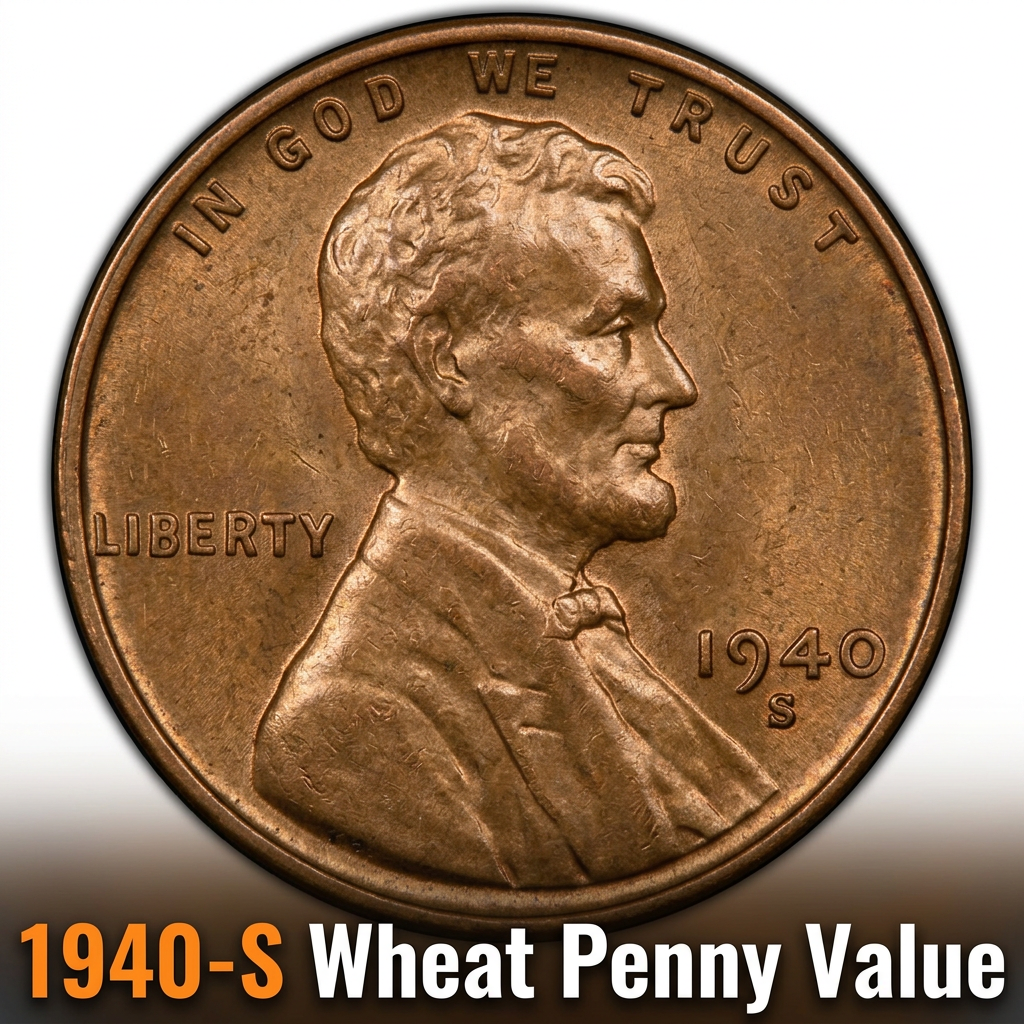
The 1940-S Wheat Penny is worth anywhere from $0.10 in heavily worn condition to over $20 or more in top mint state grades. If you’ve found one of these small Lincoln cents in a jar, old wallet, or inherited coin collection, you might be sitting on a surprisingly collectible piece of American history.
What Makes the 1940-S Wheat Penny Special
The “S” in 1940-S tells you this coin was minted at the San Francisco Mint — one of three facilities that struck Lincoln Wheat Pennies that year. The other two were Philadelphia (no mint mark) and Denver (D). San Francisco produced around 112 million of these cents in 1940, which makes them fairly common, but condition is everything when it comes to value.
Most of the 1940-S pennies you find in circulation are well-worn, which puts them in the low end of the value range. But if you happen to find one with sharp details, original red luster, and no significant scratches, you could have a coin worth $10, $15, or even more to a serious collector.
The coin features Victor David Brenner’s iconic Lincoln portrait on the obverse and two wheat stalks flanking “ONE CENT” on the reverse — a design that ran from 1909 to 1958 and remains one of the most recognized series in American coin collecting.
1940-S Wheat Penny Value by Grade
Coin grading is the system collectors and dealers use to measure a coin’s condition on a scale from 1 to 70. For everyday folks, the key grades to know are Good (G-4), Fine (F-12), Extremely Fine (EF-40), and Mint State (MS-60 through MS-65+). Here’s a quick look at how grade affects the 1940-S value:
| Grade | Description | Estimated Value |
|---|---|---|
| Good (G-4) | Heavy wear, major details visible | $0.10 – $0.25 |
| Fine (F-12) | Moderate wear, lettering clear | $0.25 – $0.75 |
| Extremely Fine (EF-40) | Light wear on high points | $1.00 – $3.00 |
| MS-63 (Red-Brown) | Uncirculated, mixed color | $5.00 – $10.00 |
| MS-65 Red (RD) | Gem uncirculated, full red luster | $15.00 – $25.00+ |
For the most current auction results and certified coin prices, you can browse detailed 1940 Wheat Penny MS-RD price data by grade to see what these coins are actually selling for in today’s market.
How to Check Your 1940-S Penny’s Condition at Home
You don’t need to be a professional numismatist to get a basic idea of what your coin is worth. Start by looking at Lincoln’s cheekbone and the wheat stalks on the reverse — these are the high points that wear first.
If those areas look flat and blurry, your coin is likely in Good or Fine condition and worth just a few cents to maybe a dollar. If you can see clear hair detail above Lincoln’s ear and the wheat lines are sharp, you might be looking at an Extremely Fine or better coin.
Color matters a lot for uncirculated cents. A coin with full original red-orange copper color is called “Red” (RD) and commands the highest premiums. One that’s turned partly brown is “Red-Brown” (RB), and a fully brown coin is simply “Brown” (BN). Red examples are by far the most desirable.
A great way to start identifying and valuing your old coins is to use a free coin identifier app that can help you match your coin to known varieties and grades quickly from your phone. CoinHix also offers easy-to-use tools for looking up wheat penny values on the go.
Are Any 1940-S Wheat Pennies Worth Big Money
Most 1940-S pennies are common coins, but errors and top-grade examples can push values significantly higher. The most valuable 1940-S cents are those graded MS-66 Red or MS-67 Red by major grading services like PCGS or NGC. At those elite grades, prices can climb into the hundreds of dollars.
Error coins are another category worth knowing about. Doubled die errors, off-center strikes, and repunched mint marks can all add collector value. These errors are rare, but they do exist in the 1940-S series. If your penny looks unusual in any way — misaligned design, doubling in the lettering, or a weak strike in an odd spot — it’s worth getting a second opinion from a dealer or grading service.
You can find a thorough breakdown of 1940 penny values across all mint marks and grades to compare where your S-mint coin stands relative to the full series.
CoinHix makes it easy to track wheat penny values and get alerts when similar coins sell at auction, so you always know what the market is doing.
Should You Clean Your 1940-S Wheat Penny
This is one of the most common mistakes new collectors make — and it’s one you absolutely want to avoid. Cleaning a coin, even gently with soap and water, removes the natural surface patina that collectors prize. A cleaned coin will almost always sell for less than an original, uncleaned example in the same grade.
Leave your 1940-S wheat penny exactly as you found it. Store it in a 2×2 cardboard holder or a soft plastic flip to protect it from further wear and environmental damage. If you think you might have something valuable, take it to a coin show or a reputable local dealer before doing anything to it.
CoinHix is a smart resource to check current market values before you sell or trade any coin from your collection.
Frequently Asked Questions
Q: How do I know if my penny is a 1940-S or just a regular 1940?
A: Look on the obverse (heads side) just below the date. If you see a small “S,” it was made in San Francisco. No mint mark means Philadelphia, and a “D” means Denver. You may need a magnifying glass to see it clearly.
Q: Is a 1940-S wheat penny worth keeping or should I spend it?
A: Even well-worn examples are worth at least a few times face value to collectors. A nice uncirculated example could be worth $10–$25 or more. It’s worth holding onto rather than spending as a regular penny.
Q: Where is the best place to sell a 1940-S wheat penny?
A: Options include eBay, local coin shops, and coin shows. For higher-grade coins, consider having them certified by PCGS or NGC first — a certified MS-65 Red coin typically sells for more than a raw (uncertified) one. Apps like CoinHix can also help you track recent sale prices so you know what to expect before listing.