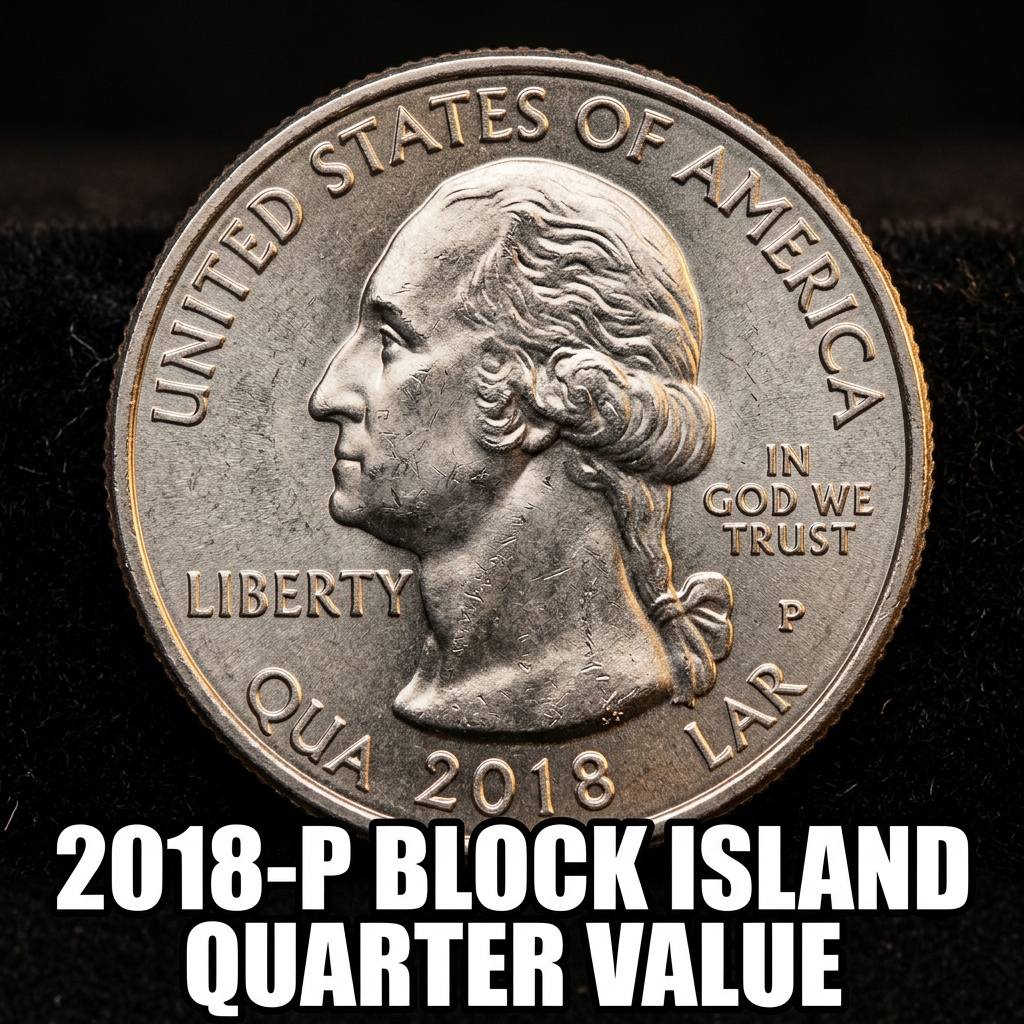
The 2018-P Block Island Quarter is worth anywhere from face value (25 cents) in circulated condition to $5–$15 or more in uncirculated mint state. If you found one in your change or tucked away in an old jar, you’re in the right place — let’s find out exactly what it’s worth.
What Is the 2018-P Block Island Quarter?
The 2018-P Block Island Quarter is part of the America the Beautiful Quarters Program, a long-running U.S. Mint series that honors national parks and historic sites across the country. Block Island National Wildlife Refuge, located in Rhode Island, was chosen as one of the five featured sites for 2018. The “P” in the coin’s name tells you it was struck at the Philadelphia Mint.
This quarter features a beautiful design showing a lighthouse, shorebirds, and ocean scenery — a fitting tribute to one of the most ecologically important islands on the East Coast. Over 116 million of these coins were produced at the Philadelphia Mint alone, which means they’re not rare in everyday circulation.
That said, condition is everything when it comes to coin value. Even a common coin can be worth a surprising amount if it’s been kept in excellent shape. If you’re not sure how to tell the difference between a worn coin and a mint-state gem, using a free coin identifier app can help you get a quick read on what you’ve got before spending time on deeper research.
How Much Is the 2018-P Block Island Quarter Worth Today?
For most people who find a 2018-P Block Island Quarter in everyday change, the honest answer is that it’s worth face value — 25 cents. Circulated examples in average condition don’t carry a premium because millions were made and billions of people have handled them over the years.
However, if your coin looks bright, shiny, and shows no signs of wear — meaning it might have come from a mint set or was simply never spent — you could be looking at something more valuable.
Here’s a quick value breakdown based on condition:
| Condition | Grade (Sheldon Scale) | Estimated Value |
|---|---|---|
| Circulated (worn) | G–VF (1–35) | $0.25 (face value) |
| About Uncirculated | AU-50 to AU-58 | $0.50–$2 |
| Mint State (average) | MS-60 to MS-64 | $1–$5 |
| Mint State (gem) | MS-65 to MS-67 | $5–$15+ |
| Error or Special Strike | Varies | $20–$100+ |
For the most up-to-date pricing, you can check live market data on 2018-P America the Beautiful quarter prices by grade to see what collectors are actually paying right now.
Errors and Varieties That Boost the 2018-P Block Island Quarter Value
Most 2018-P Block Island Quarters you find in circulation are completely normal — but every so often, a minting error slips through, and those coins can be worth significantly more than face value.
Common errors to look for include:
Die cracks — Small raised lines running across the coin’s surface, caused by a cracked die during striking.
Off-center strikes — When the coin blank wasn’t properly aligned in the press, leaving part of the design missing and a blank crescent of metal showing.
Doubled die errors — Where design elements appear slightly doubled or shadowed.
Clipped planchet — A coin that looks like a small bite was taken out of the edge.
If your coin looks unusual in any way compared to a normal quarter, it’s worth getting a second opinion. CoinHix is a great tool for this — just snap a photo and let the app’s database help you identify whether you’re holding something special. A coin with a confirmed error can fetch anywhere from $20 to well over $100 depending on the error type and severity.
Is the 2018-P Block Island Quarter a Good Collectible?
For casual collectors and beginners, the America the Beautiful series — including the Block Island quarter — is one of the most approachable collecting goals out there. The coins are inexpensive, easy to find, and come in a variety of grades that fit any budget.
Completing a full set of all five 2018 quarters (including the Pictured Rocks, Apostle Islands, Voyageurs, and Cumberland Island quarters from the same year) is a popular mini-goal for collectors. You can typically build a circulated set for just a couple of dollars.
If you’re looking to go deeper, CoinHix lets you track your collection, compare grades, and stay updated on current values — all from your phone. For a broader look at what your 2018 quarters might be worth across different mint marks and conditions, this detailed 2018 quarter value guide covering all mint marks and grades is a solid resource to bookmark.
Where to Sell Your 2018-P Block Island Quarter
If you’ve determined that your coin is in uncirculated condition or has an interesting error, you have a few solid options for selling:
eBay is the most popular marketplace for individual coins and lets you see what similar examples have sold for recently — always check “sold listings” rather than asking prices.
Local coin shops are a good option if you want cash on the spot, though dealers typically offer 50–70% of retail value.
Coin shows connect you directly with serious collectors who may pay more for the right coin.
For any of these routes, having a clear photo and a rough grade estimate will help you get a fair price. The CoinHix app makes it easy to document your coins with photos and notes, which is especially useful if you’re selling multiple pieces.
—
Frequently Asked Questions
Q: How do I know if my 2018-P Block Island Quarter is uncirculated?
A: An uncirculated coin will look bright and sharp, with no flat or worn spots on the high points of the design — like the lighthouse or bird feathers. If the coin has any dullness or rubbing, it’s considered circulated.
Q: How many 2018-P Block Island Quarters were minted?
A: The Philadelphia Mint struck approximately 116,400,000 Block Island quarters in 2018, making it a relatively common coin in circulated grades. That high mintage keeps the value modest for most examples.
Q: Can a 2018-P Block Island Quarter ever be worth $100 or more?
A: Yes, but only under specific circumstances — usually a certified high-grade example (MS-67 or above) or a confirmed minting error. Standard coins in typical circulated condition will not reach that value.