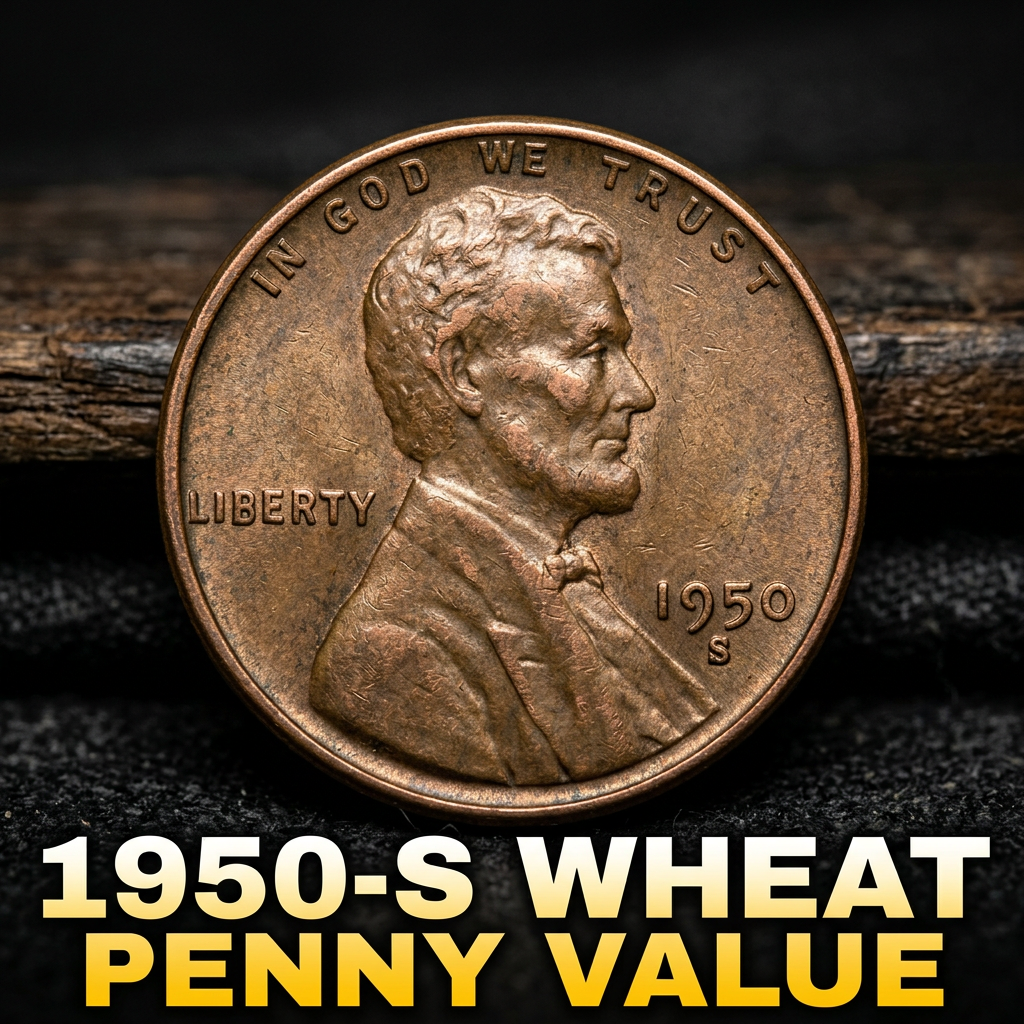
The 1950-S Wheat Penny is worth anywhere from $0.10 in heavily worn condition to over $15 or more in mint state, with top-grade examples occasionally fetching $50 or higher at auction. If you just found one of these little copper coins in a jar or old collection, you might be holding something genuinely interesting — and potentially valuable.
What Is the 1950-S Wheat Penny?
The 1950-S Wheat Penny was struck at the San Francisco Mint, which is where the small “S” mintmark under the date comes from. In 1950, the U.S. was still producing Lincoln Wheat Pennies — the design that ran from 1909 to 1958 — featuring Abraham Lincoln on the front and two wheat stalks on the back.
The San Francisco Mint produced about 118 million of these coins in 1950, which makes it a relatively common date in circulated grades. However, well-preserved examples in high mint state grades are harder to find than you might expect.
If you’re not sure what mint mark you’re looking at or need help identifying your coin, a free coin identifier app can help you figure out exactly what you’ve got before you start researching values.
How Much Is a 1950-S Wheat Penny Worth?
Value depends heavily on condition. A coin that’s been circulating for decades will show wear on Lincoln’s cheek and the wheat stalks, which drops the value significantly. But a coin that’s been sitting in a collection untouched since the 1950s could be worth a nice premium.
Here’s a general value breakdown by grade:
| Grade | Condition Description | Estimated Value |
|---|---|---|
| Good (G-4) | Heavy wear, outline visible | $0.10 – $0.25 |
| Fine (F-12) | Moderate wear, some detail | $0.35 – $0.75 |
| Extremely Fine (EF-40) | Light wear on high points | $1.50 – $3.00 |
| Mint State (MS-63) | Uncirculated, minor marks | $8 – $15 |
| Mint State (MS-65 Red) | Gem uncirculated, full red | $30 – $60+ |
For a more detailed look at 1950-S Wheat Penny prices across mint state grades and color designations, you can check certified auction records and dealer price guides to see what the market has been doing recently.
What Makes Some 1950-S Pennies Worth More?
Color matters a lot with Lincoln Wheat Pennies. Coins are graded not just on wear, but also on how much of the original copper luster remains. The three color designations are:
Red (RD) — Full original copper color. Most valuable.
Red-Brown (RB) — Mix of red and brown toning. Mid-range value.
Brown (BN) — Mostly toned to brown. Lowest value among uncirculated examples.
Beyond color, look for coins with sharp strikes, no cleaning, and no damage. Cleaned coins — even ones that look shiny — are worth significantly less to collectors. If someone polished a coin trying to make it look better, it actually destroys the surface and numismatic value.
Error coins are another thing to watch for. Some 1950-S pennies have doubling or die errors that make them far more valuable. Examine your coin under a magnifying glass to check for doubled lettering or other anomalies.
How to Get an Accurate 1950-S Wheat Penny Value Today
The best way to know what your specific coin is worth right now is to check recent sales data and, if the coin looks high-grade, consider professional grading through PCGS or NGC.
You can also use CoinHix to get a quick estimate. CoinHix is a handy app that pulls real market data so you’re not guessing based on outdated price guides. It’s especially useful when you have a handful of old coins and want to sort out which ones are worth pursuing further.
For a comprehensive breakdown of 1950 penny values across all three mint marks including the S, D, and Philadelphia issues, numismatic reference tools can give you side-by-side comparisons that help you understand where your coin fits in the bigger picture.
—
FAQ
Q: Is a 1950-S Wheat Penny rare?
A: Not especially rare in circulated grades — over 118 million were minted. However, gem uncirculated examples with full red color are genuinely scarce and worth collecting.
Q: How do I know if my 1950-S penny has been cleaned?
A: Cleaned coins often look unnaturally shiny, have hairline scratches under magnification, or lack the natural toning you’d expect from a 70-year-old coin. Cleaning kills collector value, so it’s important to identify it early.
Q: Should I use CoinHix to value my 1950-S Wheat Penny?
A: Absolutely. CoinHix gives you up-to-date market pricing based on real sales data, which is much more reliable than old printed price guides. It’s a great starting point before deciding whether to sell, hold, or get your coin professionally graded.